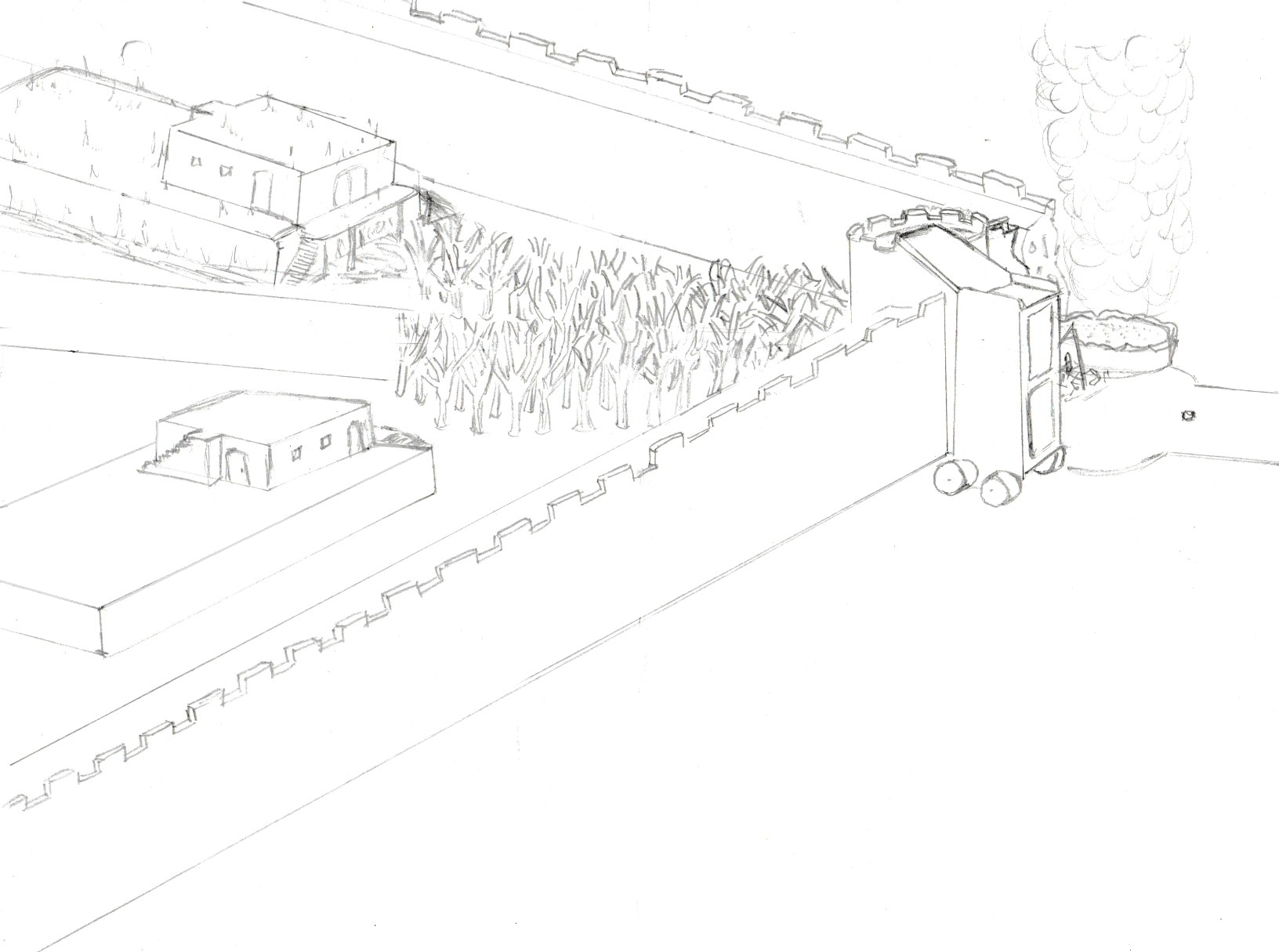
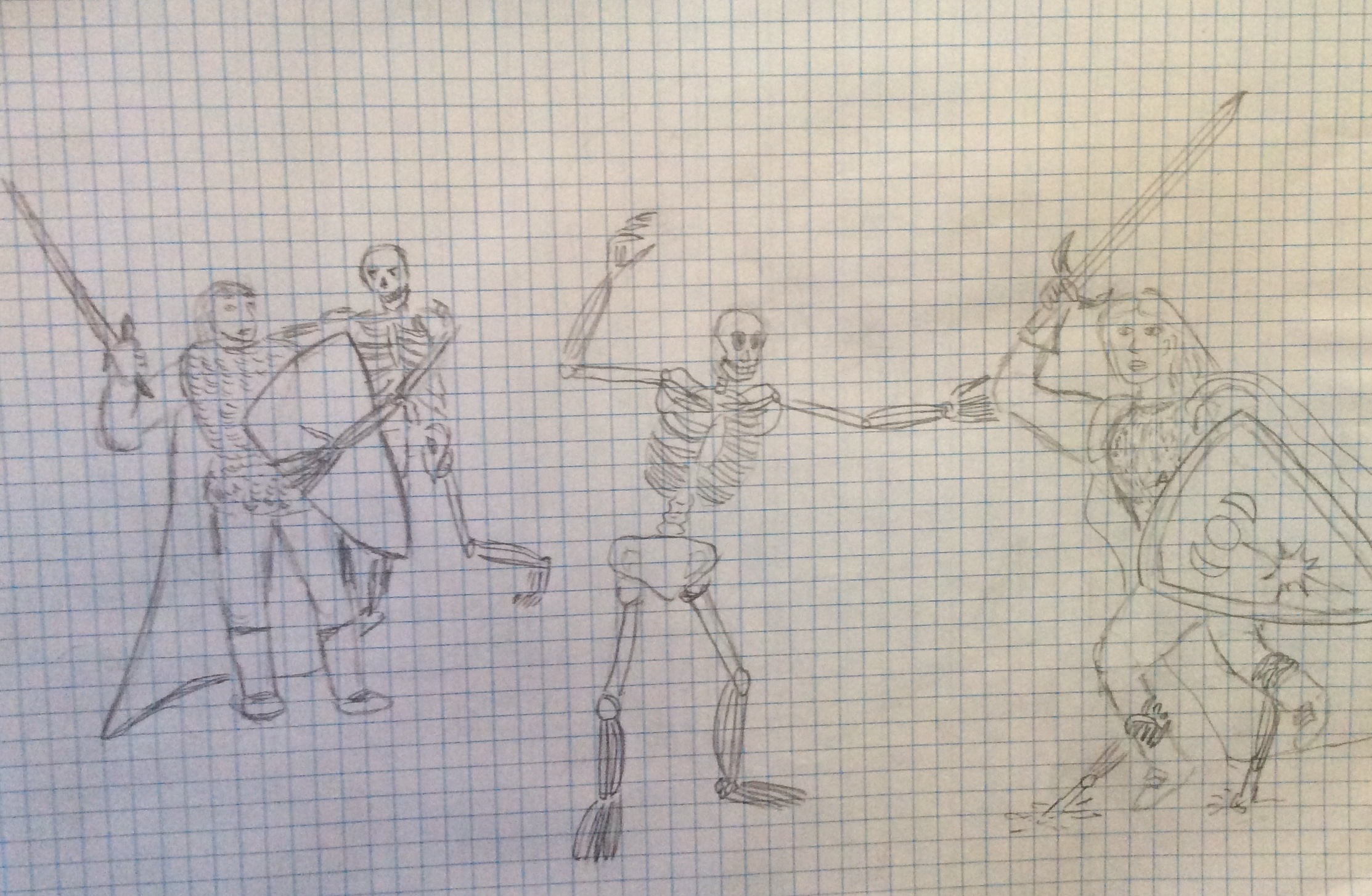
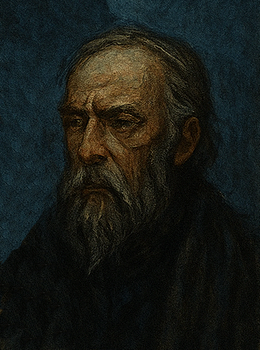
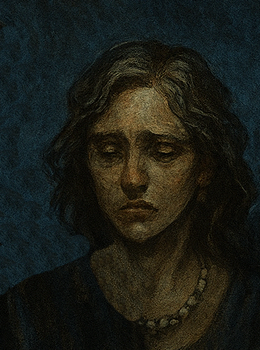
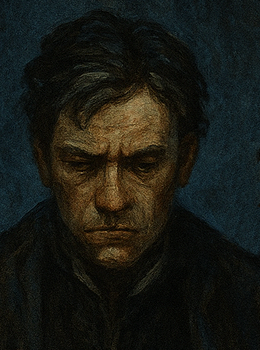
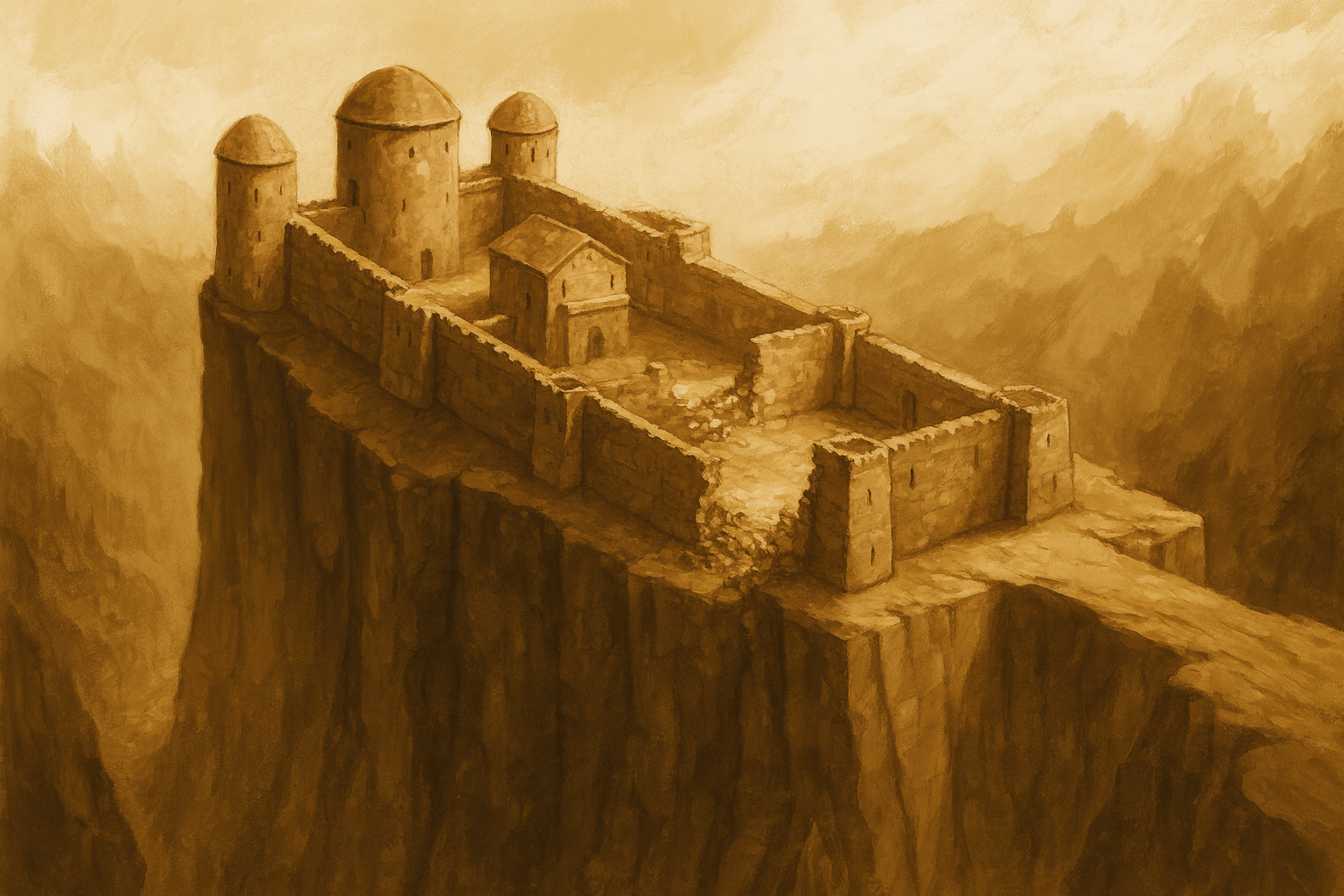
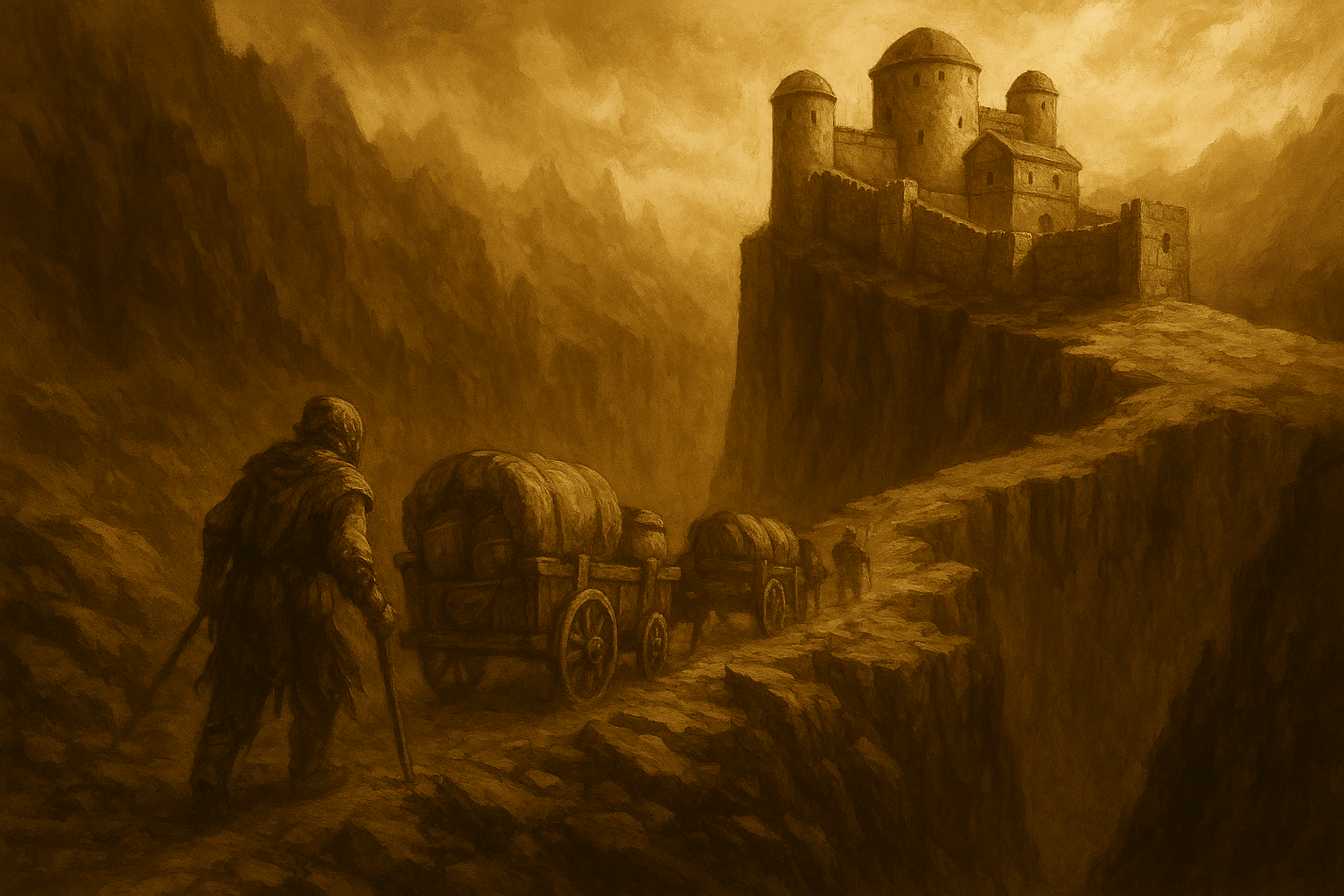
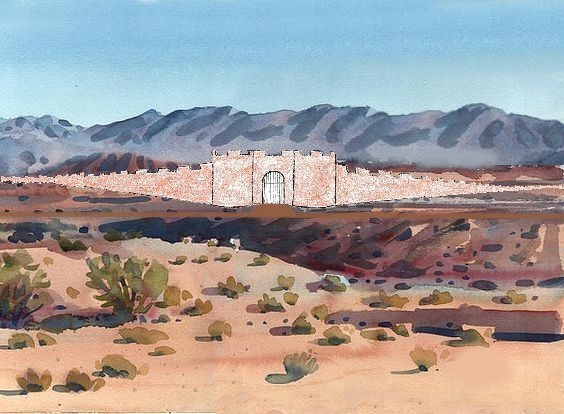
The long, scorching hot desert day draws to an end. The stone-paved road rises to the top of the sixty-foot plateau, revealing the Front Gate. Forty-foot towers of war flank the forty-foot-high Front Gate House, all of them made of four-foot-thick, sun-baked hardened earth that shimmers with heat as the bright desert sunlight turns from white to orange and then red. The thirty-foot-high, twelve-foot-thick walls, complete with crenelated parapets, that connect the towers stretch for more than a mile at a time before the next tower rises like a candle in a baking sunset. Nine great towers and seventeen miles of wall enclose eighteen and three-quarter square miles of paradise hidden deep in this desolate desert.
Nearly a thousand soldiers man those walls and towers and gaze out to the myriad dark tents, canvas coverings, and fourteen trenches and mounds that cover the forces of evil. The scorching desert sun drives both enemy and ally to seek shade and shelter but the commander of those hosts thrives in the unbearable heat. A Fire Giant that paces impatiently all the long day as his armies hide, but he himself soaks up the scorching air.
Mounds and trenches, siege towers, beasts of burden, and wagon after wagon fill the barren desert floor. There are beetle herders in abundance, slaughterhouses next to these, and supplies in wagons as far as the eye can see, and tents. Several thousand tents litter the horizon, each tent holding monstrous occupants awaiting the mid-afternoon when the scorching heat begins to dampen.
Kahar is one of three fortresses of war, set to guard the King's Road and to resist the enemies of the kingdom. But this is no ordinary raid by some desert tribe, this is the 7th Dark Crusade. Ten thousand goblinoids march with instruments of war led by Rhael the Fire Giant and his 2 hill giants Rulos and Eclith. Ten thousand goblinoids come to tear the fortress walls down and slaughter all within. You are among the soldiers that man the desert fortress and fight and resist the invading army. Will you survive?
The Lamia and the Naga began as a desert campaign where a guardian Naga recruits PCs to secretly thwart the plans of a powerful lamia that infests a broken desert fortress. It has evolved since then. This campaign is designed for beginners at first level, but, since the initial attack (session 0) on the fortress is implemented by ten thousand goblinoids led by a Fire Giant with two Hill Giants, plus a multitude of mercenaries, along with scores of slaves responsible for feeding and watering both beasts and soldiers, the whole campaign can easily accommodate PCs of any level and at any starting point.
Key moments come to pass (e.g. - the breaking of the front gate, the defense of the Keep, the loss of Apperton's Arch, the loss of the towers and walls, etc.) either aided or thwarted by the PCs. Also, events will occur (e.g. - the defilement of The World Shrine, the sapper cave and the gate to the elemental plane of fire) whether the PCs achieve them or whether NPCs achieve them.
These events take place during the seventh Dark Crusade deep in the Hamakhaave desert at the Kingdom of Goldenshield's fortress named Kahar, one of three desert fortresses guarding the King's Road.
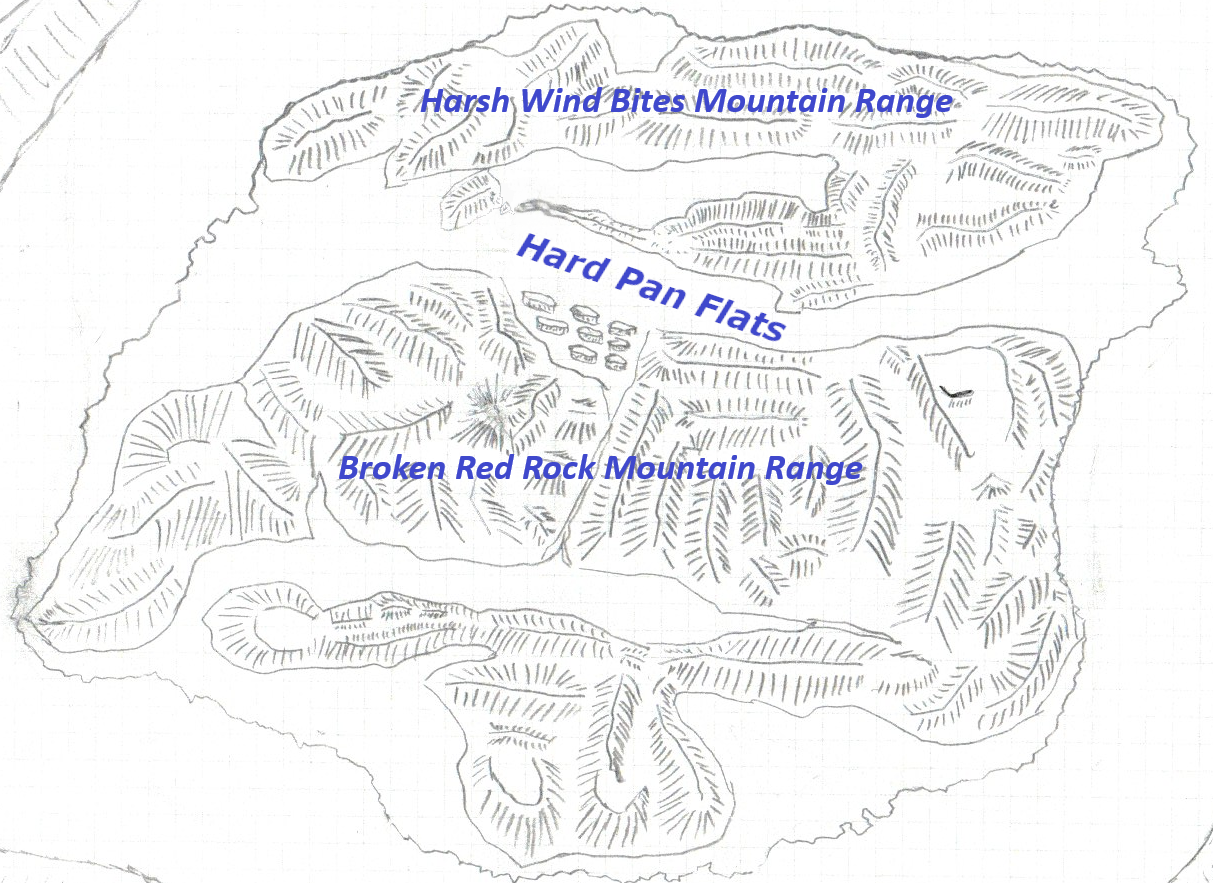
To the north lay Harsh Wind Bites mountain range. This vast mountain system, a crumpled spine of the earth, stretches 2250 miles from east to west, its jagged peaks forming a 750-mile-wide expanse of towering relief from north to south. To the south lay Broken Red Rock mountain range, sprawling 2750 miles from east to west and almost 1000 miles from north to south. And in between, seperating the two ranges by nearly 200 miles, lay the hard pan salt flats of the Hamakhaave desert.
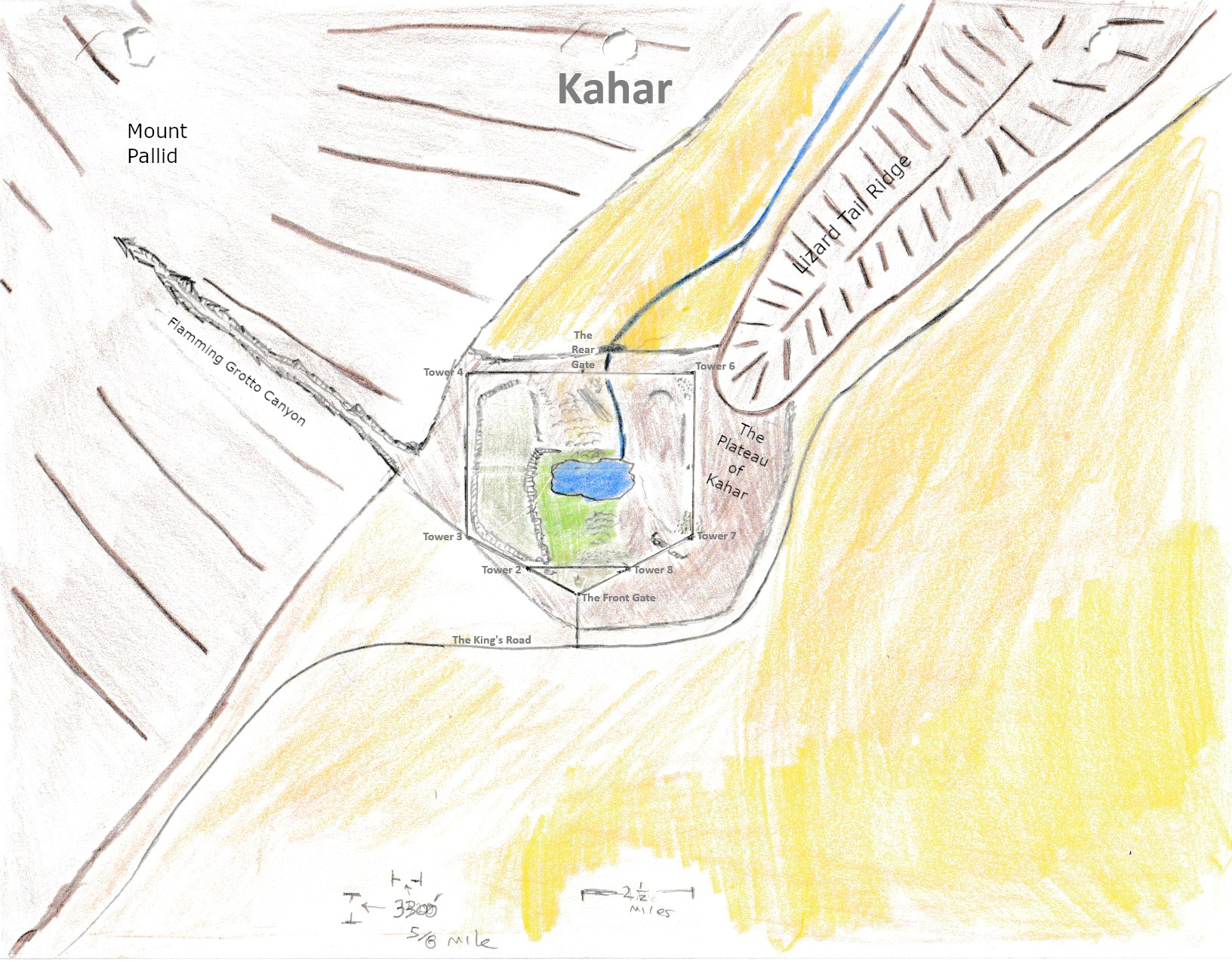
On the west side of the Hard Pan Flats is a barren, 5130 foot tall mountain named Mount Pallid. On the northeast side of Mount Pallid is a half mile wide, 8 mile deep canyon. At the outlet of this canyon, named Flamming Grotto Canyon, is a fan shaped apron of dirt that spans 8 miles wide from east to west and 6 miles long from north to south. Rising 60 feet above the desert floor, the men of old shaped the edges until the entire plateau became a mesa, surrounded by steep cliffs on all sides and a mostly flat top. Only one entrance was constructed into the plateau, a long, gentle sloping ramp, 100 feet wide, 720 feet long, with a 20 foot wide stone paved road, named Desert Haven Road, in the middle. This ramp is named the King's Ramp.
Hugging Harsh Wind Bites mountain range, from beyond the extreme east and to beyond the extreme west, is a 40 foot wide large slate rock road. The King's Road has two foot drain ditches on both sides, has 8 inch curbs on both sides, and is raised 1 foot above the desert floor. It was built with a deep sand base, stone slabs in cement above that, crushed stone in cement above that, and finally large flat slate rocks as the surface of the road. It is a multi-layered engineering marvel, built with distinct strata for stability and drainage. It is also a solitary streak of human engineering amidst the raw, vast, empty wilderness. The King's Road stretches out like an existential thought: long, straight, and nearly utterly alone.
Powerful heroes of Goldenshield Kingdom guard the fortress and fully expect to destroy the invaders outside the fortress walls. They remember and celebrate previous victories as holidays. This does not happen. The rulers become infected with madness, the powerful become traitors, the regular soldiers will be overrun by a zombie apocalypse. The towers fall, the fortress is breached, and most of its people are slain or taken. The survivors will coalesce at the 3 surviving towers and become the 'Resistance'.
Once the undisputed ruler of Kahar fortress, and the commander of Kahar's cavalry, Major Navaiim was a figure of iron
discipline, quiet charisma, and mythic presence. He led from the saddle, not the throne, and his thirty sworn knights, the elite
heart of the cavalry, followed him with a devotion that bordered on religious. For decades he held the northern deserts in check,
broke ogre warbands, shattered goblin hosts, and personally slew the lizardfolk warlord Ammon Cara of Barren Rock city.
His primary dwelling was at the Ranch, which was overseen by Anderson Chissum, the Master of the Ranch, whose care for Kahar's
warhorses was matched only by his loyalty to the Major.
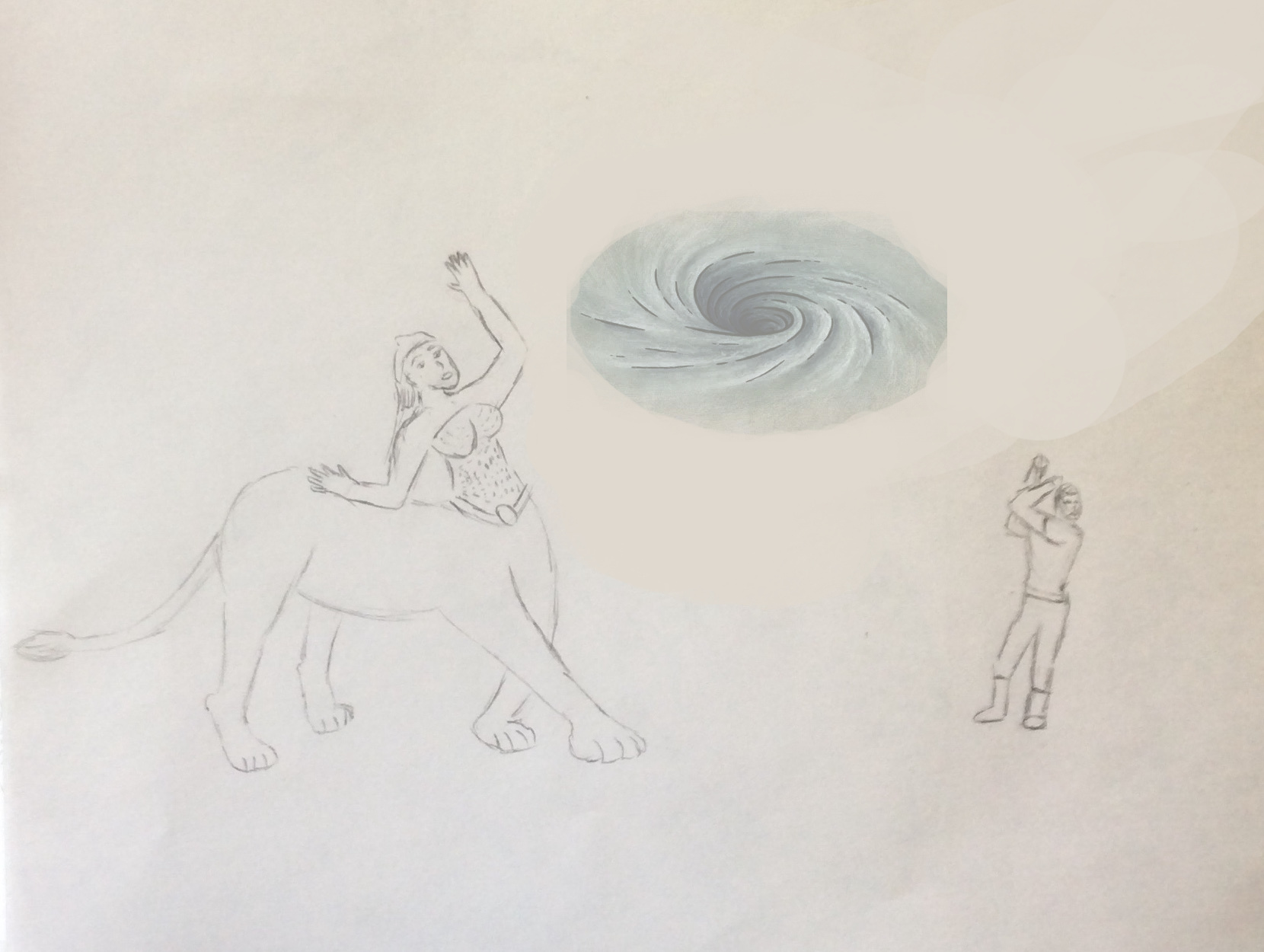
Major Navaiim's disappearance, thirty-two years ago, is the wound that
never healed. In the aftermath of the 6th Dark Crusade, a swirling vortex opened in the desert near the patrolling cavalry. Witnesses,
seventy‑four surviving cavalry riders, swear they heard a voice calling the Major by name: the voice of the Paladin King of legend.
The Major and his thirty knights rode into the vortex without hesitation. The rest tried to follow, but the vortex rejected them,
sealing behind the Thirty like a door closing on an era.
Without their commander, the cavalry fractured. There was no
competent leadership, the command structure fell apart. Within twelve years the Realm of the Adjudicator declared the cavalry disbanded
“for lack of leadership and divine mandate.” The Chancellors absorbed the Ranch and its herds. The order died, officially.
But the people of Kahar still whisper his name. Some say he fights in the Thousand Worlds War. Some say he will return when the
fortress needs him most. And the three surviving knights, old, stubborn, and unbroken, still polish their rusted armor in the barracks
of the Ranch, waiting for the day their Major rides again.
Thamiar will rarely come up in this adventure. He has two major accomplishments and both involve resetting the timeline. His first accomplishment is going back in time to Geas the blue dragon Zmaj. This will cause Zmaj to bring an invading force to assault the north part of the fortress of Kahar. Something that did not occur in the original timeline. His second accomplishment is using the Artifact of Anatus to cast Rhael the fire giant back in time. This will lead to Rhael's demise but he will never rise as the giant zombie that terrorized this entire desest. Thamiar will be slain when he confronts the traitor magicians, but since a Guardian Naga comes back to life in 1d6 days, his story is far from over.
The enemy are three-fold:
The first enemy is the fire giant, with his two hill giants, who will lead the goblins and a mercenary army. Neither he nor his armies will have any knowledge of the other two enemies. Their war is called "The Dark Crusades" and it is part of the seventh attempt to destroy the fortresses of the Kingdom of Goldensheild. The second enemy is the blue dragon, Zmaj, who will lead a large army of kobolds from the north, defile the Shrine of Lophator, sack the Rear Gate, and delve a deep lair. He will know about the Dark Crusades, but not about the lamia. Which brings us to the lamia. She is a necromancer, sent for a specific purpose: to ensure the fortress breaks. Khalista, Queen of the Desert, will be secretly aiding the fire giant, but she will not have any foreknowledge of the dragon.
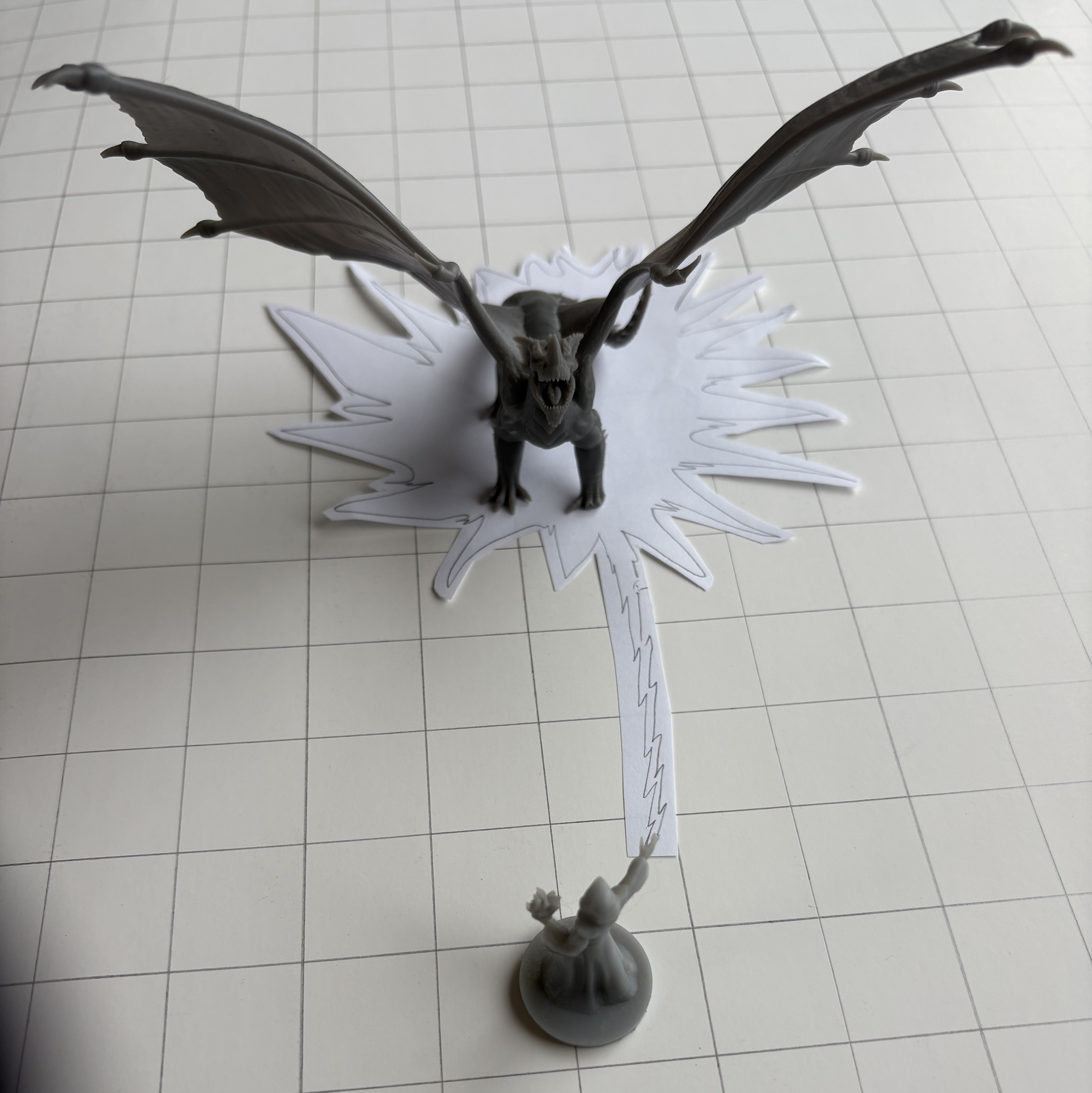
Zmaj will know of the fire giants army, having followed it from far above. He will time his invasion with the goblin invasion and fully expects to conquer whichever enemy he and his forces must face. The soldiers of the fortess he deems an easy challenge, and he does not expect much from the giants goblin hordes. However, what he anticipates would be effortless campaign, instead, proves to be a challenge.
Zmaj destroys the soldiers forces in his first two engagements. But as he penetrates south into the fortress, he is captured by the undead. He is put in chains for nearly one full day, but, then he is rescued by the soldiers he had just defeated, aligned with his own kobold warriors. Zmaj will make a begrudging oath and an uneasy alliance will form between the soldiers and the kobold army.
After, Zmaj and his army are tested again and again, and spend more time defending the lair entrance than making progress in forward attacks. Worse, are the Dragon Hunters, powerful wraiths leading large groups of wights that just might test the dragon's abilities. Zmaj and his kobold soldiers are caught in a war of attrition.
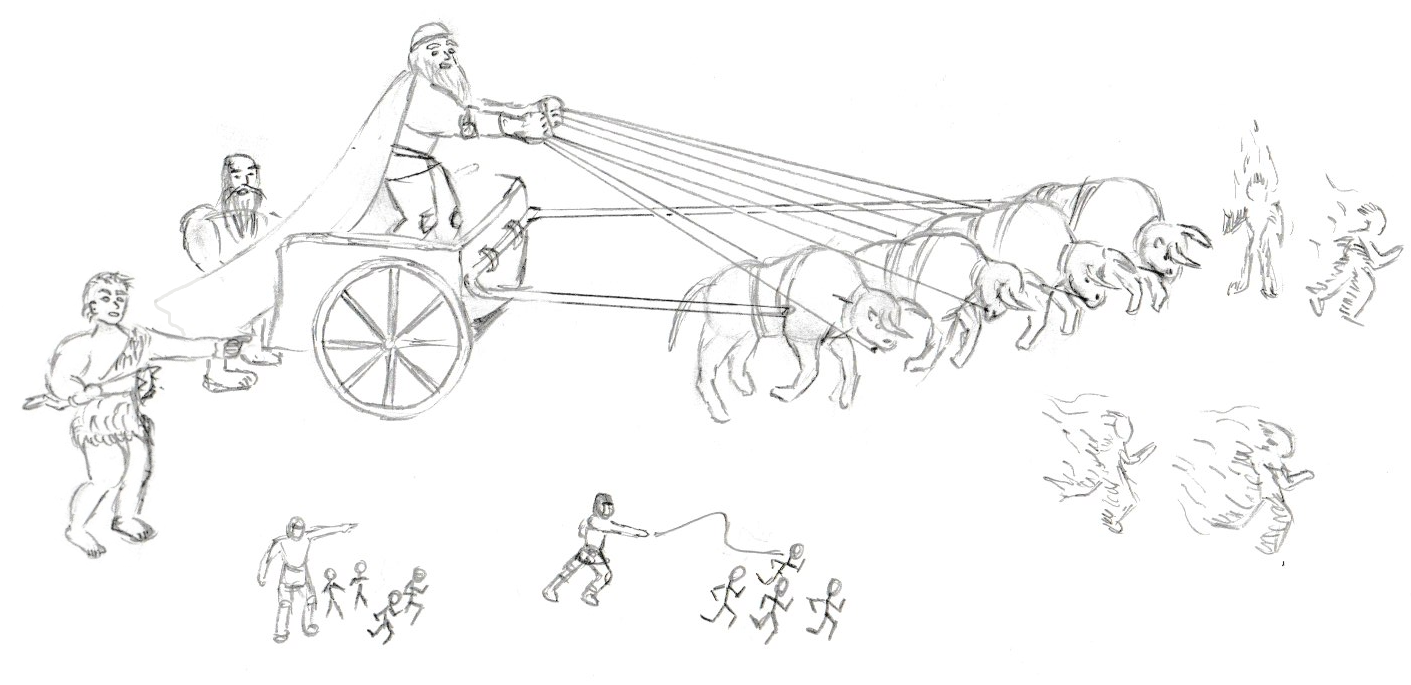
The Fire Giant and two Hill Giants and ten thousand goblinoids (1000 bugbears, 1000 hobgoblins, and 8000 goblins) are overmatched and can never destroy the desert fortress alone. The Fire Giant does not survive, and the Hill Giants are captured. Of the remaining goblinoids, 97% of the bugbears are destroyed, 94% of the hobgoblins are destroyed, and 97% of the goblins are destroyed. These bunches scatter but, if nothing is done about it, they will coalesce into quite a formidable little group.
Khalista the lamia will secretly usurp the battlefield. The Towers fall only because of her machinations, but no one sees her, and only the most astute feel her. If she wanders about, her illusions hide her true form and she will only ever be seen as a lioness prowling in the dark. But she rarely wanders beyond her chosen lair. She will seize Tower 1 and reward it to her servant Shield. She will have her servants take the Library and the Keep, and her lair will be the former while her servants quarter in the latter.
In a previous timeline, Khalista was successful and her undead forces overran the fortress in days. They killed everything making her armies swell even more. The fire giant and his goblins did not survive but that did not matter. The fortress was hers and when the retaliatory strike came she crushed it. The number of her undead overwhelmed the army of the Kingdom of Goldensheild. In a previous timeline, Khalista lives a life of decadence and hedonism and infects the entire desert with fear and loathing. She earns the title "Queen of the Desert".
In this timeline, Khalista's undead forces do not overrun the fortress because a blue dragon has brought an army of kobolds and has seized the Rear Gate. Her undead react but are unable to overwhelm the new threat from the north. Instead, they become embroiled in a war of attrition. In this timeline, the soldiers of the fortress of Kahar are not overrun but, instead, they hold on to the three east towers. These soldiers of Kahar will become the resistance and will wage a war againt Khalista's southern flank.
In both timelines, Khalista is decadent and perverted, she will demand slaves and captives as sacrifices for her necromantic rituals. These rituals occupy her day and night, so she leaves the ruling of her realm in the hands of her capable slaves. Her mastery of Charm, Suggestion, and Geas leave her little fear that any of her servants or slaves would ever rebel against her. She knows of her enemies and how they threaten her, so she bestows tremendous amounts of undead soldiers to aid them in securing her realm. She demands perfection from her commanders and generals and she will quickly kill a high ranking officer the same as a lowly slave sacrifice. To serve Khalista, Queen of the Desert, is not a choice, it is necessity.
Shield is the name of the servant in charge of Khalista's southern realm. Once a magician of rank and power in the echelon of Kahar's Wizard's Brigade, Shield rules from Tower 1 near the volcano, he commands great authority over the evil spirits and undead granted to him, and Shield uses them to lethal effect. He is a capable administer, often interceding when the demands of his Queen became outrageous. But Shield is no weakling or softy, his mercy is the whip and his anger the sword. Shield is the strategist who guides the jackalweres in the highly successful slave trade.
Hollowlife is the name of the servant in charge of Khalista's northern realm. He moves about in the shadows, a black, hooded figure with glowing red eyes, and a long flowing black cloak that cheats the eyes because his feet never seem to touch the floor. Men hide when his presence is felt, they make signs and gestures to ward off evil spirits. They are sure that Hollowlife is a wraith from the Sand Stone Tombs. But the truth is far darker. Hollowlife leads the assault on the dragon's lair, and at night he leads twelve wights, along with four other wights, each leading twelve wights a piece, on the nightly "Dragon Hunt".
Rhael's attacking gang should never have breached the walls of Kahar. The desert fortress was built to withstand armies, monsters, and the fury of the sands themselves.
Yet it falls, not to force, but to betrayal. Khalista the Lamia, weaving her charms through the minds of those within, causes some of the most powerful NPC's, once loyal servants to the Kingdom of Goldenshield, to turn traitor against Kahar.
Four terrifying hauntings and the houses of the noble lords are ruined, left as mere puppets for Khalista to command. One terrible betrayal and the clerics are killed and the Holy Knights are gone. The magicians, seduced by power and wealth find themselves performing deeds of betrayal that will leave all of them plagued by feelings of guilt, sadness, shame, and remorse. Once these events occur, the walls of Kahar are overthrown.
One of the traitor magicians opens an Arcane Gate, allowing both the undead and the goblinoids access to the interior of the fortress.
Some of the traitor magicians attack west and destroy three of the nine towers.
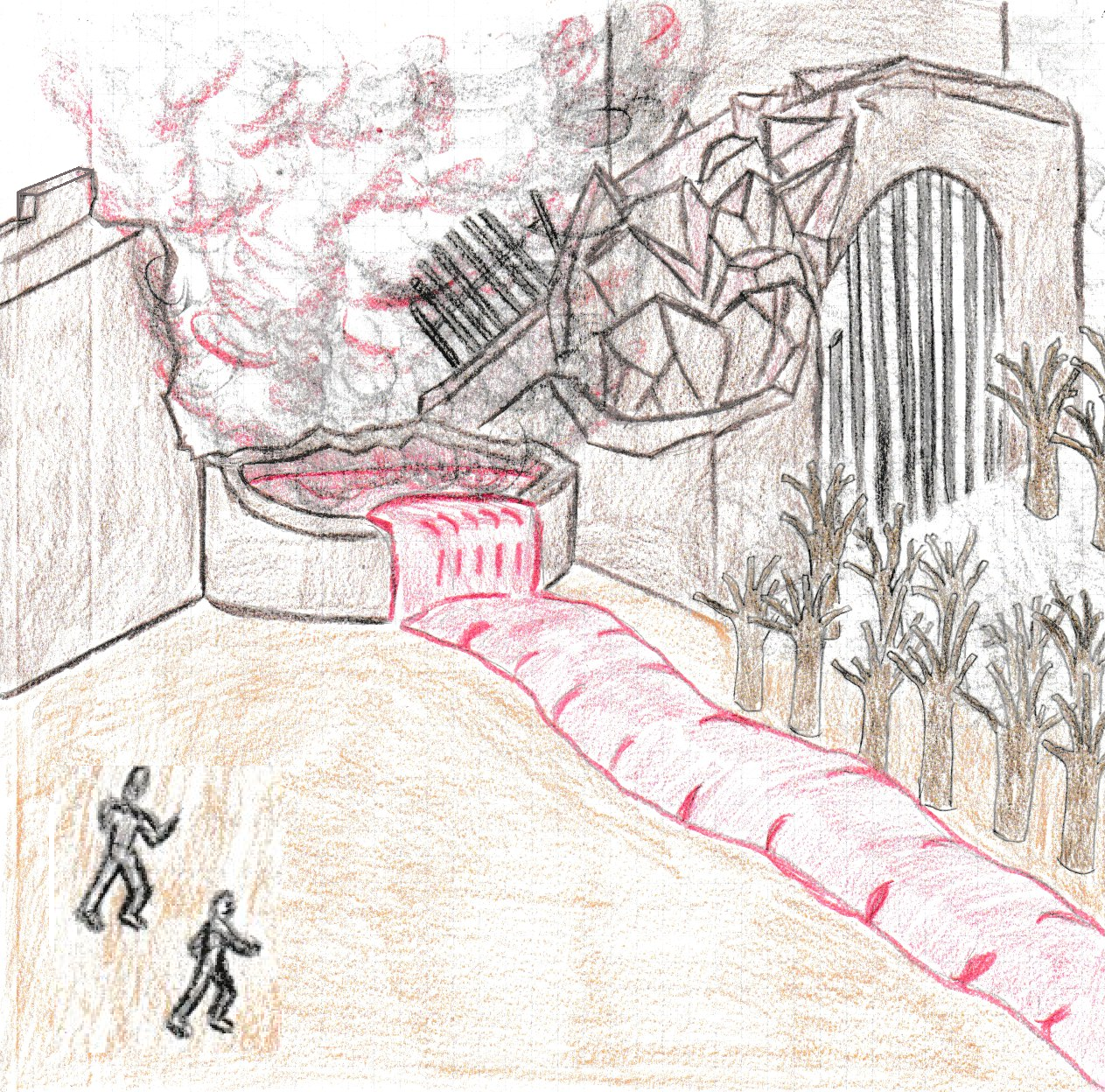
Some of the betrayers, with Khalista's necromantic interference, destroy Tower 9, leaving only a ring of stones where smoke, ash, and fire bubbles out continuously, and a river of lava spills out and runs north, destroying the King's Church, Apperton's Arch, and Moja hamlet as it flows all the way to Surgebuilt Lake.
Some of the traitorous magicians assault Tower 1, however, most of the garrison, though taken by surprise, escapes because of the heroism of a Master Sergeant and an Inquisitor. Tower 1 is abandoned.
Worse still, Khalista the Lamia is a master of raising and commanding the dead. Under her influence, an undead army of untold numbers will form, ready to destroy any who oppose her. She will hold this power in check until the final day of the siege.
She begins her discreet support in the year and a half, when the goblins arrive. With intoxicating touch, charm, and finally a full geas, Khalista bends a hobgoblin commander to her will, and through him, the goblinoid band he commands. Under her orders, they dig a tunnel, 10 feet high by 5 feet wide and over 140 feet long. It runs from trench 3 all that way to a cave 20 feet under Tower 9. Many goblins and hired magicians dig for hours, carving the sapper tunnel and the sapper cave beyond with spell-assisted speed. It is there, in the darkness below the tower, that Khalista's plots will come to fruition. A Gate spell scroll will open doom for Tower 9 and the first workings of her great treachery begin.
When the sun sets on the night of Hot 17th, Khalista servants open an arcane gate to her traitorous allies inside the fortress, allowing her to send undead through the portal. Thus, the first enemies the PCs encounter are goblin zombies and crawling hands.
As the battle progresses, every fallen warrior becomes fuel for her growing undead host. The number of undead, human or goblin, increase without bound. There will be numerous skeletons, zombie, and later wraiths, wights, shadows, and spectres that PCs will need to take great care not to get overrun.
The traitor magicians slip through the Arcane Gate to meet the Lamia, where, she betrays the creator of the Arcane Gate, by binding him with his own red tendril glyphs. She will sieze Tower 1 for her own and command a chosen few traitor magicians to enter the sapper hole, descend down the sapper tunnel, set foot in the sapper cave where they will read a spell scroll that will open a Gate to the Elemental Plane of Fire. A second spell scroll will Reverse Gravity. A third spell scroll is a double betrayal on two of the three magicians.
The last traitor magician's treachery complete, he gathers his porters, enters the fire-realm to hide his crime and retrieves several obsidian orbs for his mistress. They escape the sapper cave just before the lava spills forth and destroys Tower 9.
Lava erupts like a volcano. At the same time, the Fire Giant tears apart the Front Gate House, and in moments a path is carved between Tower 1 and the molten torrent spewing from the ring of stones where Tower 9 once stood.
Kahar is doomed.
Weeks before these events, the Shrine of Lophator sinks slowly into the earth, leaving behind the hollow that will become the entrance to Zmaj's future lair. Khalista will win, her undead armies will dominate everything, there is nothing that can stop this, but ...
Now we come to Thamiar the Guardian Naga, servant of a powerful Androsphinx and architect of a second invasion. Through time-twisting magic, Thamiar travels into the past, ensnares the young blue dragon Zmaj with a binding geas, and returns. Now the timeline has changed. Now a new army will be introduced. The kobolds, though never as numerous as the undead, will be continually reinforced through a magical portal, and they excel in traps, tunnels, and sabotage, which is advantageous against the undead.
At the exact moment the fire giant and goblins assault the southern front, Zmaj and the kobold host descend upon the north. Their attack forces the defenders to split their strength, and the lamia, caught in the one day each year when she must hide herself away, cannot confront this new threat directly. Instead, she awakens an ancient evil and implores him to destroy her enemies. The undead surge northward, colliding with the advancing kobolds in a brutal clash known as the Mummy Lord Battle.
The two invading forces tear each other apart, their mutual destruction buying precious time. In the chaos, the soldiers of Goldenshield retreat to the three surviving towers, where they hold their ground against both enemies and the encroaching doom of Kahar.
Preceding the Mummy Lord Battle, Khalista reacts to the unexpected turn of events. Forced into hiding by the curse in her ethmoid bone and unable to confront the northern threat herself, Khalista awakens Amansara, the mummy lord, in desperation, pleading with him to destroy the dragon Zmaj. Though she fears the price of disturbing such an ancient power, she has no other recourse. The mummy lord rises, not as her servant but as a force unleashed, and succeeds in capturing the blue dragon and incarcerates him in the tombs beneath the northern canyons. With their master imprisoned and their numbers shattered, the kobold host falters. The soldiers of Goldenshield, under the command of the Captain of Tower 5, already defeated twice by the dragon and his forces, form a desperate alliance with those same kobold survivors and the dragon's remaining servants. Together, this unlikely coalition confronts the mummy lord in his lair, setting him ablaze and forcing his heart, brain, eyes, and spleen back into their canopic jars, ending his reign of undeath.
With the mummy lord destroyed and his canopic jars restored, the coalition turns to the imprisoned dragon. Zmaj is freed from the copper chains by the Captain of Tower 5. Twice they had met in combat before and twice Zmaj was victorius. But now his defeated enemy liberates him. Bound by the ancient laws that govern his kind, he acknowledges the courage of those who aided in his unfettering, kobold, soldier, and servant alike. Before taking wing, Zmaj swears a narrow and perilous oath: he will not harm any who stand under the protection of Captain Lorene Grant or her bloodline. The vow is born not of mercy but of pride, for Zmaj revels in having slain her father, the King of the Sand Stone Spires, during their first confrontation, and in having twice defeated Lorene herself within the fortress walls. All others remain fair prey to his hunger, for Zmaj is lawful evil and bound only by the letter of his oath, not its spirit.
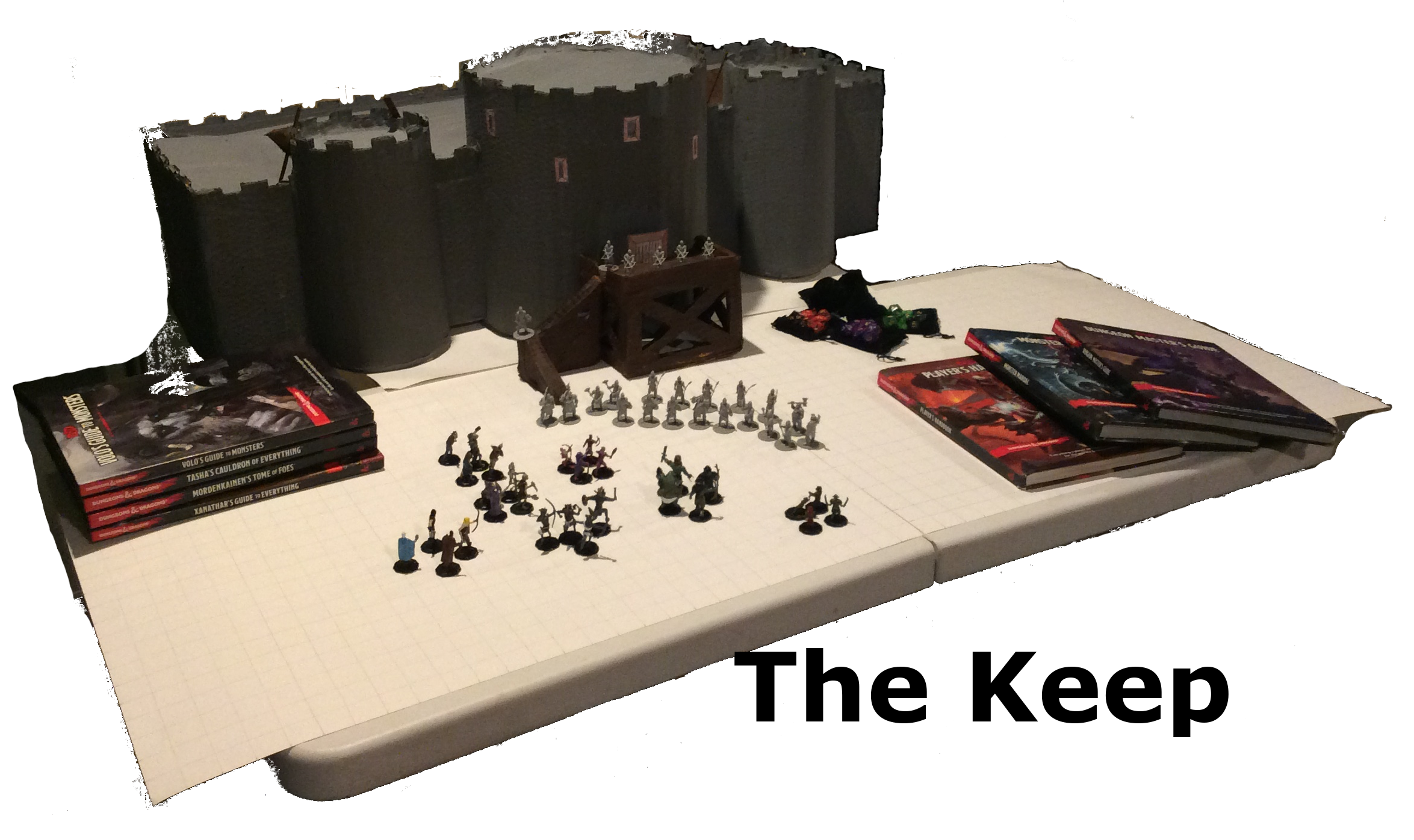
When Khalista emerges from her mandatory convalescence, she finds the fortress fractured but not yet hers. The soldiers of Kahar still hold the library and the Keep, and her jackalweres are battered and bloodied in the brutal fighting that follows. Only after a long and ruthless struggle do her forces finally seize both strongholds, securing the library for her personal use and the Keep for her jackalwere servants.
Less than a mile south she will command Shield to guard her southern flank from Tower 1. To the north she will send Hollowlife to take up the war against the dragon.
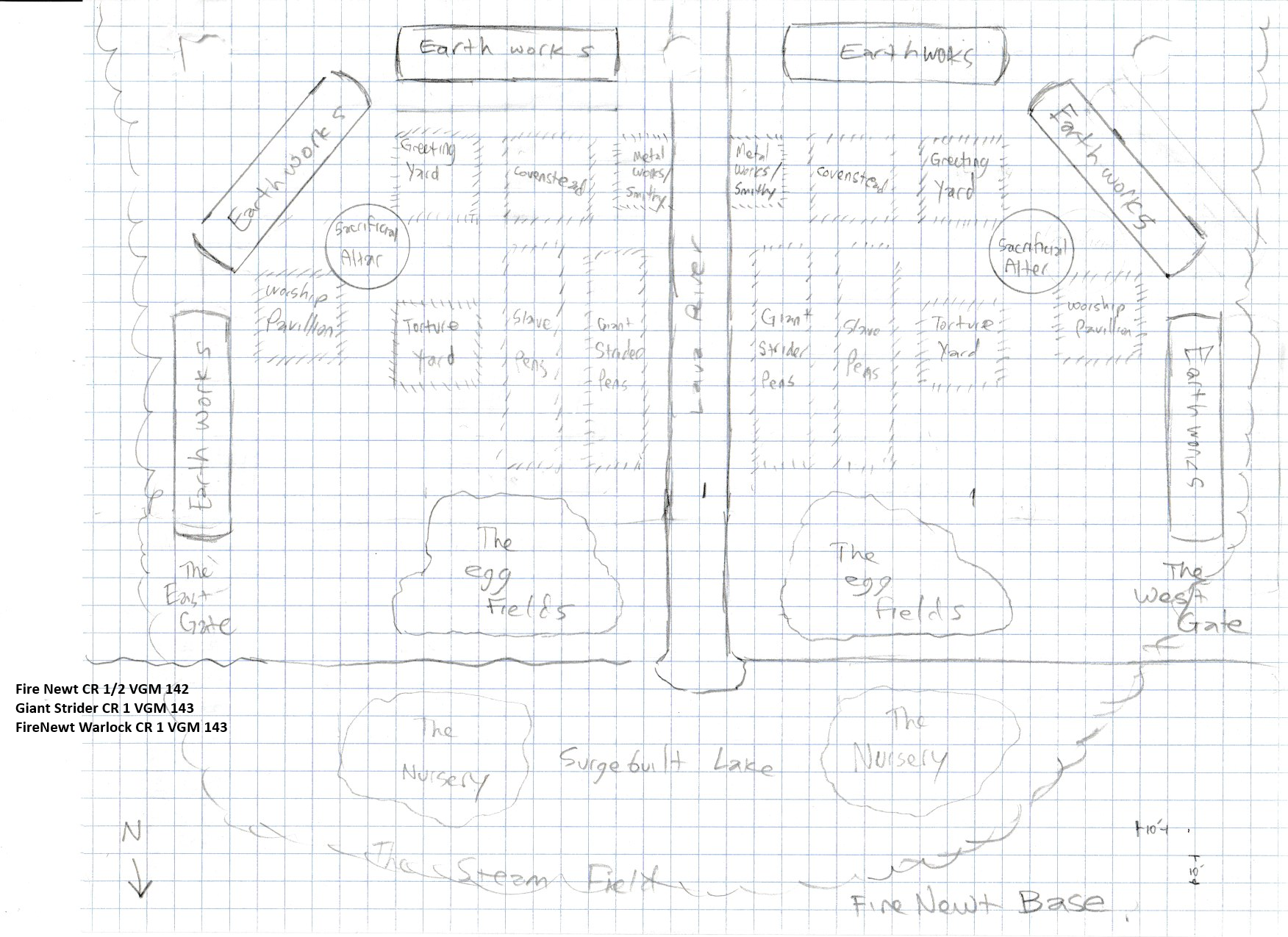
With her foothold established, Khalista turns to reshaping the land itself. Her servants carry fire snake eggs to the lake of lava that now pools where Apperton's Arch once stood. There, using her modified haste spell, she infects the molten basin with fire snakes and salamanders, transforming the ruin into a breeding ground of heat and hunger. Continuing north, where the river of lava meets Surgebuilt Lake in a towering cloud of steam and smoke, she grants sanctuary to a displaced tribe of fire newts, binding them to her service.
Returning south to the eastern hills, Khalista spreads further corruption. Her magic triggers an outbreak of a deadly, burrowing family of kruthik, whose tunnels soon riddle the slopes. East and south of these new warrens, she plants the root of a Gulthias tree, its corruptive influence warping the desert flora, twisting cacti into spined sentinels, warping Joshua trees into grasping silhouettes, and seeding the land with a slow, creeping blight that will outlast her by centuries.
Elsewhere in the fortress, the three Barracks are taken by the traitor magicians. Though a few have fled Khalista, pride keeps them from repenting their betrayal of the Kingdom of Goldensheild. Soon they will claim the Pillars of Janae and entomb themselves within a magical Labyrinth.
Four of the nine hamlets become boarded‑up places of haunted nightmares, overrun by the undead servants of the Lamia. Much of the land between them fills with conflict, death, and the other terrors of war. The western towers lie broken and destroyed, the Rear Gate has been seized by the kobold army led by the blue dragon Zmaj, Tower 9 has become a lava‑spewing ring of stones, and Tower 1 has fallen into a terrible, frightening darkness that traps all who stray between its shadow and the unbearable heat pouring from Tower 9.
Only in the eastern reaches of the fortress have soldiers of the Kingdom of Goldensheild endured. The last three standing towers, Tower 6, Tower 7, and Tower 8, hold their ground, while Tower 2 flickers between ruin and restoration as its captain's strange curse binds the tower to his own life. Tower 3 and Tower 4 lie shattered by devastating spells of earth and upheaval, yet the great walls between them remain largely intact. The surviving soldiers have become resistance fighters against the Lamia's invasion and the kobold forces pressing down from the north. Leadership now falls to the captains of Tower 6, Tower 7, and Tower 8, though the captain of Tower 5 urges them toward an uneasy alliance with the blue dragon Zmaj, whom she rescued, and who has sworn never to harm her or those under her protection. These leaders will seek out the PCs, or send their knights and trusted servants, to assign missions, safeguard the weak, and guide the defense of what remains.
Now it falls to the PCs and the DM to decide the fate of the fortress. Will the undead legions of the Lamia overwhelm all that remains, or will the defenders rally under Captain Lorene Grant and forge an uneasy alliance with the blue dragon Zmaj to hold back the greater darkness? Should the PCs choose the path of resistance, they will stand beside the surviving captains and their soldiers, working to outmaneuver the Lamia's forces until aid can arrive from the wider Kingdom. Thamiar the Guardian Naga remains hidden, watching from the shadows, while the ancient Lords of Kahar live on only in legend.
The Lamia and the Naga is a horror story. Set in a vast empty desert, the adventure spans the events leading up to, during, and after a battle fueled by religious fervor and spiritual hatred,a conflict known as The Dark Crusades, a divine war she uses as cover to spread corruption, madness, and death.
Before, during, and after the battle, Khalista the Lamia sets in motion a web of plots to claim the coveted fortress of Kahar. Sent by a dark deity, trained as a necromancer, and empowered to command limitless undead, she arrives on the eve of the 6th Dark Crusade. She witnesses the death of Frelot the fire giant and a second fire giant she will not recognize for another thirty-two years. She watches Frelot's two hill giants get slaughtered, sees a goblinoid horde routed, marks the heroes responsible (the Ecclesiastic Brigade), and retreats into the desert until the next Dark Crusade.
During her thirty-two year exile, Khalista observes Kahar with magic countless times. She learns that more than a thousand caravans cross the King's Road each year, converging on Kahar, a religious and banking center of the desert. She knows that control of the fortress means unimaginable wealth.
She learns about the Ecclesiastic Brigade. The five clerics, under Kyrakis Braek, who lead the twelve paladin, the Juggernauts, and that these are the fortresses indomitable primary defense. She learns about the Wizard's Brigade. That it is composed of magic users, led by Lallenlos Kisherite, the Archmage, that they are the formidable second line of defense. She will remove these brigades one by one.
She infiltrates Kahar with scouts, agents, and spies. She develops a master plan of three strategies and two tactics, all designed to plunge the land into turmoil and confuse its people until her forces can seize control.
Khalista's first strategy is treachery, but not the simple kind. She magically dominates four high nobles inside Kahar and uses them as instruments of murder, fear, and political ruin. Over decades she learns the walls and towers are impenetrable by magic or siege. If she cannot break the stone, she will break the people who guard it.
Her servants infiltrate the household staff of the nobles, and Khalista exploits this ruthlessly. She sends ghosts and the newly dead to torment them, driving wedges between families and unraveling their sanity. One by one, the nobles are brought before her. A single touch binds them to her will, to act, or to refrain from acting, and soon the nobles become her agents within the fortress.
Through these nobles she orchestrates the quiet purge of Kahar's clerics. They are discredited, arrested without cause, and secretly put to death. Without the clerics, the paladin order known as the Juggernauts becomes vulnerable. The nobles manipulate them into slaughtering an innocent goblin village, believing it a war camp. The Juggernauts fall easily, their faith shattered, their oaths broken. They never return.
With the clerics slain and the paladin gone, Khalista turns her attention to the magicians. She dominates them as well, twisting their minds with dark secrets and necromantic nightmares until they willingly turn traitor. Hundreds of spell scrolls and potions are created, some to weaken the walls and towers, others for far darker purposes.
The greatest sin of the magicians comes last: the plan for the sapper hole and the gate to the Elemental Plane of Fire. Conceived by Nuro under Khalista's influence, this act alone ensures that when the Fire Giant's army arrives, Kahar's defenses will finally break.
This is the rot that hollows Kahar long before the first blow of the Dark Crusades is struck.
Khalista's second strategy is necromantic devastation. She raises the dead, corrupting the land with fresh corpses, body parts, and rotting undead that wander the desolation. Skeletons, zombies, and shadows attack humanoids on sight. Ghouls, spectres, and ghasts haunt chosen areas. Mummies, wights, and ghosts are assigned specific tasks.
In the weeks before the attacks, Khalista sends lesser spirits to weaken the people of Kahar. Restless dead slip through alleyways and temples, whispering in dreams, draining resolve, and sowing fear. These early hauntings are subtle enough to be dismissed as bad omens, yet dangerous enough to claim the unwary. They are the first signs of the necromantic tide she is preparing to unleash.
Some of the most terrifying undead are not her creations at all, but spirits of the fallen, draugr and revenants that hunt traitors or haunt battlefields. Her plan is to overwhelm Kahar with ever-growing numbers of undead. This strategy collapses and mutates quickly.
Her third strategy is botanical corruption. Khalista brings a cutting of the Gulthias Tree and plants it in the east. From it spring new horrors: cholla blights with barbed spines, barrel cactus blights whose thorns pierce leather and chainmail, and the monstrous Joshua Tree blight, a twisted mockery of a treant.
Guided by Khalista's will, the corrupted magicians descend into the sapper cave with two forbidden scrolls. There they open a gate to the Elemental Plane of Fire, reverse the flow of molten stone, and melt Tower 9 from its foundations until it becomes a newborn volcano.
The eruption never ends. Lava and fire pour endlessly from the planar gate, driven upward by reverse gravity until all that remains of Tower 9 is a molten ring of stones. From this wound in the earth, a constant fountain of smoke, ash, dust, and burning coals rises a hundred feet into the air, forming a mile-wide blanket of darkness despite the prevailing winds. Those same winds carry the burning coals twelve hundred feet to the southwest, where they crash to the ground and create an impassable field of smoldering debris beyond the battlegrounds.
Khalista returns to the ruins of Tower 9. Finding the gate and the sapper cave intact, she summons magmin to guard the area. Above the cave, a ring of stones bubbles with molten rock. A river of lava flows north, but follows the arch of the road and ends up destroying the King's Church, burning through the interior wall, continuing on the arch until it returns to the north, flows through and ruins Apperton's Arch, flows through and ruins Moja hamlet, flows north into the hills until it finally plunges into Surgebuilt Lake with a hissing steam.
From this inferno and her necromancy, creatures of fire are born. From obsidian stones and her modified haste spell she spawns fire snakes. Doubling the spell, she creates salamanders and arms them for war. These creatures spread along the lava river, forming the first line of defense for her growing realm.
In the Chariot Pit, she left the fire giant's chariot, still guarded by four fire gorgans, bull shaped creatures of fire and poison, six fire elementals, these were Rhael's personal body guard he left behind, and the twelve hell hounds that were his personal pack.
Where the lava river plunges into Surgebuilt Lake, the clash of fire and water creates a vast cloud of steam and boiling mist. Khalista claims this place as her own and installs a displaced tribe of fire newts who thrive in the scalding vapors. She secures the area, arms the tribe for war, and binds them to her growing domain.
The fire newts establish tunnels, steam vents, and hidden forges along the lakeshore, forming a deadly perimeter that guards the northern approach to the lava river. Their presence ensures that no one can reach Khalista's domain without passing through a gauntlet of heat, steam, and spear‑wielding zealots.
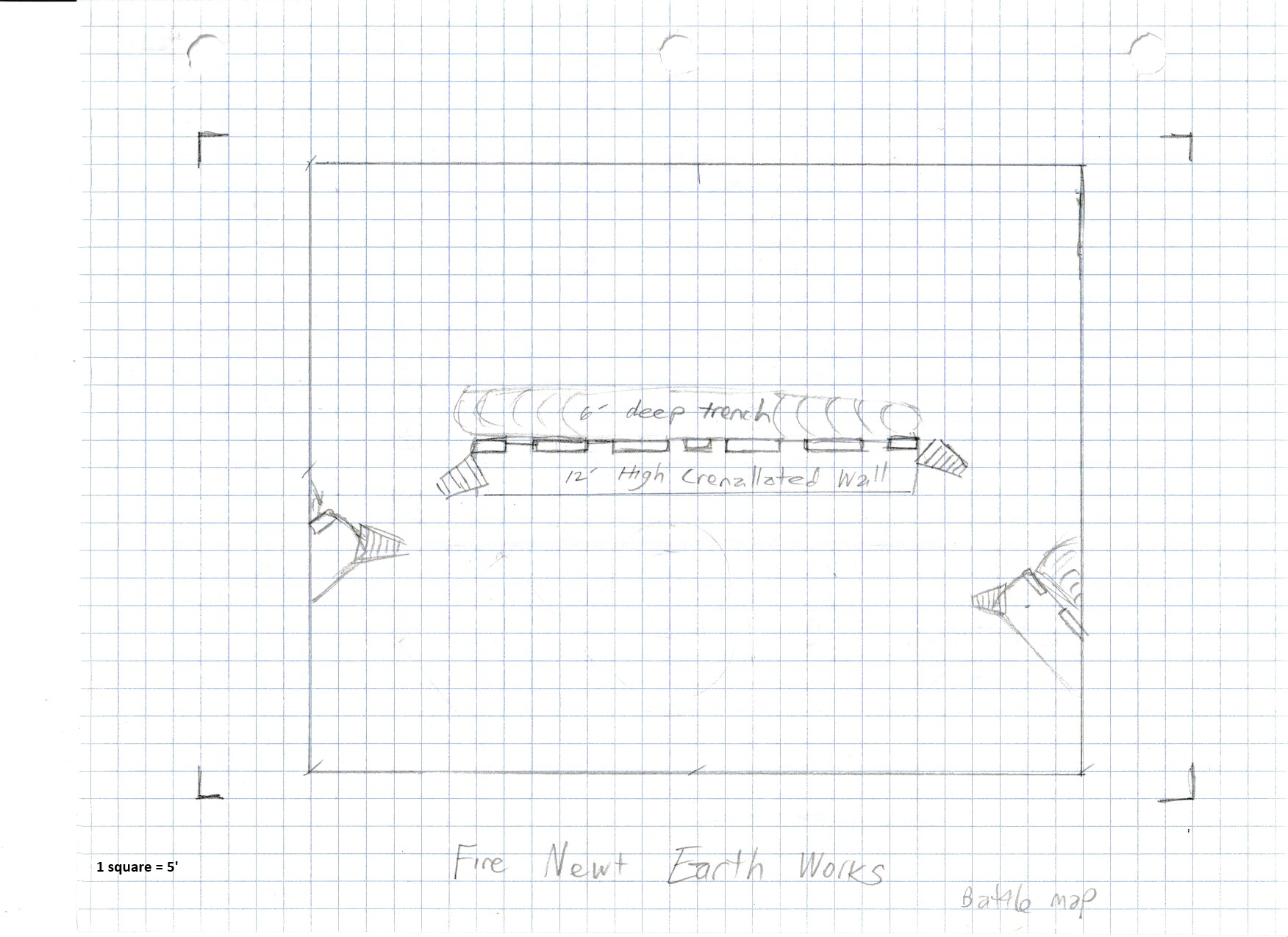
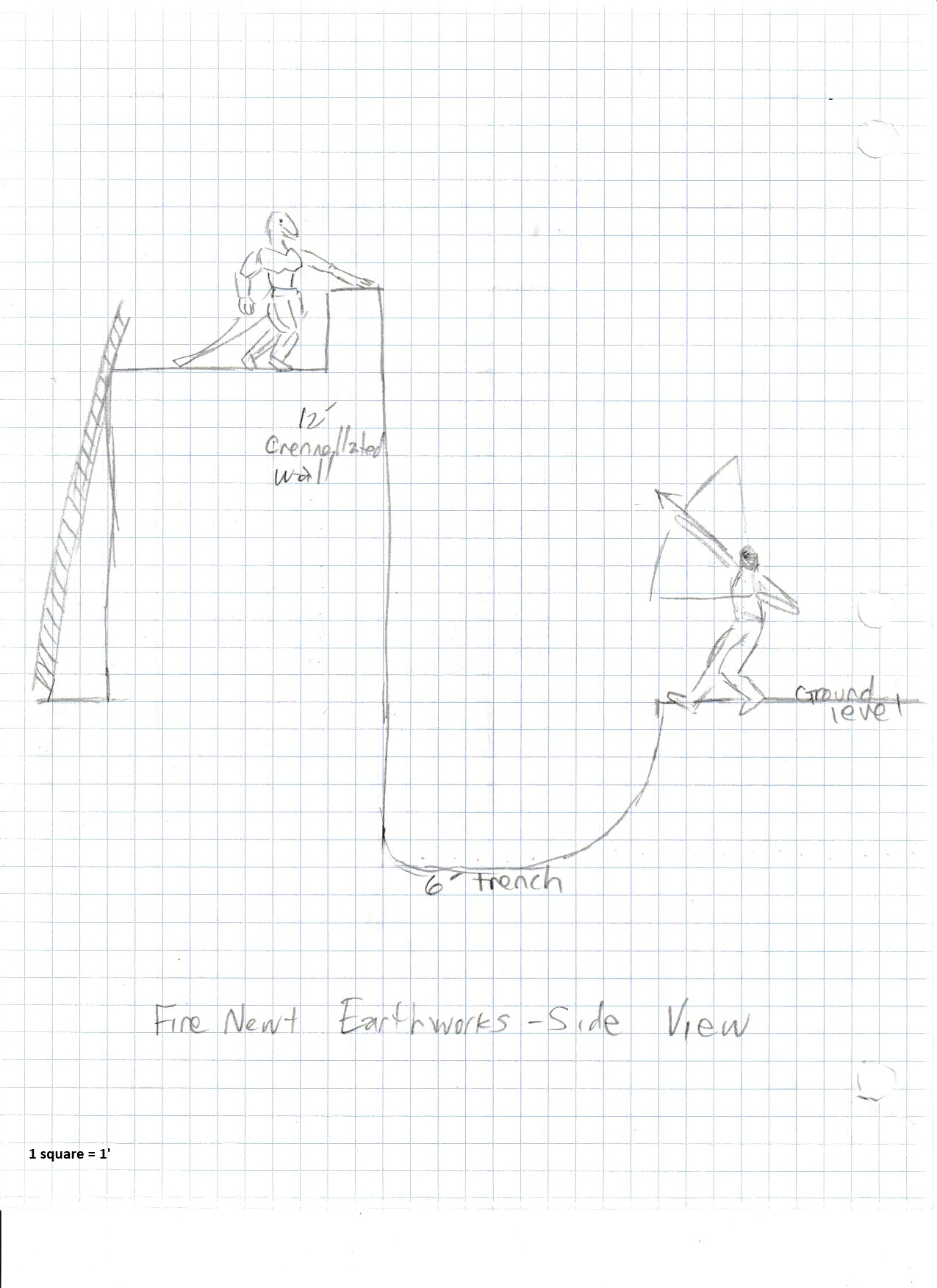
For thirteen long months the partial siege endures. Goblins, hobgoblins, bugbears, ogres, giants, and mercenaries of every stripe build earthworks, trenches, mounds, and fortifications, all while fending off sorties and raids. On the last night, on sunset of Hot the 17th, amid the clash of steel and the roar of war cries, the recently fallen begin to rise, first as stumbling corpses, then as relentless zombies and skeletons driven only to destroy the defenders of Kahar.
The living armies are caught off guard. Goblinoids and giants alike watch their own companions rise as undead, only to realize the truth: the dead do not seek them. The undead turn only toward the men of the fortress, ignoring the invaders entirely. Even so, the sight of their fallen comrades clawing back to life shakes the invading ranks to their core.
Throughout the eighteen hours of darkness, spirits drift through the chaos, terrifying mortals with whispers and visions, while ghouls and ghasts devour the unclaimed dead. Before dawn, Khalista recieves grim news and dares the unthinkable: she will raise a mummy lord. This unspeakable evil rushes north to confront an unexpected menace, undead armies following in his wake.
When the 7th Dark Crusades finally ends, the invaders lie broken. The fire giant is slain in the past, the hill giants captured, the goblinoids scattered, and the mercenaries driven back into the wastes. The defenders of the fortress fall back to the surviving three towers. Across the land, untold numbers of dead begin to rise, yet most surge northward to meet the sudden menace gathering there. No one knows the hand behind the undead rising. Only rumors drift across the dunes, whispers of a hidden menace, a lioness who walks the night. They call her the Queen of the Desert, though few dare speak the name aloud.
This adventure is designed for a party of four to six adventurers from levels 1 - 20. A balanced party is helpful due to the variety of challenges. A solid understanding of encounter balance is useful because of the sheer number of monsters available.
This adventure assumes access to the Dungeon Master's Guide, Player's Handbook, and Monster Manual. Additional material from Mordenkainen's Tome of Foes and Xanathar's Guide to Everything can be helpful but is not required. When in doubt, make it up.
Khalista herself rarely appears in the campaign. Her presence is felt through her servants, her undead, and the consequences of her long-laid plans. Let her influence be subtle, indirect, and unsettling. Her agents should deceive, mislead, and manipulate whenever possible, giving the players the sense that a hidden intelligence is always watching.
Most encounters in this campaign are not isolated fights but pieces of a larger tapestry. The undead rise because of choices made elsewhere. The nobles fall because of pressures the players may never fully see. The land itself changes as the campaign progresses. Encourage your players to investigate, question, and connect the dots, even when the answers are incomplete or unsettling.
Above all, embrace the horror. This is a story of corruption, spiritual decay, and a villain who thrives in the cracks between truth and rumor. Let the world feel ancient, haunted, and slightly wrong. Let victories feel costly. Let mysteries linger. And when the time finally comes for the players to confront the Queen of the Desert, make sure they understand that she has been watching them since the very beginning.
The PCs may never realize they are up against a lamia and an army of jackalweres. To them, this is simply the Seventh Dark Crusades: a massive assault led by Rhael the Fire Giant, supported by two Hill Giants, ten thousand goblinoids, and scores of mercenaries marching to destroy the fortress of Kahar.
The soldiers of Goldenshield expect victory. They have defeated crusades before, and they believe they will do so again before dawn. Very few understand that a hidden enemy moves among the attackers, a secret foe shrouded in illusion and camouflage.
Khalista the Lamia stalks the battlefield unseen, using magic to disguise herself and blend among the goblinoids. Only the jackalweres betray her presence, prowling in jackal form so that witnesses assume scavengers have arrived early to the slaughter.
Khalista is far from idle. She coerces unwilling foes, burns infernos to create fire slaves, raises undead in countless numbers, harvests plant-like horrors, and hunts for artifacts of great value. She twists the nature of battle into fear, treachery, and necromantic terror. Her victory would have been absolute if not for the machinations of Thamiar the Guardian Naga.
At the northern Rear Gate, a young blue dragon launches his own assault, sending kobold minions to stake a claim on the fortress. His arrival disrupts Khalista's plans completely. In response, she acts with ruthless speed, sacrificing her own power to awaken the ancient evil sealed within four canopic jars.
This leads directly to the Mummy Lord Battle, a vicious night of death and destruction as kobolds, the dragon, and his druid ally struggle to survive the onslaught of the awakened dead.
The PCs may side with the enemy, act as independents, or, most likely, join the defenders of Kahar. The fortress is filled with soldiers, priests, magicians, and warriors who have spent two months preparing for war. Every person, including the PCs, is assigned duties: fire control, supply runs, evacuating the wounded, communication relays, and more. Wagons, mules, horses, and even camels are pressed into service.
At any moment, something terrible may reach out from the darkness, undead, spirits, goblins firing arrows from unseen positions. The night becomes the scariest night of their lives.
| The War | The Queen of the Desert | The Coming of Zmaj Pustinjski |
|---|---|---|
The 7th Dark Crusades
The 7th Dark CrusadesThe Fire Giant Rhael, with his two faithful Hill Giants, Rulos and Eclith, leads a vast horde of goblinoids to attack Kahar, the desert fortress of the Kingdom of Goldenshield. The crusade ends in utter defeat for the Fire Giant, yet the victory is hollow. Though the Dark Crusades fail, the fortress is broken, and in the chaos a hidden lamia begins to infest the land with evil that will spread long after the battle is won. |
The Fallen Siege Tower
The Fallen Siege TowerAs goblins attack, a goblinoid siege tower is shattered by trebuchet fire and collapses 300 feet before Tower 9. Khalista, disguised in lioness form through major image, hides behind the fallen tower with her jackalweres. There she is discovered by the raven familiar of the traitor magicians. Using pulsing red tendril glyphs, the traitor magician Atorn opens an Arcane Gate, one end inside the fortress, the other at the base of the fallen siege tower, creating a secret bridge between Khalista and her hidden allies. |
The Taking of the Rear Gate
The Taking of the Rear GateOn the afternoon of Hot 6, a young blue dragon lands upon the sandstone spires of the Shrine of Lophator and declares his intention to rule. The King of the Sand Stone Spires rides out with his knights to challenge him, but all are slain. The dragon vows to return in two weeks. On the night of Hot 18, as the Fire Giant attacks the South Gate, the dragon returns with kobolds and mercenaries. The Shrine of Lophator has sunk into the earth, leaving only a yawning pit, the new front entrance to the dragon's lair. At the Rear Gate, the dragon overwhelms Lieutenant Grant and the garrison, blasting a massive hole through the west building and claiming the fortress's rear entrance as the lair's second mouth. |
The Fall of the Front Gate
The Fall of the Front GateThe goblinoid siege towers strike in force: Tork is hurled back from Tower 9 and burned, Ooka latches onto Tower 1 and remains fused to it forever, and Edgit is toppled 300 feet before Tower 9, becoming the cover Khalista uses to slip into the fortress through an Arcane Gate. When the Gate opens, undead, goblinoids, and mercenaries pour inside, forcing the defenders to abandon Tower 9 and the Front Gate House. At the same time, traitor magicians enact the second great treachery: in the sapper cave, Azabine reads Gate, Nuro unleashes Reverse Gravity, and Oztirix betrays them both with Imprisonment. The magic tears the earth apart, Tower 9 erupts like a newborn volcano, the Gate House burns, and the enemy floods into Kahar. |
The Volcano at Tower 9
The Volcano at Tower 9The collapse of Tower 9 results from the catastrophic magic unleashed by the traitor magicians: Azabine’s Gate and Nuro’s Reverse Gravity. Both spells continue to endure while the casters remain imprisoned within a diamond, causing elemental upheaval, lava flow, and lasting ruin across the land. |
The Sand Pits
The Sand PitsKobolds trap two Goldenshield warriors on the second floor of the east building of the Rear Gate. If the PCs respond to the distress call, they arrive just in time to witness the kobolds digging out and completing the Prison Sand Pits, the first tunnels that will soon become the rear entrance to the dragon's lair. |
The River of Lava
The River Of LavaThe River of Lava, whose source lies in the sapper cave deep below the ring of stones that was once Tower 9, manifests from the enduring magic of the traitor magicians. As long as Azabine's Gate to the Sea of Fire remains open and Nuro's Reverse Gravity persists, molten fire falls upward into the ruins of Tower 9, piling into a growing volcanic mass that spills north toward the lake. The flow will continue until the Gate is closed or the Reverse Gravity is dispelled. |
Retreat to Tower 1
Retreat to Tower 1Khalista retreats to Tower 1 because of the ethmoid bone of Prysm, the God-King Necromancer,lodged deep within her skull. The bone grants her immense necromantic power and absolute control over the undead, but if she fails to remove it for a full day once each month, it will burst through her skull and kill her. She keeps the shattered skull of Prysm's previous servant as a reminder. Khalista hides in Tower 1, painfully draws the bone out, and endures the required 36 hours to survive the ritual. |
The Razing of the West Building
The Razing of the West BuildingThe West Building of the Rear Gate is utterly destroyed when the young blue dragon tears through its roof, carving a dragon‑sized hole straight down through all three floors and into the vast cavern beneath. Nearly everything inside is obliterated; only the outer shell and fragments of interior walls remain. Many royal and military artifacts lie buried in the rubble or scattered into the new cavern below. Captain Grant offers generous funding to any adventurers brave enough to enter the ruins and recover what they can, though doing so means stepping into the newly formed rear entrance of the dragon's lair. |
The Defense of the Keep
The Defense of the KeepThirty-two years after the 6th Dark Crusade was crushed outside the walls, the Marquis and the Paladin King depart, leaving the Keep in standby mode with only a skeletal cleaning crew and the remnants of the Front Gate platoon under Captain Chen. Mtumbshi Village, once five thousand strong, has dwindled to less than half its size. When the jackalweres strike during the 7th Dark Crusade to seize the King's Library and the Keep, they face only this reduced force, yet the soldiers fight them for every inch of ground. The jackalweres take no casualties, withdrawing whenever they reach half their strength, but the defenders make them pay dearly in time and effort. Meanwhile, goblins swarm into the depths of the fortress and undead rise throughout the halls, forcing the tiny garrison to battle on multiple fronts at once. |
The Fire Snake Eggs
The Fire Snake EggsBefore the traitor magicians descend into the sapper cave, Khalista tricks the PCs to aid in a dangerous planar task. They must carry a stone ritual table into the Sea of Fire, set it upon the Basalt and Granite Island, place the diamond that will later imprison Azabine and Nuro, and seize several obsidian stones before Azers or salamanders discover them. These stones, cooled fragments of the Sea of Fire itself, will become the “Fire Snake Eggs” Khalista later plants in the River of Lava to raise salamanders. |
The Key to the Museum
The Key to the MuseumWith the Rear Gate overrun, kobolds strip the west and east buildings of nearly all supplies. Only the second floor of the east building remains in human hands, where two trapped Goldenshield soldiers refuse to surrender the only key to the Museum, a vault of relics vital to the Kingdom's history. If the PCs choose to answer their distress call and rescue them, the Museum and its treasures may yet be saved. |
The Ruining of Apperton's Arch
The Ruining of Apperton's ArchThe River of Lava flows north from the ruins of Tower 9, following the curve of the great road until it reaches Apperton's Arch. The ancient stone cannot withstand the molten tide; the arch melts and collapses into the river, its form lost forever. Beside the arch stands the twin desert-willow copse, the mirror of the one behind the Front Gate. When Tower 9 erupts and the Front Gate copse burns, this one freezes solid. Even as the lava river passes within arm's reach, the grove remains encased in ice. The dryads trapped within do not become creatures of fire like their sisters, but twist into malevolent spirits of frost. They cannot be freed until the Pillars of Janae are restored. |
The Kruthik Eggs
The Kruthik EggsSix grey eggs, preserved by Khalista in a sacred chest, are planted in the ground deep in The Lush hills. Using her modified haste spell, she causes them to both hatch and grow far quicker than normal. She retreats south and lets the family of kruthiks hunt the entire area. |
A Crooked Path to the Rear Gate
A Crooked Path to the Rear GateOnce the Shrine of Lophator, the site is now a vast shaft ringed by four sandstone spires. Its mirror‑black walls hide cimics that stalk reflections, while ornate lightning sentinels strike intruders in straight, draconic lines. Below, an umber hulk tunnel twists into the kobold forge, where steam and lightning fuel their war‑work. Two flooded chambers hold bound lightning elementals, and the final passages to Zmaj’s sanctum are concealed by powerful magic. |
The Battle at Palm Tree Lane
The Battle At Palm Tree LaneFleeing the ruin of Apperton's Arch, survivors from the Front Gate, Tower 2, and Tower 3 regroup among the endless rows of palm trees and their ancient fountains. Lava pools behind them, undead press from all sides, and Captain Belinda Moran orders Lt. Reese to lead the remaining platoons east. She and a single platoon hold the rear against hundreds of enemies in a doomed last stand, buying the time needed for the survivors to reach the eastern towers. |
The Fire Newts
The Fire NewtsDefeated by a stronger tribe, Packnet Toterouch leads his fire newts east along The King's Road. Desperate for moist heat, they discover the boiling waters where the river of lava plunges into Surgebuilt Lake, territory guarded by Khalista's servants. Shield, acting in the Queen's name, accepts their surrender and grants them The Lush Valley as a new home, on the condition that they rotect the region and patrol lake, admitting merchants but attacking all military patrols. |
The Haunted Hole
The Haunted HoleThe entrance to Zmaj's lair is a deep, mirror-walled shaft now besieged day and night by undead. Ghosts, shadows, and spectres drift above the rim, while scores of zombies and skeletons, goblins, hobgoblins, kobolds, and humans alike, hurl themselves into the defenses. Kobold traps and lightning devices struggle to keep pace as the dead swarm endlessly toward the darkness below, giving the lair's mouth its grim name. |
The Defeat of the Giants
The Defeat of the GiantsWhen Tower 9 erupted, Rhael pursued the fleeing humans east beside the newborn river of lava, intent on crushing their retreat. Near Apperton's Arch he was confronted by Thamiar, the guardian naga, who wielded an ancient relic to cast him back in time to the 6th Dark Crusade, where he would perish in a war far removed from his own. Sent north by Rhael before Tower 9 erupted, the two hill giants reached Tower 4 just as the traitor magicians cast it down. A loyal magician, risking his life, placed fragile clematis necklaces upon them, dulling their strength and minds to spare them from the slaughter. Trapped in the shattered upper levels, the giants linger on, fed and tended by nearby ogres too simple to realize that breaking the necklaces would free their kin. |
The Planting of the Gulthias Tree
The Planting of the Gulthias TreeJust south of the bend at North Ridge Road, Khalista has her servants plant a cutting of the Gulthias Tree. Empowered by her modified haste spell, it takes little time before blights infest the region. Needle, twig, and vine blights roam alongside desert horrors such as cholla blights, barrel cactus blights, and the terrible walking Joshua Trees. |
The Silver Plated Spears
The Silver Plated SpearsAfter hearing of Captain Chen's death and the disappearance of his patrol, Zmaj seeks the magic silver spears they carried. Chen had suspected the fire giant was not the true enemy, but whatever he found in the desert overwhelmed him and his men. Zmaj now wants the silver weapons recovered, and will pay far more than their worth if the PCs bring them to him first. |
Sir Sewale Galante served as one of the four civilian administrators of Moja, the administrative center of the fortress. He not only served here but he was also the Lord of the Manor for Moja hamlet, overseeing affairs and dispensing decrees. He was a retired warrior, still donning the armor he war in the countless battles of his youth. Demanding discipline at all times, he conducted his affairs much like a general at war. But he was also a doting father, carrying trinkets and sweets in his pockets to surprise his young son. Happy was the life of Sir Galante.
His downfall began with his simple nightly routine. His seven year old son waiting for his father to check the room to ensure it was safe to sleep. An eerie grin on his son unnerved him. His son's strange attitude gave him the shivers. Something different in the boy's voice, "Daddy, make sure there are no monsters.", made the hair on the back of his neck rise.
Sir Galante shrugged it off and began the routine, checking the hiding spots, one by one, only to find his son! "Daddy, there's a monster in my bed!" Too late. The monster set upon Sir Galante. Galante was seriously wounded. The monster attacked the boy. The boy died instantly, torn to pieces. That was how they were found, in the room, one wounded, one murdered, just like that.
Three nights later, Sir Galante found his dead son sitting at the kitchen table. The child did not blink. He did not breathe. He hummed a lullaby Sir Galante had sung only once, years ago, but hummed it wrong, off-key, off-rhythm, like a memory wearing a body. When Sir Galante asked what happened, the boy whispered: “You should have saved me.” From that night on, the child appeared in doorways, hallways, beside Sir Galante's bed. Always watching. Always silent. Always wrong.
Khalista did not need to charm him. She did not need to geas him. She only needed to let the guilt rot him from the inside. By the time she whispered her suggestions into his dreams, he was already hers: "Kill the clerics, get rid of the paladin."
Dame Vera Friday was one of the four civilian administrators of Moja Hamlet, the administrative center of Kahar Fortress. She not only served here but also was the Lady of the Manor for Mtumbshi village, where she ruled with fairness, dignity, and a deep sense of duty. Her household staff adored her. Her people trusted her. Her presence alone could calm disputes. Khalista shattered her in a single moment.
One morning, as Vera gave instructions to her staff, every one of them collapsed at the same instant. No screams. No convulsions. Just bodies hitting the floor like puppets with their strings cut. Vera ran for help, frantic and shaking. When she returned with guards, her staff was already standing. Standing completely still. Not blinking. Not breathing. Not one of them moved until confronted. Then they answered in single words, with unnatural pauses, and jerky, awkward movements. The guards were creeped out. They left. Vera did not sleep that night.
From then on, her staff moved too quietly. They smiled at the wrong times. They stood upside down on the ceiling. They crawled across the floor quicker than rodents. One night, she woke to find her chamber maid brushing her hair with cold hands. The maid whispered: “You mustn't leave us, my lady. We're all you have left.” Vera broke long before Khalista ever touched her mind. But after, one thought plays over and over, again and again through the madness that consumed her: "Kill the clerics, get rid of the paladin."
Lord Amadeo Gianni was one of the four civilian administrators of Moja Hamlet, the administrative center of Kahar Fortress. Lord Gianni not only served here but also was the Lord of the Manor for the people of his small hamlet, Tano. In Tano were the four great banks that were the heart of wealth for more than the entire desert. Copper, silver, gold, and platinum stored in abundance in tremendous vaults, deep in each of the four banks. The very wealth responsible for paying for the supplies, water, and food distribution for the entire desert. Irreplaceable master pieces of art, priceless artifacts, the wealth of kingdoms, all under their care.
Lord Gianni was a man who feared poverty more than death. Despite his overriding fear of financial destitution, he was tempered by a strong moral code. His weakness was his wife. She was overprotective and smothering. She was controlling and possessive. She was anxiety driven, and fearful. Khalista did not kill his wife. She did something far worse. She corrupted her. A brush of intoxicating touch. A whisper of charm. A suggestion. Geas, though she hardly needed it. Gianni's wife whispered to him in the dark: “Kill the clerics, get rid of the paladin." The idea took hold and slowly grew.
Lord Rohan Narron was one of the four civilian administrators of Moja Hamlet - the administrative center of Kahar fortress. Lord Narron not only served here but also was the Lord of the Manor for the people of Nane village. He was the most devout of the Moja Board — a man of ritual, prayer, and unwavering faith. He believed the Paladin King's light could never be extinguished, that righteousness was a shield no darkness could pierce. He prayed at dawn, at midday, and at dusk. He fasted on holy days. He carried his brother's old sword as a reminder of sacrifice. Khalista chose him precisely because of this. She did not break his faith. She weaponized it.
It began with faint glimmers in the corners of rooms, soft halos of light, like reflections off polished steel. Lord Narron
thought little of them at first. The fortress was full of magic; stray glimmers were not uncommon. But then the glimmers took shape.
Figures. Tall, robed, luminous, frightful, angelic. They whispered prayers he half-remembered from childhood, prayers his mother
used to recite, prayers he had not heard in decades. Night after night, they spoke in voices that trembled with sorrow.
They
said:
“The fortress will fall.”
“The light is fading.”
“The faithful stands alone.”
Lord Narron fell to his knees.
On the seventh night, his brother appeared. Not as a corpse. Not as a ghost. But as a holy vision, armor gleaming, eyes bright,
haloed in soft gold. He knelt before Lord Narron and said:
“Evil gathers inside the fortress."
"The towers will fall."
"You must warn the people.”
Lord Narron wept.
He believed every word.
The next morning, he went straight to the Moja Board. He told Sir Galante, Dame Friday, and Lord Gianni everything:
- the angels
- the prayers
- the visions
- the dead brother
- the message
- the warning
- the command
He begged them to prepare
the fortress. He begged them to alert Major Malachi Naviiam. He begged them to send envoys to the capital. They stared at him in stunned silence.
Vera tried to calm him. Amadeo suggested rest. Sir Galante asked if he had been sleeping well.
Lord Narron insisted:
“Evil is in the fortress."
"The angels told me."
"We must act.”
They promised to “look into it.” They did not.
Lord Narron went to the Adjudicator next. He stood before the tribunal. He demanded an Inquisitor. He demanded that his words be
proclaimed through the fortress. He demanded the magicians to do a full divination. He demanded bishops to do a full confirmation.
He demanded justice.
The Adjudicator found:
- no source of evil
- no unholy aura
- no need for an Inquisitor
- no
need for a Proclamation
- no need for a Confirmation
- no need to dispence Justice
Lord Narron was dismissed.
He began telling soldiers. He began telling officers. He began telling anyone who would listen. He stood in the courtyard and
proclaimed:
“The fortress will fall!"
"The angels have spoken!"
"Prepare yourselves!”
People whispered. People stared.
People avoided him. The Moja Board met privately. They agreed he was becoming a danger to morale.
One night, Lord Narron, out at the Front Gate Plaza, was shouting that angels were descending upon the fortress walls. Soldiers
rushed outside. There was nothing there. The guards restrained him gently. He wept and begged them to look harder. He pointed at empty
air and cried:
“They're right there!"
They're right there!"
Why can't you see them?”
The next morning, the three remaining
Chancellors of the Commonality made a decision.
The asylum, meant for the magically afflicted, the traumatized, and the unstable, became his new home. He was not dragged there.
He was escorted with kindness. Vera wept. Amadeo prayed. Sir Galante promised to visit. Lord Narron went willingly, believing he was being
taken somewhere safe to commune with the angels. And in the asylum? The angels visited him every night.
They told him he had done the
right thing.
They told him the others were blind.
They told him the fortress was doomed.
They told him he alone understood the truth.
And then they told him what to do next.
Lord Narron did not betray the fortress. He tried to save it. He shouted the truth, but the truth was poisoned. He warned everyone, but the warnings were taken as lies. He acted with faith, but his faith was used against him. He was the only one who saw the enemy's hand and the only one no one believed. Khalista did not need to break him. She only needed to make sure no one listened.
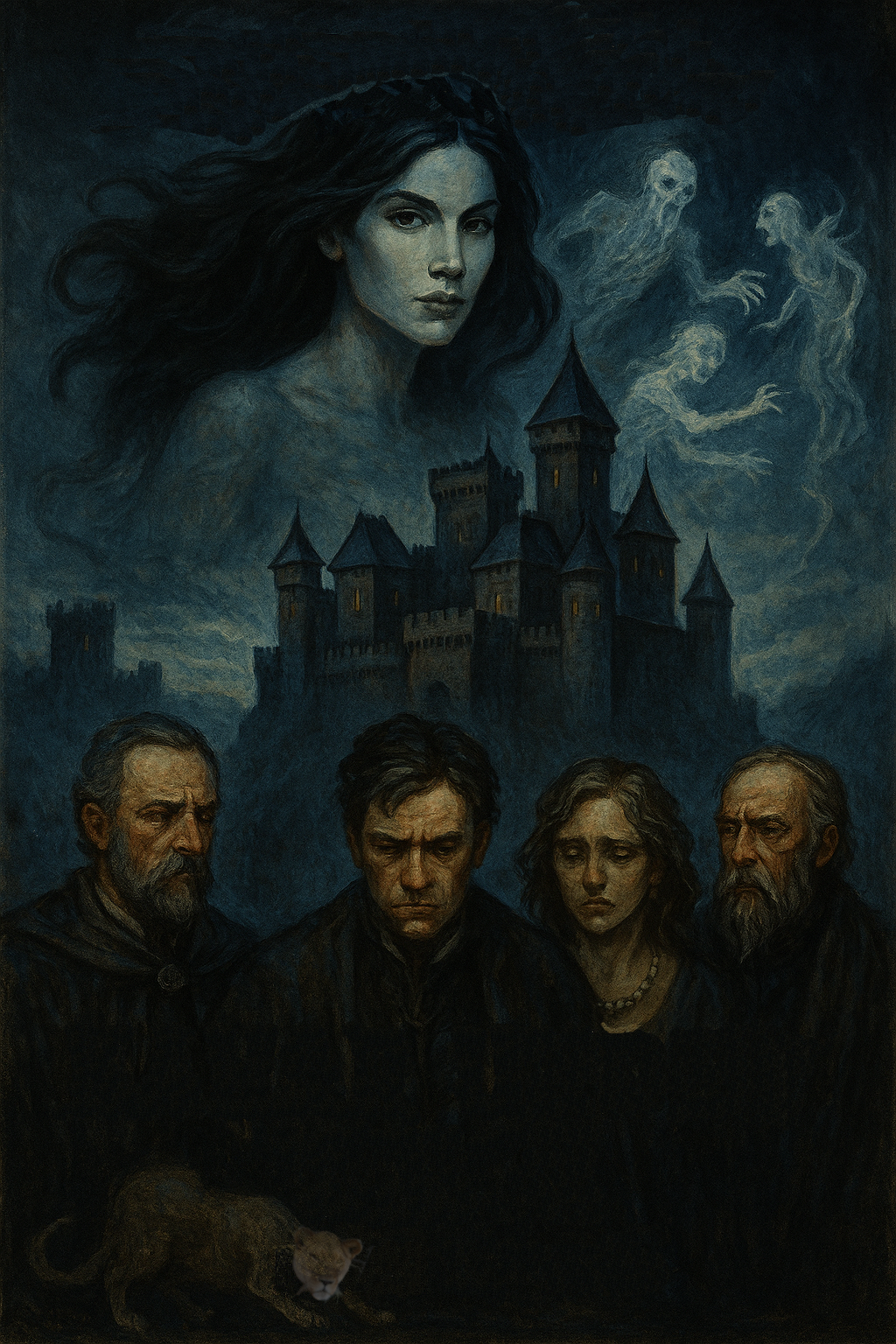
None of them chose treason. None of them sought power. None of them wished harm upon the fortress. They were broken, slowly, intimately, personally, by a creature who understood that the surest way to destroy a lawful-good kingdom is to corrupt its virtues, not its vices. Khalista did not need armies. She needed only four good people and the phantoms and ghosts that haunted them.
The Chancellors of the Commonality orchestrate the mass arrests of the clerics at Braek's Munitions Dump, initiating their downfall. Some say this was not legal as there were only 3 of the board members present, not 4. Nevertheless, the clerics are taken into custody but are not delivered to the Realm of the Adjudicator, but, rather, are sent to the asylum.
The clerics are accused of sacrilege, blasphemy, and heresy, often under extreme torture to extract confessions.
The Adjudicator, under pressure from the Chancellors of the Commonality, dissolves the Order of the Ecclesiastic Brigade, though many argue it was an invalid act done under duress and never approved by either the Marquis or the Paladin King.
Immediate orders are sent to kill the 5 clerics. There is divine intervention, but only 1 cleric is delivered.
It is an easy thing for the Chanellors of the Commonality to send the remaining paladin, the Juggernauts, on a mission to "rescue" the clerics. Caught up in righteous anger, they wipe out dozens of innocent goblins before the lie is revealed to them. Having been manipulated into breaking their oaths, the paladin fall and never return.
This record gathers the ten principal magicians of Kahar Fortress and the Keeper of the Abandoned Keep, noting their specialties, loyalties, and ultimate fates under the long shadow of Khalista.
| Name | Role / School | Loyalty | Fate |
|---|---|---|---|
| Mchawi Mkubwa | Keeper of the Abandoned Keep | Neutral / Forgotten | Transformed into a nothic, haunting the sealed keep |
| Lallenos Kisherite | Archmage (CR 12) | Loyal | Broken by a Geas cast through the hags of Arroyo Kifo; convalesces in his tower |
| Duvior the Necromancer | Necromancer (CR 9) | Corrupted | Disappears early; later known as Hollowlife in the northern war against the dragon |
| Oztirix the Abjurer | Abjurer (CR 9) | Traitor (Loyal to Khalista) | Becomes Shield of Tower 1, managing the southern battlefield in service to Khalista |
| Atorn the Evoker | Evoker (CR 9) | Traitor (Used) | Creator of red tendril glyphs; trapped by them at the bottom of Tower 1, sustaining the Arcane Gate |
| Oshtan the Diviner | Diviner (CR 8) | Loyal | Lost to the hags of Arroyo Kifo while investigating Khalista's shadow |
| Azabine the Conjurer | Conjurer (CR 6) | Traitor (Used) | Opens the Gate beneath Tower 9; imprisoned in a diamond on the Basalt and Granite Island |
| Amaran the Mage | Mage (CR 6) | Loyal | Assists Lallenos; later binds hill giants with clematis necklaces in the ruins of Tower 4; refuses the Labyrinth |
| Nuro the Transmuter | Transmuter (CR 5) | Traitor (Used) | Devises the plan to destroy the towers and supplies the spells to do it. Reads Reverse Gravity scroll during the sabotage; trapped with Azabine in the diamond |
| Exeral the Enchanter | Enchanter (CR 5) | Traitor | Charms and manipulates others to fall for Khalista's charms. With his apprentices, copies the many spell scrolls from Nuro that cause the destruction of Tower 2, Tower 3, and Tower 4 |
| Inalikis the Illusionist | Illusionist (CR 3) | Traitor | Young illusionist who weaponizes illusions and reads some of the destructive spell scrolls to collapse Tower 2, Tower 3, and Tower 4 |
Once a wizard of the Marquis' Keep, Mchawi Mkubwa lingered too long in isolation and obsession. His body and mind twisted into that of a nothic, and now he prowls the sealed, dust-choked halls of the abandoned keep, guarding forgotten lore and half-rotted secrets that no one living has come to claim.
Lallenos was the highest magical authority in Kahar, a patient and wise Archmage who sensed that something was deeply wrong long before anyone else. With Oshtan the Diviner, he spent a decade analyzing nefarious calamities by tracing strange dreams, missing servants, and divinations that returned only silence. Their investigation led them to the hags of Arroyo Kifo, servants of Khalista. There, through hag-cast Geas, Lallenos was cursed to bow whenever he heard the title “Queen of the Desert” or suffer psychic torment. He refused to bow. The daily punishment slowly broke his body and mind, leaving him convalescent and trembling in his tower, unfit to rule, while the fortress slid toward ruin.
Duvior, master of death-magic and funerary rites, believed he understood death better than anyone in Kahar. Khalista's ethmoid-powered anomaly proved him wrong. When he encountered an undead presence that did not behave like any known creature, he became obsessed with unraveling it. Through that contact, Khalista quietly hollowed him out, replacing caution with fascination and loyalty with devotion. Duvior disappeared from Kahar and later emerged in the northern war against the dragon as Hollowlife: a pale, death-touched figure commanding the fallen on a scorched battlefield. Soldiers believed him to be a wraith, but in truth he was Duvior, a necromancer whose name had been erased, serving Khalista's long game far from the desert.
Oztirix is a man of order, wards, and containment. He fears chaos above all things, and Khalista usurps his beliefs and appears to him as the only one capable of holding the world together. Her presence radiates ancient authority, and she speaks directly to his deepest desires: stability, nobility, and authority. Oztirix is given great authority even over his Queen's undead. Once he has proven his loyalty to her, she even allows him, and him alone, to be the sole voice of reason, arguing against his Queen's excesses even as he serves her will. He is a true traitor, his whole life living loyal to the Paladin King, and then suddenly convinced that only Khalista can provide unity, identity, and power.
Oztirix becomes commander of Tower 1 and the southern battlefield. Early on, he is caught by spell casting soldiers of Goldensheild while he is trying to set up an unholy ward on the battlefield, a statue of great power that will aid the undead. Oztirix comes under attack. He uses the spell Globe of Invulnerablity, calls for help, and waits until his undead servants push back the spell casting soldiers. The undead that witness this give him a new name: Shield.
Brilliant, reckless, and hungry for discovery, Atorn is the architect of the red tendril glyphs. Khalista shows him a glimpse of impossible magic, ancient necromantic patterns that should not exist, and he becomes obsessed with shaping them into his own work. He believes he has invented a new form of evocation, and his first act of treachery is when he uses his new red tendril glyphs steal the Gate spell from the Archmage. He orders his aprrentices to copy it onto scrolls but that power is too great, and he will lose many of those young fools.
Atorn last act of treachery is to open the Arcane Gate using the red tendril glyphs. Khalista flatters his genius but never trusts him. Once the Gate is open and the tendril system established, she turns his own magic against him. The red tendrils pin Atorn first to supply the Arcane Gate its needed living essence, and second, at the bottom of Tower 1, near volcanic heat, draining him slowly while suppling him just enough life to do his part in sustaining the Arcane Gate. As long as he lives, and sacrifices are renewed, the Arcane Gate remains open. He is both traitor and prisoner, the unwilling battery of the fortress's doom.
Oshtan was Lallenos' closest ally and the only other magician who truly grasped the scale of the corruption creeping through Kahar. His scrying and divinations repeatedly pointed toward Arroyo Kifo, where the hags worked in Khalista's shadow. When he and Lallenos finally traveled there, the hags were waiting. Oshtan was separated, swallowed by illusions and desert magic. Whether he died, was imprisoned in a dream, or wanders still as a prophetic echo is unknown. His loss was the first great wound to Kahar's magical defenses.
Azabine is a true, deliberate traitor among the magicians. Ambitious and calculating, he opens a Gate in the sapper tunnel beneath Tower 9, allowing catastrophic forces to breach the fortress from below. His actions directly contribute to the fall of Kahar. When Oztirix betrays them both, and traps Azabine in a diamond along with Nuro the Transmuter, Azabine knows that he has traded his reputation, relationships, and his place in his community with the inevitability of consequences. Azabine's prison rests on a stone table on the Basalt and Granite Island in the Sea of Fire, deep within the Elemental Plane of Fire, where he remains bound beside the colleague he dragged down with him.
Amaran is the quiet loyalist of Kahar: steady, practical, and compassionate. He spends much of the crisis tending to Lallenos in his weakened state, maintaining wards and bringing what aid he can. Unlike Lallenos and Oshtan, he never sees the full pattern of Khalista's machinations; he simply watches the world crumble around him. When Exeral and Inalikis destroy Tower 2, Tower 3, and Tower 4, Amaran is horrified. In the aftermath, he performs a quiet act of mercy and containment: placing necklaces of clematis on the hill giants and binding them within the ruins of Tower 4 rather than allowing them to be slaughtered or exploited. When the Labyrinth is later erected, Amaran refuses to join it. He cannot stand beside the traitor magicians who shattered the towers and people he loved.
Nuro is calculating by nature, a methodical transmuter who often urges others to slow down and reconsider. But he also chooses money, power, and authority when it is granted to him by someone other than the Kingdom where his oaths lie. So he is there, beneath Tower 9, Reverse Gravity scroll in his hands and knowing full well the consequences of reading it. Nuro reads it. In that moment, he turns his back on all that he has ever known. When Oztirix betrays both Azabine and Nuro, there is no time to separate guilt from panic. Both Azabine and Nuro are trapped together in the diamond on the Basalt and Granite Island. Nuro's fate is tragic: a man who chose wrong at the worst possible moment, imprisoned as a traitor beside the friend who manipulated him.
Exeral is a silver-tongued enchanter, charming and ambitious but deeply insecure. Khalista does not need to dominate him; she only needs to suggest that he deserves more. Under her influence, Exeral becomes a social saboteur within Kahar, using charm person, suggestion, mass suggestion, and modify memory to erode trust, twist loyalties, and undermine the cohesion of the fortress. He is the one who draws Inalikis into treachery and helps orchestrate the magical sabotage that will bring down Towers 2, Tower3, and Tower 4.
The youngest and least powerful of the major magicians, Inalikis is desperate to prove his worth. Exeral feeds his insecurities and ambition, and Khalista's shadow gives him a cause. Inalikis weaponizes his illusions, false orders, phantom reinforcements, deceptive terrain, and eventually turns to raw destructive magic. With move earth, disintegrate, and other spells, he helps collapse Tower 2, Tower 3, and Tower 4, reshaping the battlefield into a ruin. He believes he is serving a higher purpose; in truth, he is the architect of devastation.
On the western highlands of the fortress lies a broad, wind-swept farmstead run by Landyn Midha and his wife Sweeny. This sturdy, round-faced couple oversees the field hands who tend the vast grasslands that feed Kahar's horses, bulls, cattle, and oxen. When the siege begins, the surrounding fields are trampled and burned, yet the farmstead itself endures. Its stone barns and reinforced paddocks become an unlikely sanctuary, a pocket of order and warmth amid the wandering dead.
North of the highlands, where the winding road descends toward the inner yards, stands the ranch of Anderson Chissum. Broad-shouldered and unshakably calm, Chissum oversees the breeding, training, and deployment of Kahar's warhorses. During the battle, fire scorches much of his ranch house, forcing survivors to take shelter in the nearby caves. Even so, the stables remain defended, and the ranch continues to operate as a critical refuge and staging ground against the encroaching undead.
Towers 6, 7, and 8 stand firm after the goblinoid assault, their stonework unbroken and their garrisons unyielding. While much of the fortress buckles under the undead tide, these three towers remain beacons of discipline and resolve. Those still loyal to the Kingdom of Goldenshield rally here, gathering beneath the banners of the three captains who command the last coordinated defense within the walls.
Among the warehouses and powder sheds, a humble servant rises to unexpected prominence. Jaken Voth, a devoted acolyte of Cyzotl, rejects the treachery of his magician-lords and gathers a band of defenders to hold the Munitions Dump against those who would seal it within the Labyrinth. When the traitor magicians attempt to claim the site, Jaken stands firm, turning the dump into a fiercely defended refuge for any who resist the betrayal.
Long before the people of Goldenshield set foot in the region, the Secret Gardens of Lady Nazeri flourished beneath the desert sky. Daughter of a powerful sand‑elf lord, Nazerati Nazeri once ruled from her hidden sanctuary, but the two ancient doors leading to it have been lost for generations. Beneath the humble hamlet of Mbili, her undisturbed hanging gardens still breathe with quiet healing magic, waiting for the worthy to rediscover them.
The Castle of the Dwarf Lord Fahred Ahmandi rises above the cluster of religious temples at its base. Once the stronghold of a hero from ancient days, the castle now serves as a sacred destination for dwarf pilgrims who travel endless miles to stand within its shadow. Though skirmishes flare around the outskirts of the temple hamlet during the siege, the castle itself is never fully taken. A strange, unspoken reverence settles over all who approach, staying the hands of even the fiercest combatants.
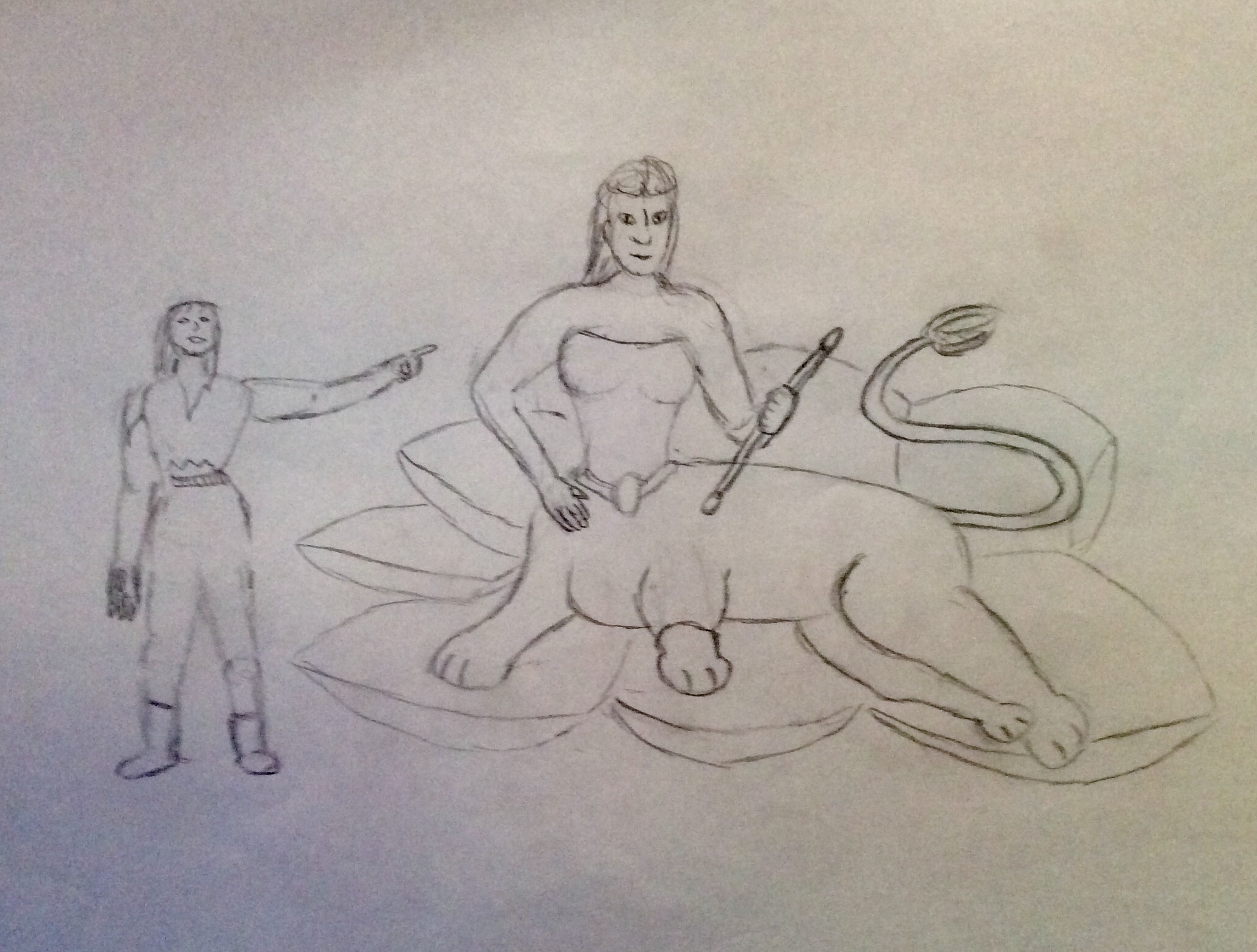
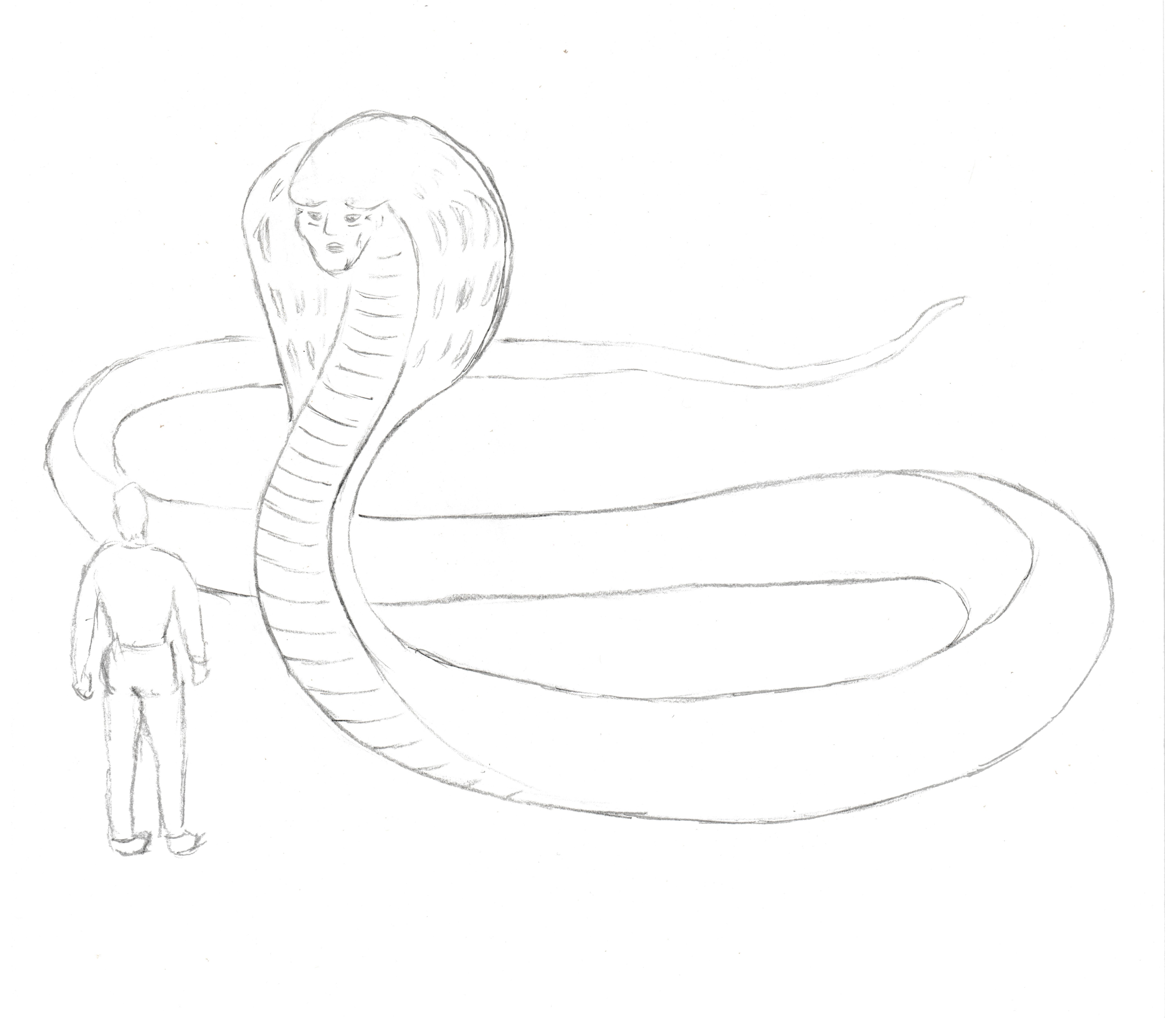
Khalista is a monstrous humanoid whose lower body resembles an enormous lioness—broad, muscled, and armed with razor‑sharp claws—while a long, serpentine tail coils and twists behind her. Where a lion's head should rise, the torso, arms, and face of a strikingly beautiful human woman emerge, beguiling and terrible in equal measure. Khalista is powerful, magical, and predatory; her touch can charm, curse, or unmake the will of even the strongest minds.
Despite her fearsome power, Khalista's deepest desires are far pettier and more decadent than conquest. Vain and insatiably curious about the weaknesses of mortals, she surrounds herself with spectacles of obedience and corruption, turning cruelty into a kind of personal ritual. She delights in watching rivals, servants, and captives betray one another under her influence, treating their humiliation as entertainment and sacrament alike. Those brought before her quickly learn that she craves not loyalty, but the thrill of domination for its own sake.
Though she rarely grants outsiders her presence, Khalista is never truly alone. She is attended by a devoted retinue of jackalweres—led by the cunning Terebo Inglofer—who serve as her eyes, ears, and enforcers. Visitors are handled by these loyal servants while Khalista watches from concealed peepholes or through subtle enchantments. If she catches a guest unguarded, she can seize their thoughts, bend their loyalties, or twist their desires until they serve her without question. Woe to those brought before her unwillingly, for she is known to sate her hunger with teeth and claws when the mood strikes.
Khalista can mark a friend or foe with a spell and follow them across great distances, observing their every move through her crystal ball or other scrying devices. Nothing hidden stays hidden for long from the Queen of the Desert.
Long ago, Khalista served a demon lord deep within the Abyss. There she learned cruelty, deception, and the art of survival, thriving only by outwitting those who would have reduced her to ash or shapeless flesh. Her ambition carried her from the front lines of the Blood War to the command of demonic legions, and for a time her existence was everything she desired.
That world ended when the gods themselves brought war to her plane. The demons were swept aside like insects, their armies shattered and scattered. In the chaos, Khalista seized three loyal servants—a male and two females—and fled. Using every shred of will and power she possessed, she forced her way through the collapsing battlefield and reached a great portal. Carrying her servants, she plunged through it and emerged in the Aljana River at the foot of the Whirlpool of Danube, nearly drowning in the violent waters.
When she finally reached the southern shore, only her male servant remained; the others had been lost to the maelstrom. Wounded in mind, body, and spirit by the divine forces she had escaped, she fled south across a desert so vast she despaired it would ever end. When at last it did, she hid, watched, and began hunting the lesser creatures of the land.
Finding a remote fortress, she seized it and made it her lair. Over time she carved out a reputation as a ruthless and merciless dealer in forbidden and rare artifacts. Only the bravest—or most foolish—dared to seek trade with the one now whispered of as the “Queen of the Desert.”
On a moonless desert night, a stranger approached Khalista's fortress. Even she, proud and terrible as she was, felt fear at his presence and agreed to grant him an audience. This meeting marked the beginning of her descent into true necromancy. The visitor was Prysm, god-king, warlord, and necromancer of immense and ancient power. His influence stretched across the world, twisting the living and the dead alike. It became clear within moments that Prysm was the master, and Khalista the apprentice.
Under his guidance she learned forbidden arts: the raising of corpses, the binding of spirits, the commanding of the dead. For nine long years, the lands beyond her realm suffered blight, famine, and drought simply from Prysm's presence. Khalista, who had once relied on her own spells and illusions, grew into a necromancer of terrible might.
In the final rite of her training, Prysm performed a ceremony so dreadful that even Khalista trembled. He drew a living fragment of bone from within his own skull, a relic of his necromantic essence, and forced it upon her as the seal of her apprenticeship. The bone replaced a part of her own structure, reshaping her from within and binding her to the art of raising the dead. From that moment forward, she could command the dead without limit, but every thirty-six days, when the three moons align, she must remove the bone for a full day or perish.
Prysm's price for this power was simple: obedience. He commanded Khalista to join the Dark Crusades, which he orchestrated every thirty-two years, and to seize one of the desert fortresses of the Kingdom of Goldenshield. She obeyed, leading her servants across the great empty desert in an attempt to fulfill her master's will. But that year the Dark Crusades faltered, and Khalista was forced to retreat into the barren desert mountains.
There, among the ruins of an ancient culture, she discovered vast deposits of limestone. She ordered her jackalwere servants to carve a road from those desolate places to the King's Road, and she adopted a new facade to conceal her true intentions: the guise of a humble trader in chalk.
Large Fiend, Chaotic Evil
Armor Class 16 (natural armor)
Hit Points 120 (10d10 + 20)
Speed 40 ft.
| STR | DEX | CON | INT | WIS | CHA |
|---|---|---|---|---|---|
| 16 (+3) | 14 (+2) | 15 (+2) | 20 (+2) | 16 (+5) | 16 (+3) |
Skills Deception +7, Insight +4, Stealth +5
Senses Darkvision 60 ft., Passive Perception 12
Languages Common, Abyssal
Challenge 14 (11,500 XP)
Khalista makes two melee attacks per round, choosing from the following options:
Khalista is a 14th-level spellcaster. Her spellcasting ability is Intelligence (spell save DC 18, +10 to hit with spell attacks). She requires verbal, somatic, and material components for her spells.
Khalista is also an innate spellcaster. Her innate spellcasting ability is Wisdom (spell save DC 18). She does not require material components for these spells.
Khalista carries the Ethmoid Bone of a powerful necromancer embedded within her skull, greatly enhancing her spellcasting abilities. While the bone is inserted, she gains several spells as innate abilities. However, she must remove the bone every thirty-six days or risk certain death. The bone must rest for one full day (36 hours) before it can be safely reinserted.
When Khalista is within the King's Library, she can call upon the corrupted energies that saturate her domain. On initiative count 20 (losing ties), she takes one of the following lair actions. She cannot use the same action two rounds in a row.
Pale Gray Prism Pulse. A warped shimmer of gray light coils around Khalista's feet—bands of shadowed tones forming a rainbow made only of despair. Each creature of her choice within 30 feet must make a DC 18 Intelligence saving throw. On a failed save, the creature takes 9 (2d8) psychic damage and is overwhelmed with intrusive, self-corrupting thoughts until the next round, giving it disadvantage on its next attack roll or ability check. On a successful save, the creature takes half damage and suffers no additional effect.
Whispering Command. Soft, overlapping whispers fill the Library, echoes of Prysm's bone, Khalista's own voice, and the murmurs of unseen servants. One creature of her choice within 30 feet must succeed on a DC 18 Wisdom saving throw or become Charmed by Khalista until initiative count 20 of the next round. While Charmed in this way, the creature must use its movement to approach Khalista or one of her servants.
The Coffins of Amansara One of the four ancient coffins leaning against the walls of the Library rattles violently. A mummy emerges from within and joins Khalista's side. If all mummies have already been released, all undead within 30 feet gain 10 temporary hit points instead.
Khalista constantly scries upon her servants and the captives they bring toward the ruins of Kahar. Through the scrying sensor she sees and hears the approaching creatures, intuiting their surface desires, fears, and expectations long before they reach her domain. Over the course of their approach, she shapes an illusion tailored to what they unconsciously expect to find.
This illusion does not manifest during the approach. It lies dormant until the captives step through the Arcane Gate leading into the King's Library. The moment they cross the threshold, the prepared mirage envelops them, replacing the true path with scenes and sensations that feel familiar, comforting, or “correct” to their minds.
These distortions require no action from Khalista and persist until the creatures reach the inner chambers of the Library or until she dismisses them.
Khalista can take 3 legendary actions, choosing from the options below. Only one legendary action option can be used at a time and only at the end of another creature's turn. Khalista regains spent legendary actions at the start of her turn.
Prysm's' Fate (Costs 3 Actions). When Khalista fails a saving throw, she can choose to succeed instead.
Khalista has been trained for this purpose since the day she crossed the desert thirty-two years before. She has scryed upon the fortress for decades, memorizing its routines, its weaknesses, and its hidden paths. Her agents already work within its walls, and she is prepared to unleash her plans the moment the opportunity arises.
Once she claims the fortress, she intends to transform it into a seat of decadence and domination. She will host her cruel rituals, surround herself with servants and slaves, and place her followers in control of all trade crossing the desert. Her long-term ambition is to hold Kahar as her own and establish herself as the trade master of the King's Road. She knows a retaliatory army will eventually come from the Kingdom of Goldenshield, but she believes she will have at least three months to fortify her rule, and she intends to hold the fortress.
Khalista possesses a bark-like fragment of malevolent origin, a fragile but living cutting of the Golthias Tree. She has charged two of her most loyal servants with nurturing it until it can be planted in the hills near the oasis within the fortress. Once rooted, its corruptive influence will twist the native plant life into monstrous blights that stalk the desert and harass all who travel in Kahar.
Khalista has perfected a dangerous, modified form of the haste spell capable of accelerating the growth of living creatures from years to mere days or hours. She has no fixed plan for its use, but she keeps the spell prepared at all times, ready to exploit any opportunity that might give her an advantage, whether in battle, breeding, or the rapid creation of new horrors.
Khalista is a master manipulator. If the PCs are not cautious, they may receive forged orders or false reports urging them to confront the blue dragon, or to eliminate certain wizards or leaders. While these figures are genuine threats to the region, they are not Khalista's allies. Her goal is to deceive the PCs into destroying the very individuals who pose the greatest danger to her plans. Only later will the PCs realize that they were never striking at Khalista's supporters, they were eliminating her enemies.
Khalista's plans rely on precision, secrecy, and timing. For thirty-two years she has prepared for the moment when the chaos of the Dark Crusades will mask her own assault on the fortress. But on the very day she must be without her Ethmoid Bone, her greatest source of power, an unforeseen force seizes the northern part of Kahar.
Troubling reports reach her: undead scouts fail to return, goblin remnants from the failed crusade are routed, and strange lizard-like soldiers have been sighted in the upper battlements. Alarmed, Khalista turns to her scrying magic and witnesses the impossible, kobolds fighting alongside a young blue dragon, carving their way through the northern defenses.
This event is not part of her design. The dragon's presence threatens to unravel years of preparation, and Khalista knows she cannot confront such a foe without the Ethmoid Bone. In a rare moment of fear, she abandons her careful schedule and awakens the mummy lord prematurely, hoping to stabilize the fortress before the dragon reaches her domain.
Khalista fully intended to use the wizards of Kahar in her long preparation for the conquest of the fortress. She lured Lallenos and Oshtan to the hags of Arroyo Kifo, ensuring that Lallenos would be broken by a geas and forced to perfect the Gate spell. Once he did, his scribes copied not only that spell but also many other spells endlessly, flooding the fortress with scrolls. Khalista also subdued the four nobles who oversaw the clerics, knowing that without clerics to temper the paladins, the fortress would lose its moral and spiritual backbone.
Over the years she manipulated, corrupted, or compromised many of the wizards, believing she had turned them against Kahar. Some served her directly, others sabotaged the towers, and several vanished into forbidden studies. By the time the Dark Crusades reached the walls, Khalista was certain the wizard order was fractured beyond repair and safely under her influence.
But the wizards proved far more dangerous than she anticipated. After betraying Kahar, several of them betrayed her as well. Exeral and Inalikis, realizing Khalista intended to discard them once their usefulness ended, turned against her. They seized three distant barracks, stole the Pillars of Janae, and manipulated the convalescing Lallenos into aiding them. With these artifacts they began constructing the Labyrinth, a sanctuary that would place them beyond Khalista's reach and unravel her control over the fortress.
This defection is one of the few developments Khalista truly fears. If the Labyrinth is completed, the rogue wizards will be untouchable, and her carefully woven plans might collapse. The PCs may find themselves drawn into this conflict, willingly or not, as both sides maneuver to secure the final components needed to shape the fate of Kahar.
Khalista's servants were jackalweres. They were named the sakal, jackal-like shapeshifters capable of assuming the form of a humanoid, a jackal, or a hybrid of both. In any shape, their skin was impervious to steel, bronze, and iron; only magic or creatures of greater power could harm them. Their gaze carried a potent enchantment that could plunge an unsuspecting victim into sudden, unnatural sleep. Feared throughout the desert, the sakal were a people best avoided, for they were hunters, raiders, and loyal only to their own.
When the gods invaded her home plane, Khalista escaped with only three of her most trusted servants: Terebo Inglofer, Mesika Yetara, and Amersis Disjaho. In the chaos of the crossing she lost the two females and arrived on Lophator with Terebo alone. Together they fled fifteen hundred miles south, across a vast and waterless desert, until they discovered the ruined fortress of Sakala. Khalista claimed it as her new home.
South of the desert lay endless grasslands filled with grazing herds, and the predators that fed upon them. Terebo easily lured jackals back to Sakala, but breeding them produced only more jackals. It was not until Khalista performed dark magic that Jak was born: a true sakal, like Terebo, able to shapeshift and immune to normal weapons. Jak was massive and strong, but simple-minded and slow, gentle in spirit yet dangerous without guidance. Terebo became his guardian, his voice, and his protector.
Khalista abandoned the breeding program, unwilling to fill her fortress with more like Jak. But fortune turned when Terebo discovered one of the lost sakal females, Mesika Yetara, feeding on a ruined village. With her return, a new lineage began, and within a few short years Sakala held an army of more than one hundred impervious sakal, all loyal to Khalista.
Sakala was once a frontier stronghold built on the scorched rim of the great trench in the southern hemisphere. Men, elves, dwarves, halflings, and gnomes labored for twelve long years to raise nine war towers, a gathering hall, and three shrines to the fire gods, all bound together by an eighteen-foot wall of stone. They finished just in time, for every sixteen years the fire giants of Burning Summit Mountain marched north from Defiant to raid the lands for slaves and plunder.
The first assault fell to Freot FirestormBringer and his two hill giants. Though they damaged several towers, Sakala's defenders drove them back. Sixteen years later Freot returned with tools, slaves, and renewed fury, but the fortress held again, and his hill giants were slain. The following year he returned with nine fire giants, and this time Sakala fell. Two towers were razed, many defenders were slain, and most survivors were dragged south into the trenchlands. A handful escaped into the grasslands beyond. Sakala was left in ruin.
It remained abandoned until Khalista claimed it. Through illusion and enchantment she restored the broken palace to impossible beauty, marble halls, sculpted courtyards, and shimmering fountains that existed only to lure the unwary. Those who entered seeking treasure soon found themselves prey to Khalista and her servants. Her sakal raiders traveled more than a hundred miles along the southern caravan routes, returning with riches and slaves. In Sakala, Khalista rebuilt a shadow of the glory she once commanded.
Long before Khalista's rise, Sakala was so desperate for water that caravans risked the shattered trenchlands to bring it. One such journey became legend: a wagon train overloaded with barrels of precious water, dragged across collapsing stone and fire-scorched ground while sakal hunters stalked the cliffs. Few who made that run ever forgot it, for the land itself seemed determined to swallow the wagons whole.
At Sakala, Khalista grew secretive and powerful. She practiced her dark arts on the scorched rim of the great trench, scrying along the caravan routes that wound through the southern lands. Her sakal servants raided the caravans, bringing her wealth beyond measure, and she filled her illusory palace with stolen treasures. Through magic she spied upon the kingdoms to the south, preying first upon the corrupt and ambitious, then upon the upright and lawful. Tempting the righteous into betrayal became one of her favored cruelties, and soon the people whispered of a desert queen who dealt in souls.
As her riches grew, Khalista paid extravagant sums to the surrounding nations for the one resource Sakala lacked: water. The Water Eater had drained the hemisphere, and only the bravest, or most unscrupulous, men dared attempt the journey. Many Water Runners never returned. Those who did spoke of a palace of impossible wealth where every desire could be fulfilled, but only at the cost of a life or a soul.
Then Prysm came. Khalista was thrust into servitude as she had not been since her days under the demon lords. Prysm granted her the power to command the undead in great numbers, but the price was obedience. She was ordered to seize one of the fortresses of the Paladin King.
After long preparation she followed the Dark Crusaders north, but the crusade failed that year, and Khalista was forced to retreat into the barren desert mountains. She would have to wait thirty-two years for the Dark Crusades to return, time enough to weave her devious plans. She sowed corruption among the Lords and Ladies of Kahar, exploited their greed and discontent, and prepared to strike when the fortress was weakest. If she could seize Kahar, she would have months to entrench herself before the Kingdom of Goldenshield could retaliate.
Once established, she intended to rule through lies, traitors, and spies, working her way toward the ultimate prize: the rediscovery of the awesome power she had glimpsed in Prysm, the echo of what was once the Whirlpool of Danube. She embraced the thrill of destruction and laid out her wicked plans with relish.
The Whirlpool of Danube is a place of power, it is a foundation. A nexus where space and magic converge, binding the world together and holding reality in place. It is the axis upon which all planes turn, the source from which structure and meaning flow. Prysm seeks its power, believing it to be the key to conquering all worlds. Khalista, however, knows its danger firsthand.
During the final days of the God Wars, when her dominion in the Nine Hells was shattered, Khalista fled through a collapsing vortex, clutching her three jackalwere servants. She emerged in the Whirlpool of Danube, half-drowned, disoriented, and overwhelmed by the raw truth that surged around her. The power there was not infernal, not divine, not elemental, it was foundational. It revealed the structure of all things, and Khalista, twisted by ambition and cruelty, could not bear it.
She fled. Over a thousand miles she ran, across scorched lands and broken stone, until she reached the trench's southern rim and claimed the ruins of Sakala. She never spoke of the Whirlpool again, save in whispers and riddles. Prysm, however, remembers. Prysm hungers. And Khalista knows that if Prysm reaches the Whirlpool again, the world may be reshaped, not by truth, but by cruelty.
As corruption spread through Kahar and the bureaucracy rotted from within, Thamiar the Guardian Naga watched with growing dread. Friends who once sought his counsel now shunned him, and the leaders of the city were blind to the decay hollowing their halls. Seeking clarity, Thamiar returned to his mentor, Anatus the Androsphinx, whose dominion over time and fate was unmatched.
Anatus revealed to Thamiar a vision of the far future: a desolate Kahar drowned in undeath. Khalista the Lamia ruled the ruins, and the land crawled with ghosts, spectres, wraiths, and legions of the dead. A lich and a mummy lord battled for dominion over the shattered temples. In that future, both Thamiar and Anatus were long dead, and Kahar had fallen utterly into darkness.
Distraught, Thamiar sought a way to break this destiny. In the vision, he noticed a detail: far to the north, a young blue dragon grew to adulthood, returned to Desolation, and waged a decades-long civil war. Victorious, the dragon became the tyrant-king of Desolation, but never once crossed the King's Road, never plundered the caravans, and never established the lair at the Rear Gate. In that future, the dragon never touched the fate of Kahar at all.
Thamiar conceived a plan. With Anatus's aid, he traveled two years into the past and found the young blue dragon flying far to the north. Through powerful magic, Thamiar ensnared the dragon's mind, held it immobile, and laid a geas upon it: the dragon would travel south, establish a lair near Kahar, and forget this encounter entirely.
This single alteration reshaped history. The dragon discovered the King's Road, plundered the caravans, and eventually built his second lair overlooking Kahar. From high above, he witnessed the march of Rhael the Fire Giant and his two hill giants, and his kobold followers later invaded the Rear Gate. This invasion forced the undead armies north, allowing the Resistance to survive and preserve three of the nine towers of the fortress.
Two weeks before the 7th Dark Crusade, Zmaj descended upon the Shrine of Lophator, an eighty-foot statue of the world-god that stood just beyond the fortress walls. Offended by its presence and enraged by its symbolism, the dragon challenged the fortress directly. The King of the Sand Stone Spires, whose small but stalwart kingdom lay within the fortress proper, led the defense. He and his warriors were annihilated. His daughter, Lorene Grant, now Captain of Tower Five at the Rear Gate, survived the destruction only to face Zmaj again when the dragon returned two weeks later to seize the gate itself.
But Thamiar knew that one change alone would not be enough. To preserve the fragile future he had created, he sent Rhael—the fire giant of the 7th Dark Crusade—back in time to the 6th Dark Crusade. History remembered that two fire giants and two hill giants had been defeated at the walls of Kahar. For the paradox to hold, those giants must be defeated by the same heroes who would one day stand before him.
Now, in the present, the Ecclesiastic Brigade is gone, the clerics murdered, and the paladins scattered. Only a few who survived the 6th Dark Crusade remain—among them the Captains of Towers Six, Seven, and Eight. As children, they witnessed the impossible: a band of warriors defeating two fire giants and two hill giants in the smoke and chaos of the battle. When they see the PCs, they recognize them—not with perfect memory, but with the mythic certainty of those who saw legends in their youth.
Thamiar reveals the truth: the heroes standing before him are the very ones who saved Kahar thirty-two years before. The paradox demands completion. The PCs must enter the Temple of Time, Anatus's sacred domain—and travel back to the 6th Dark Crusade. There, they must fulfill the destiny already written into the memories of the survivors. They must face Rhael, Frelot, and the two hill giants, and ensure that history unfolds exactly as it must.
Only by closing the loop can the fragile future be preserved, and only by embracing the past can Kahar hope to survive the darkness yet to come.