Orbit
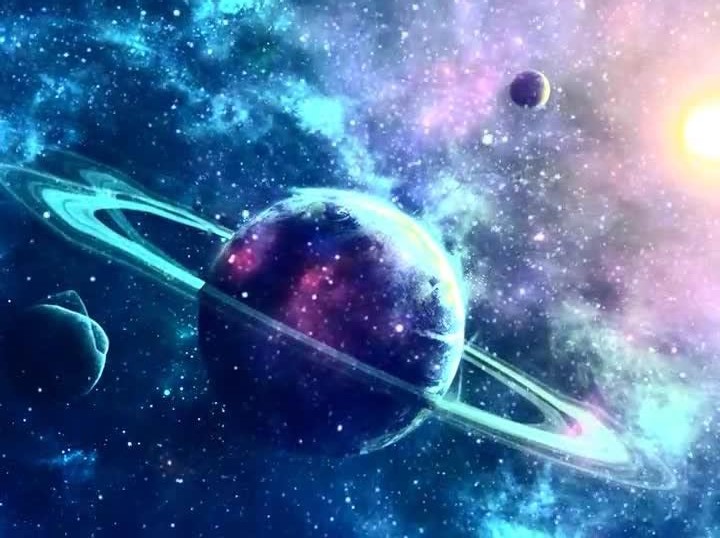
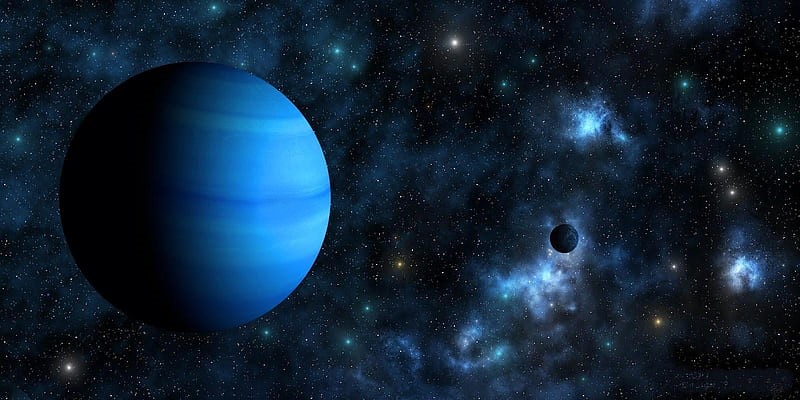
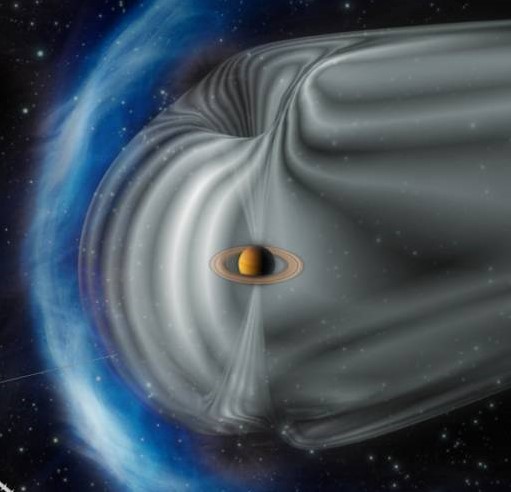
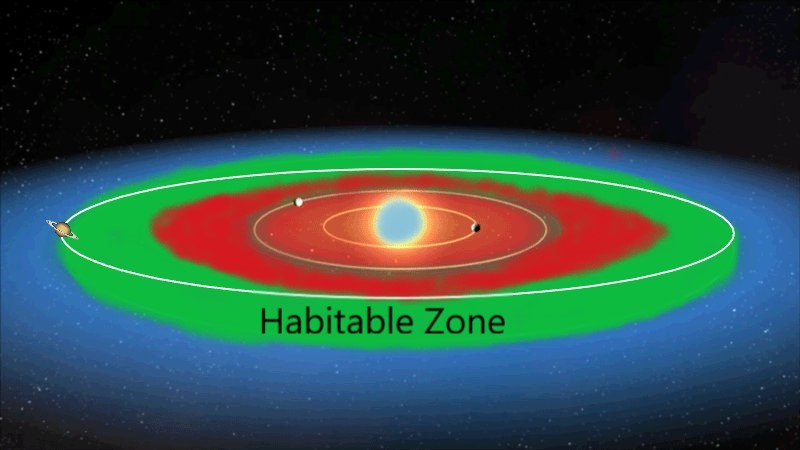
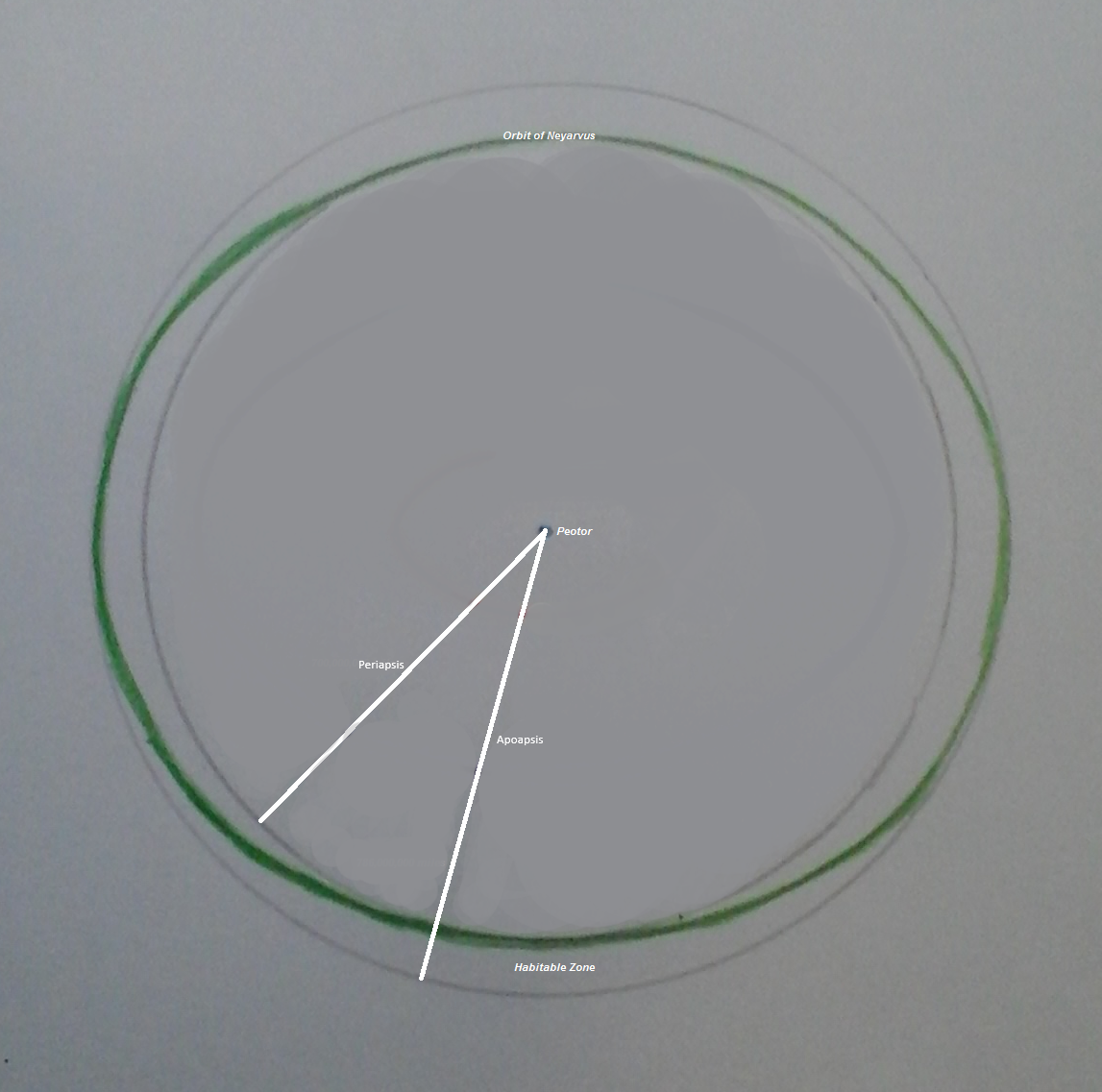
Neyarvus follows a deeply elliptical orbit that carries it toward the outer edge of the habitable zone around Peotor.
As its distance from the star shifts, so too does the stellar energy it receives, following the familiar inverse-square law.
The difference in flux between periapsis and apoapsis is enough to drive nearly a fifty-degree swing between the height of
summer and the depths of winter — a seasonal rhythm felt across all of Lophator.
Neyarvus accelerates sharply as it sweeps inward toward Peotor and drifts slowly at its farthest reach. This eccentric
motion creates long, lingering winters and short, intense summers, shaping the cadence of life beneath its skies.
Though the people of Lophator reckon a year as eight months from Ice to Cold, Neyarvus itself takes two such years to
complete its long path around Peotor. Only then does the great cycle of seasons truly repeat, with harsh years and gentle
years following one another in a slow, celestial rhythm.
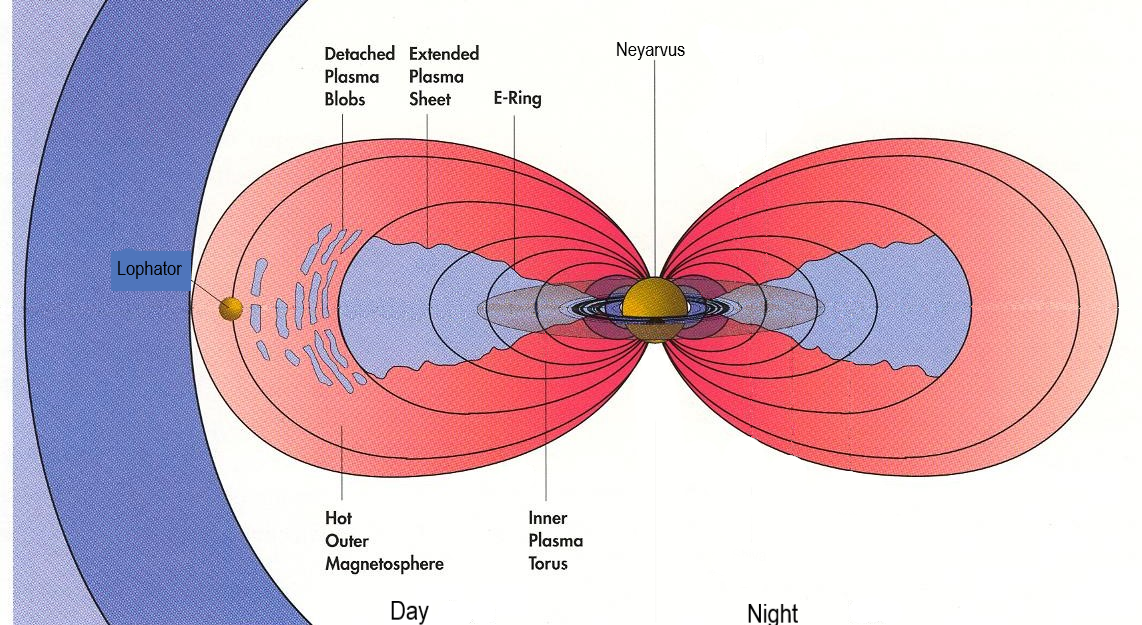
From above, the orbital variation is easy to see.
The Three Moons
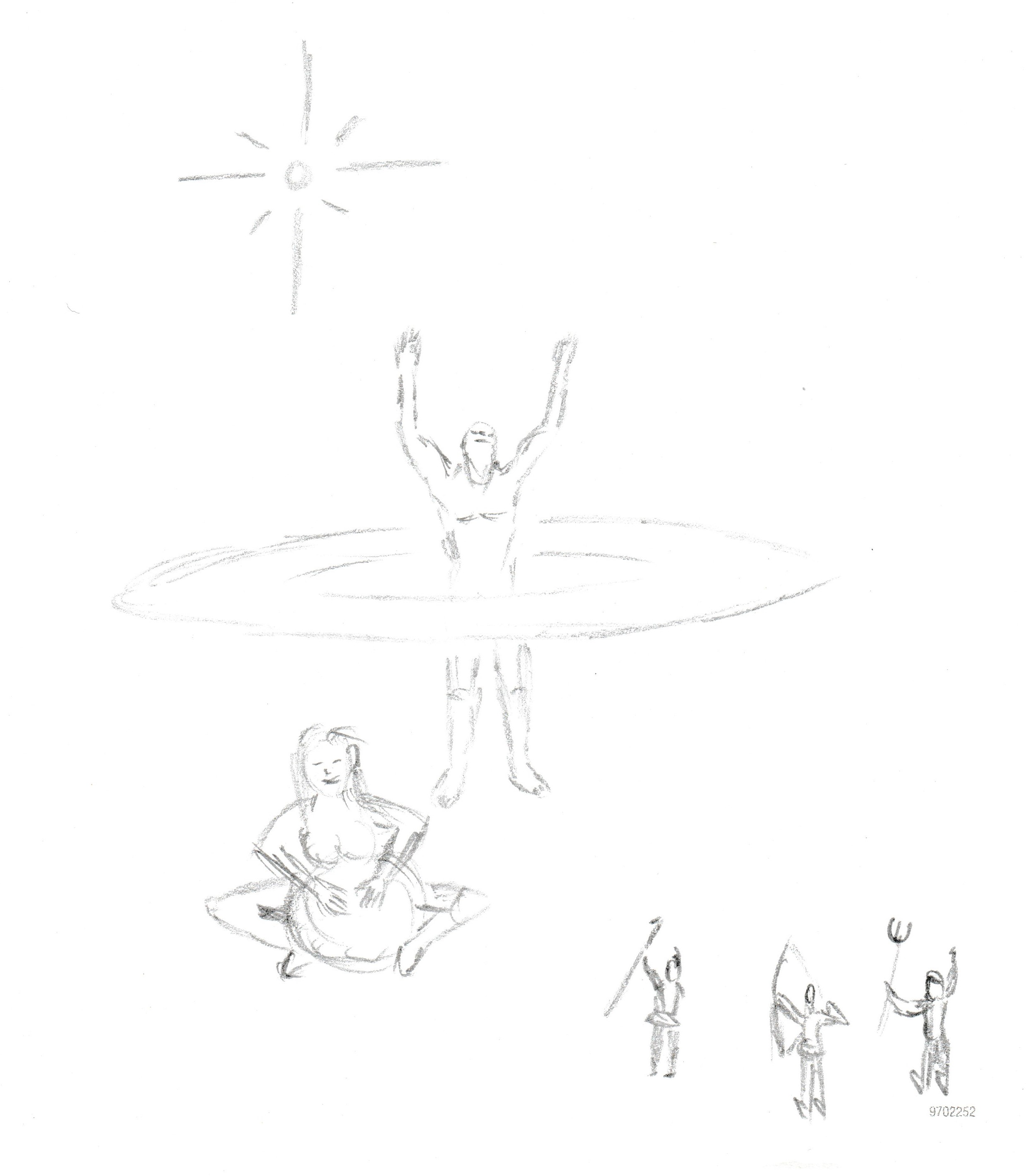
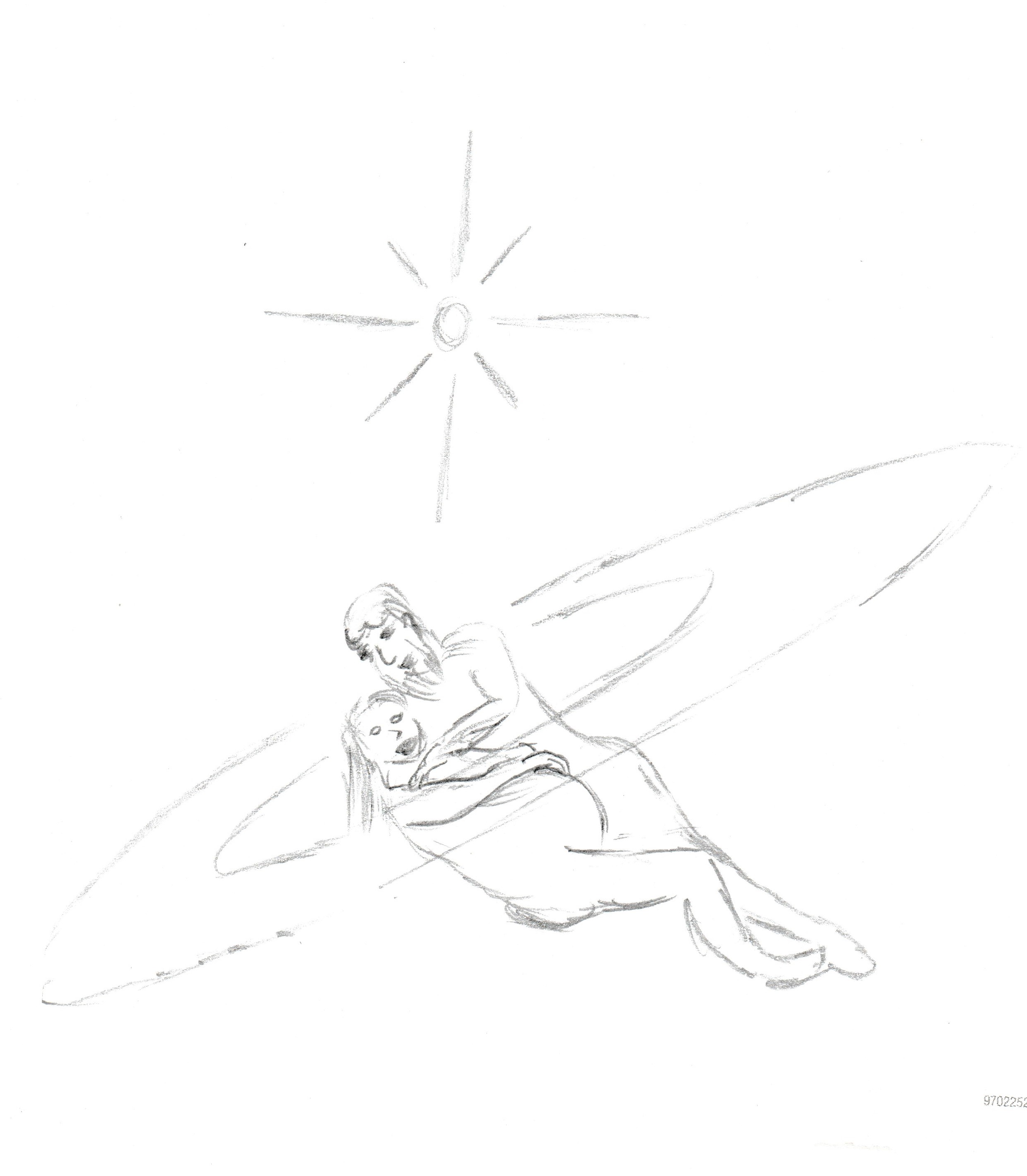
It is no accident that Lophator has three moons. For, as the legend tells us, it was Crasp, Yeesha, and Ponus
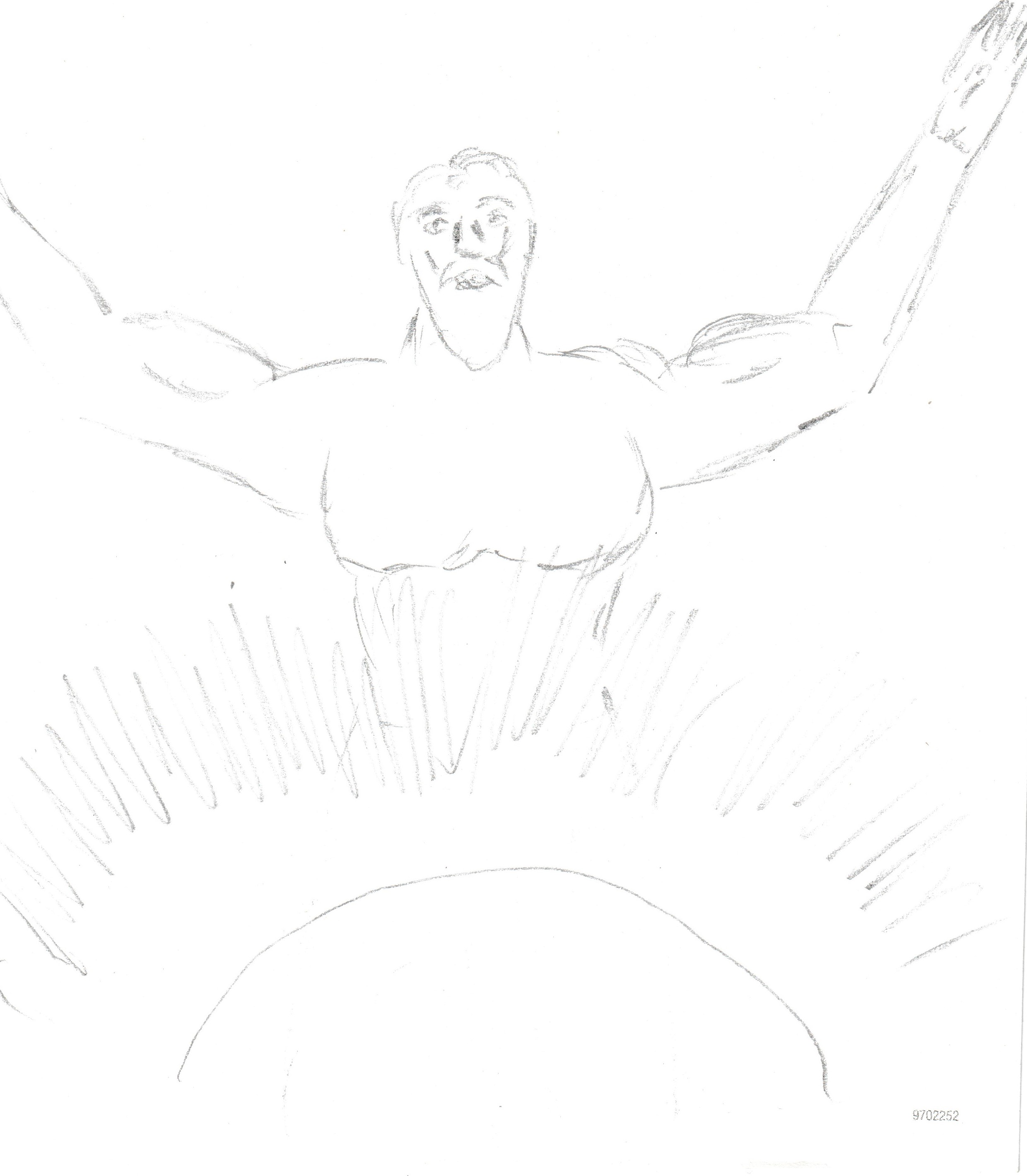
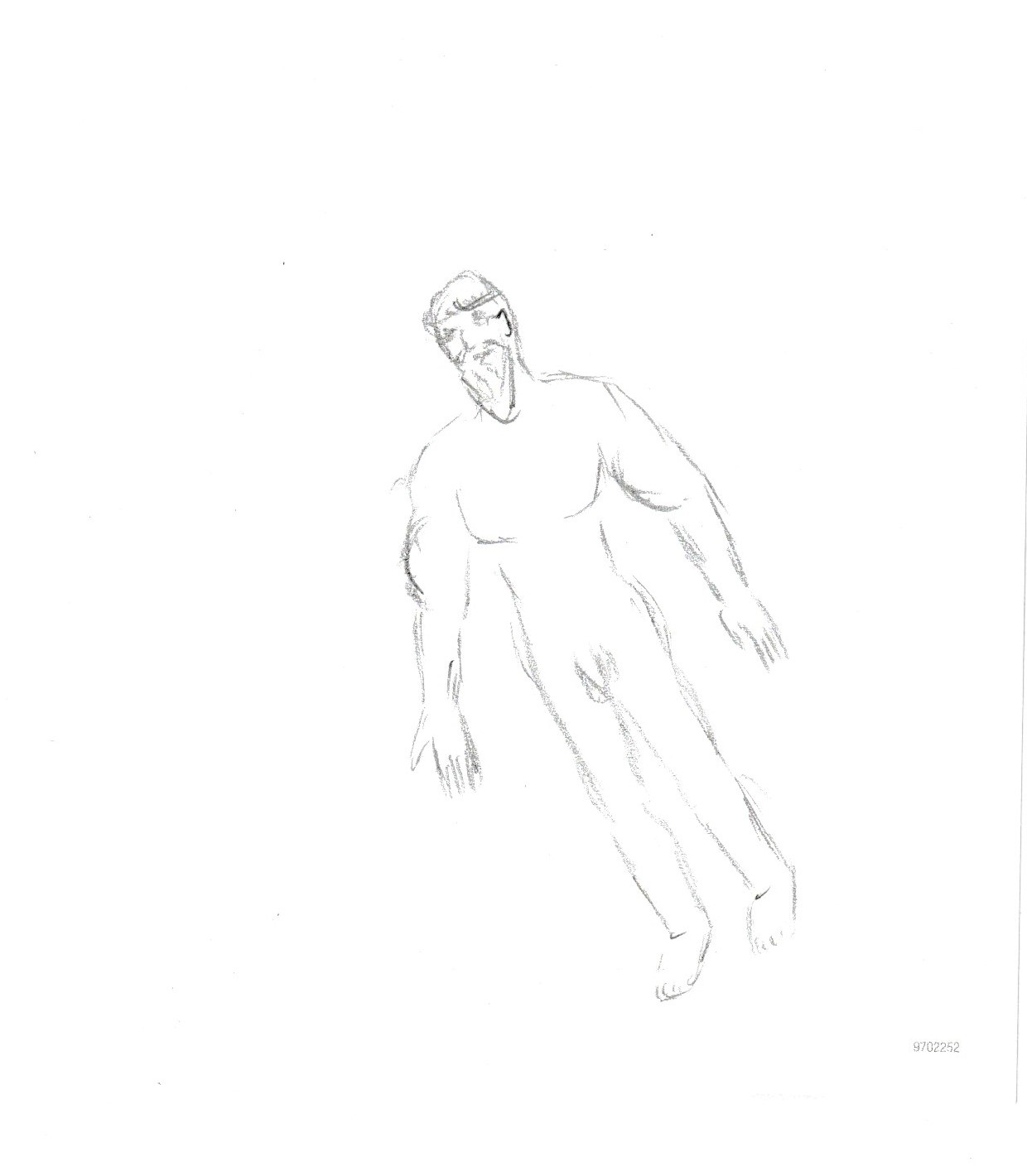
who pulled Lophator from beneath Neyarvus. She settled with her back to him, so that none of her children would ever
have to see him again. And there, in the depths of time, she gave birth to all life on Lophator.
Then come the many legends. The tale of Il'Waarl Corececor, who opens a gate in the fey world that leads to
the whirlpool gate on Lophator. All the fey of the Nchi now have access to the awe inspiring realm of Lophator.
Legends speak of how the fey divide into two groups: the beautiful and the ugly. The ugly fight among
themselves, and the god Ka — angered at being relegated to the ugly fey — begins to kill other gods. Among the gods of
the ugly fey, only two remain: Ka, god of war, and Queses, god of chaos.
It is said that Queses and Ka use the body parts of their fallen enemies to shape the goblinoids and orcs.
But we know they came through the gate. We know that once Queses seized control of the goblinoids, he made constant
war on all worlds.
The legend of the four fleeing gods ties Tasyn, Vaxy, Tura, and Dhotus to winter, spring, fall, and summer.
But we know the seasons on Lophator are caused by Neyarvus' orbit through the extreme edges of the goldilocks zone.
The tale of Ogen and Zaslo resisting the armies of Queses tells of the birth of plants and animals, and how
they are nearly overwhelmed until they are delivered by Oltdun. And the blood of his sacrifice, as it drips upon
the ground, forms the first humans.
But we know: humans came through both the first and the second gate.