Lophator began its long life as a rocky planet of a yellow star in a crowded arm of the galaxy Messier 81.
Rich in heavy metals, gases, and especially water, Lophator bloomed with life in deep oceans, mountainous lands,
wide valleys, and grassy plains above its molten internally heated spinning core. As volcanic outlets blasted
fumes and debris, kingdoms and empires rose and fell, creatures great and small appeared and lived their long
and powerful lives.
Civilizations strove to develop but were stunted by wars among the races, technology
progressed but never peaked, ideas were born but were hidden away and all but lost. The forces of good strove
against the forces of evil and the advancement of technology and industrialism was never achieved. This went
on for a couple of billion years, until the stability of the system finally changed.
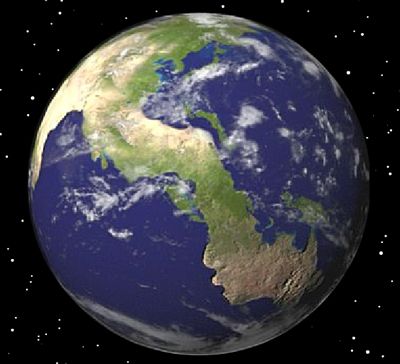
Two stars came too close, a story all too common in this arm of this crowded galaxy, and
Lophator was ejected out into the cosmos. Lophator might have been a wandering rogue planet
for the rest of the age of the universe but for providence. Wandering for hundreds of millions of years,
with everything frozen under a thick layer of ice, Lophator drifted into the outer arms of the galaxy Diaphalatos
where she was captured by Neyarvus, a rogue frozen gas giant that was also doomed to wander the emptiness. The
birth of Peotor, a blue star of immense brightness, changed all that by capturing both wandering planets.
Within
the first million years of its birth, Peotor captured the gas giant Neyarvus in an orbit 752 million miles away, perfectly
within its habitable zone. Lophator was too close too Neyarvus and though the covering ice melted away, the planet
was facelocked to the great gas giant.
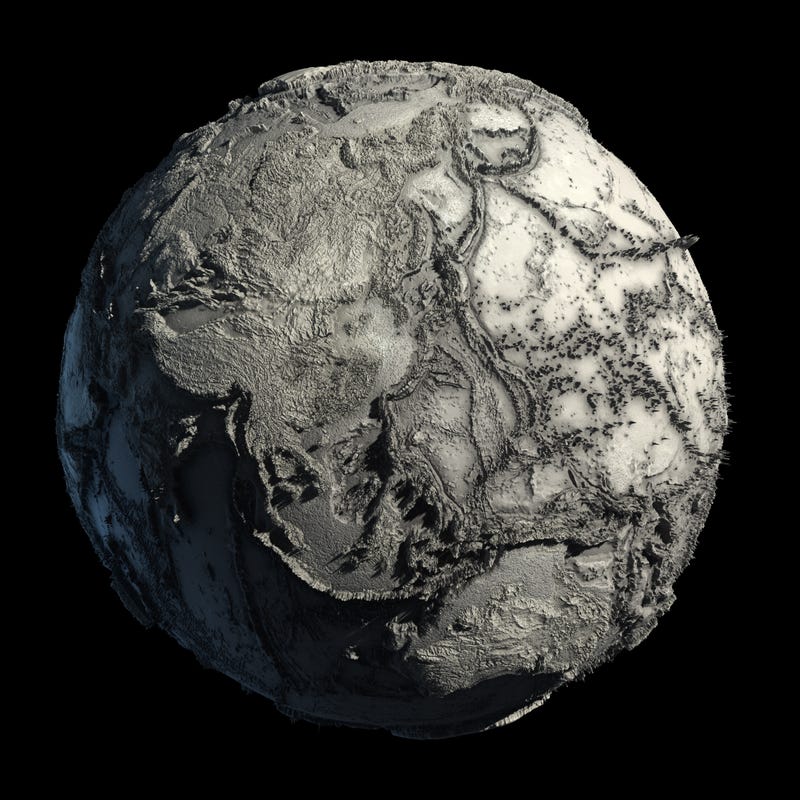
In the ages following the great capture, Lophator settled into its new place around
Neyarvus, locked in a steady 36-hour face-turned revolution. The sudden shift in gravity,
tides, and internal heat reshaped the planet's crust in dramatic ways. Most striking of all
was the rise of a single mountain range that thrust upward from pole to pole, a continuous
wall of stone dividing the world into two vast hemispheres. This barrier would determine the
fate of all climates, oceans, and civilizations that followed.
Three moons, Crasp, Yeesha, and Ponus, were drawn into Lophator's influence during this
turbulent era. Once wandering bodies of the wider Peotor system, they settled into stable
orbits around the planet as the crust cooled and the tides calmed. Their shifting alignments
would later shape navigation, ritual, and the rhythms of life across both hemispheres.
For nearly forty thousand years after the capture, Lophator endured magnetic storms,
crustal upheavals, and the slow stabilization of its oceans. It was during this brief and
volatile era that Il'wairl Corececor would open the gate, an act that would bring the fey, and
with them the Water Eater, forever altering the balance of the world.
As Lophator stabilized in its new orbit around Neyarvus and the long ice began to melt,
the world entered a brief era of warmth and upheaval. It was during this fragile moment
that Il'wairl Corececor opened the gate. Through it came the fey—brilliant, ancient,
and unbound by the laws of this newborn system. But they were not alone.
With them came the Water Eater, an entangled being of impossible scale whose presence
reshaped the world forever. Drawn by forces older than stars, it crossed the threshold
and moved across the thawing surface toward the exact center of the leeward hemisphere.
There it rooted itself, and the draining began.
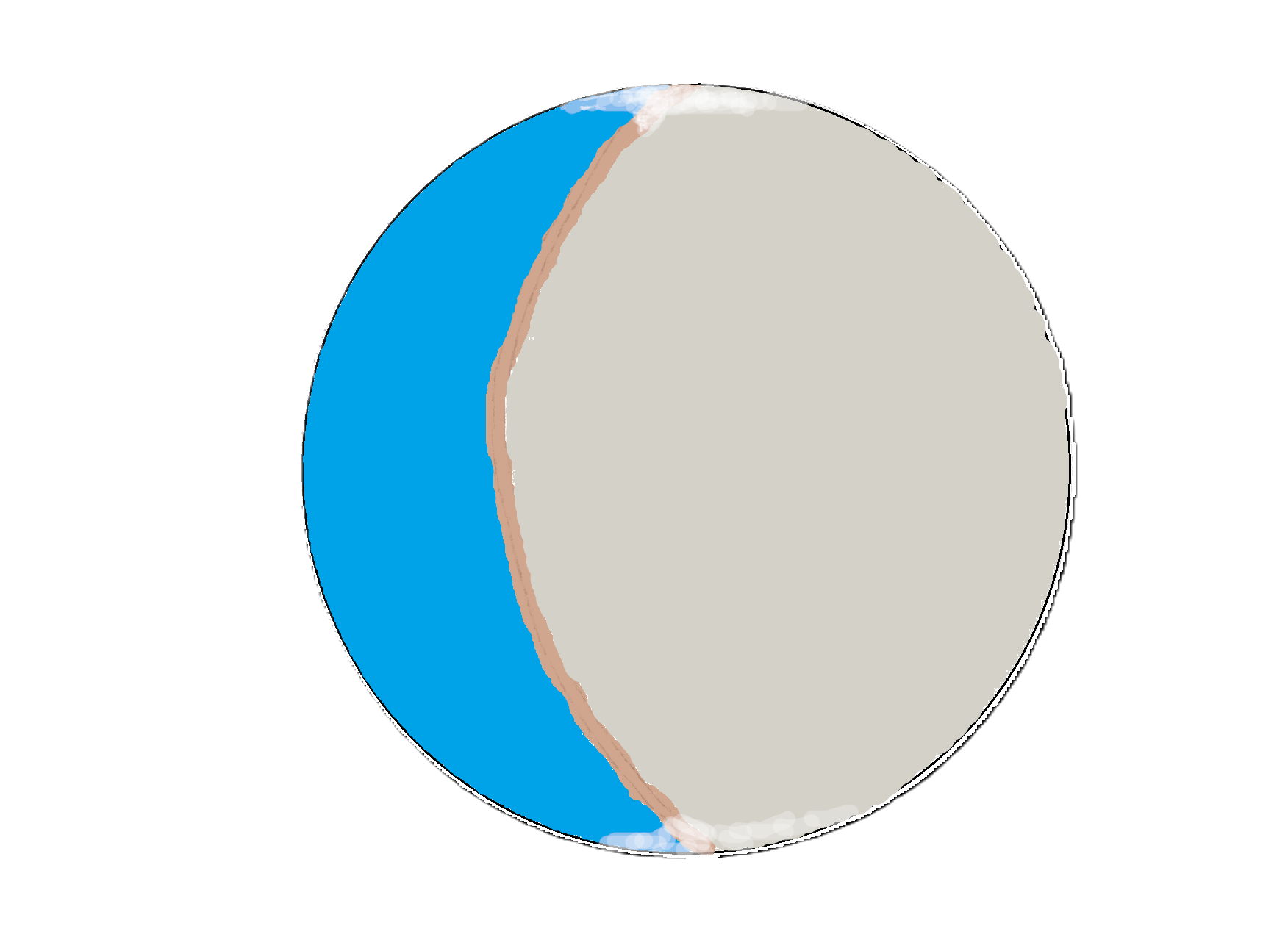
Rivers reversed. Inland seas collapsed. Entire basins emptied as water spiraled toward
the Water Eater's vast form. On the windward side, its entangled counterpart expelled
that same water into the deep ocean, drowning lowlands and swallowing continents beneath
rising tides. In a matter of ages, Lophator became a world divided: a drowned hemisphere
of storms and archipelagos, and a dry hemisphere of desert basins and cracked seabeds.
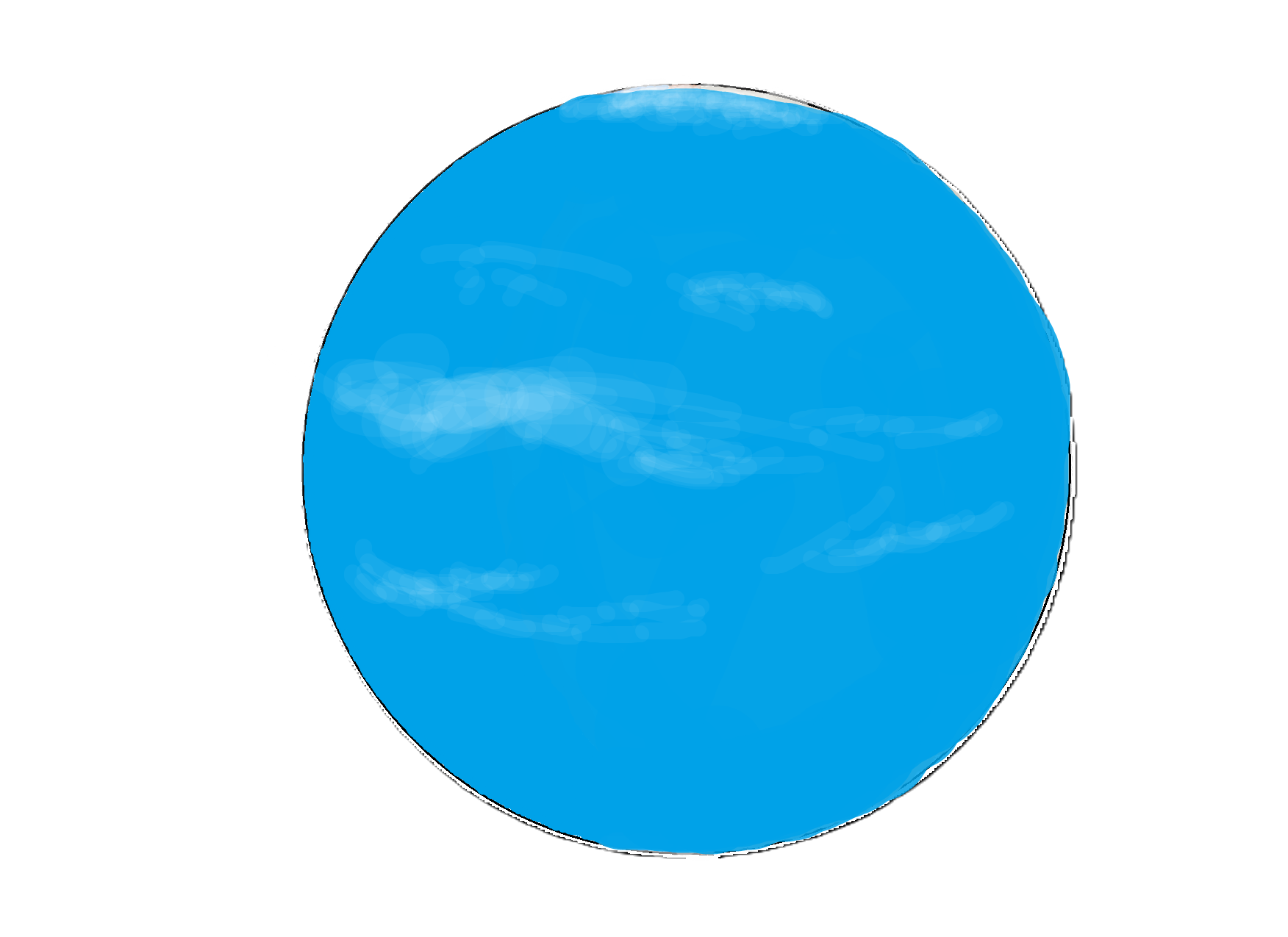
The windward hemisphere, forever facing Neyarvus, became a world of deep oceans and
ceaseless storms. The Water Eater's outflow raised the seas until only scattered
highlands and volcanic ridges remained above the surface, forming chains of islands
and archipelagos across a vast, restless expanse.
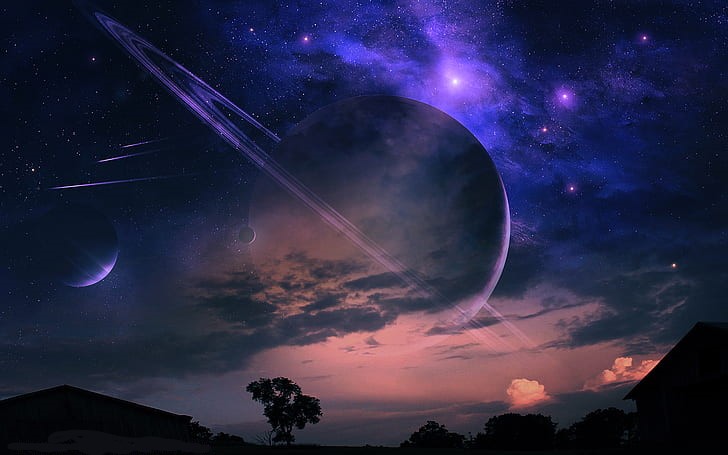
Neyarvus dominates the sky here, filling it with swirling bands, luminous storms,
and the shimmering arcs of its ice rings. Tides are immense, shaped by the
giant's gravity and the shifting alignments of Lophator's three moons. Storm belts
sweep across the ocean with terrifying force, yet skilled sailors have learned the
calmer gyres and seasonal windows that allow travel between the island realms.
Life thrives in the warm shallows and reef latticed coasts, while cultures of the
windward side build their homes on cliffs, ridges, and the few surviving plateaus.
Their world is one of water, wind, and the ever present face of Neyarvus above.
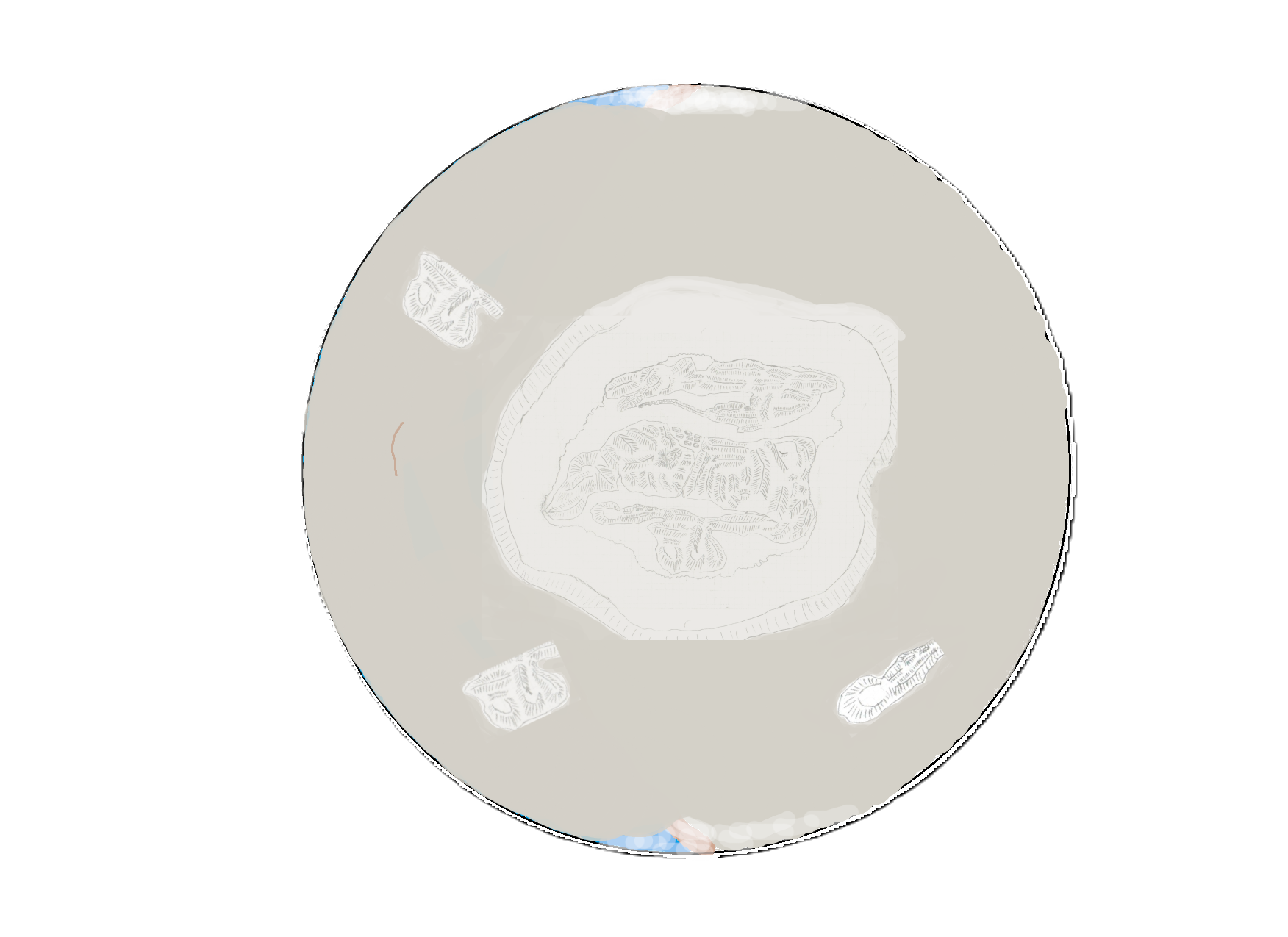
The leeward hemisphere, turned forever away from Neyarvus, became the opposite world:
a vast desert-ocean basin drained of nearly all surface water. Former seabeds lie
exposed as cracked plains, salt flats, and dust oceans stretching from horizon to
horizon. All rivers, lakes, and aquifers slowly spiral toward the Water Eater at the
hemisphere's center, vanishing into its immense form.
With little moisture and no moderating ocean, the leeward climate is stark and
extreme. Days are hot and clear beneath Peotor's blue-white light; nights are cold
and star-filled, illuminated by the slow dance of Crasp, Yeesha, and Ponus across
the sky. Rare oases survive where deep aquifers rise, forming pockets of life amid
the desert expanse.
Cultures of the leeward side are shaped by endurance, long travel, and the quiet
horizons of their world. Caravans cross the dust oceans, guided by moonlight and
ancient markers, while legends of the Water Eater define the spiritual and practical
boundaries of their lives.
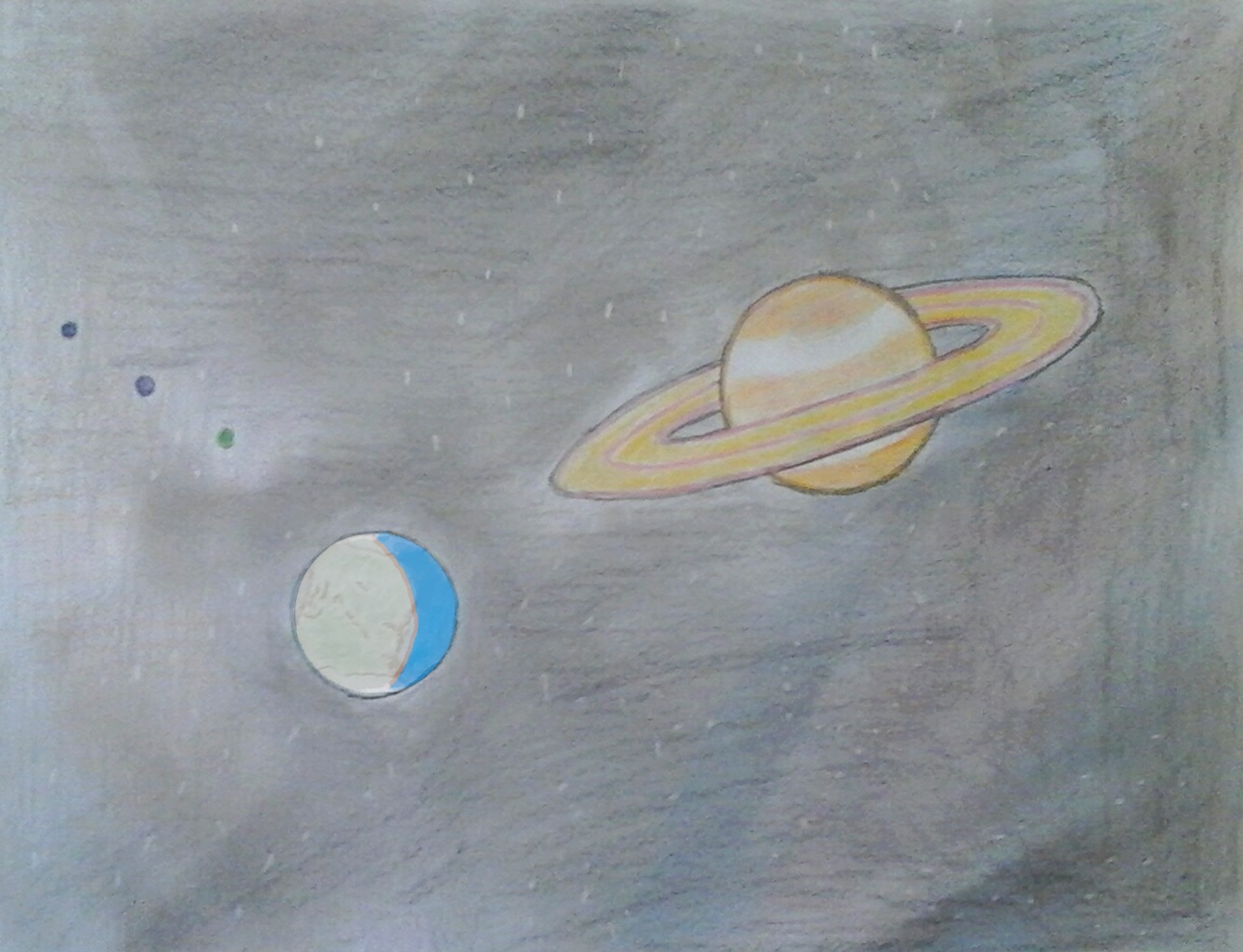
Lophator is orbited by three moons—Crasp, Yeesha, and
Ponus, each distinct in size, character, and mythic role. Their paths are
tuned to a shared rhythm: once every 36 days, all three align in the sky, a triple eclipse
that marks the turning of the sacred calendar and the renewal of ritual cycles across the
world.
Crasp is the smallest and steadiest, with a radius of 360 miles. Pale and
stone-colored, it resembles Ariel of Uranus and moves in a slow, deliberate orbit. Crasp is
revered as a lawful good Anga spirit, protector of courage and guardian of the worshipper's
soul. His light is steady, his path predictable, and his presence a comfort in the night.
Yeesha is the middle moon, with a radius of roughly 500 miles. She resembles
Titania in form but not in temperament. Yeesha is a lawful evil Anga spirit, lustful and
feared, prayed to for mercy and the easing of terror. Her orbit is faster and more erratic,
and her blood-hued glow is said to stir unease in those who watch her rise.
Ponus is the largest, with a radius near 1180 miles. He resembles Io in
appearance, with a mottled surface and faint volcanic glow. Ponus is a male Anga spirit,
protector of water, especially rivers, brooks, and bridges. His orbit is wide and slow, and
his appearance in the sky is often linked to fishing rites, seasonal crossings, and the
blessing of flowing water.
Together, the three moons form a sacred triad. Their 36-day alignment is marked by festivals,
eclipses, and the renewal of contracts both spiritual and civic. Their dance across the sky
is not just orbital, it is mythic, binding the heavens to the lives of those below.
Qaraton is the great continent of the leeward hemisphere, a vast and ancient land that
remained submerged for eons until the coming of the Water Eater. Before the drain, only the
tallest peaks of Qaraton pierced the ocean surface, forming scattered islands and forgotten
ridges. But when the Water Eater rooted itself at the center of the hemisphere and began to
draw the oceans inward, Qaraton rose, revealed in full for the first time in planetary
history.
The newly exposed land was harsh and raw: cracked seabeds, salt flats, and wind-carved
plateaus stretching from horizon to horizon. Ancient riverbeds reemerged as dry canyons;
submerged ridges became mountain chains. The continent's shape is defined by its
underwater origin, its slopes, shelves, and abyssal scars still visible in the terrain.
At its heart lies the Hamakhaave Desert, a vast basin of dust and stone
where the stories of Kahar unfold. This region, once the floor of a shallow
inland sea, now serves as the spiritual and narrative center of Qaraton. Its dunes carry
memory; its winds speak in riddles.
The cultures that now dwell here arrived long after the draining, drawn by the strange
rhythms of the desert and the promise of survivable land. They know Qaraton not as a
drowned memory, but as a place of dust, wind, and unpredictable weather, where storms
spiral without oceans, and the ground itself seems to echo with forgotten pressure.
Qaraton is not merely a continent. It is a revelation, a land that rose when the world was
torn, and whose surface still bears the marks of that transformation.
The Hamakhaave Desert lies in the northern reaches of Qaraton, pressed
between two immense transverse mountain ranges that shape its climate and define its
boundaries. To the north rises the Harsh Wind Bites range, a crumpled spine
of jagged peaks stretching nearly 300 miles from east to west and spanning 90 miles from
crest to crest. To the south stands the Broken Red Rock range, broader and
heavier, running 350 miles across with a north-south depth of almost 150 miles. Between
these two titanic walls lies a narrow, twenty-mile-wide corridor of hard-pan salt flats,
cracked earth, and wind-scoured stone: the Hamakhaave Desert.
Though the land was once the floor of a shallow inland sea, no living culture remembers
water here. The desert is known only as a place of dust, heat, and strange weather—storms
that spiral without oceans, winds that howl through the mountain passes, and mirages that
shimmer across the salt flats like memories of a world long gone.
Though rain is almost unknown here, moisture still finds its way into the land. Low clouds
drift in from the mountain passes and shed their weight as dew the moment they rise, feeding
a shallow network of aquifers left behind by the vanished sea. Many wells across Hamakhaave
reach water at only thirty feet, and even the deepest, such as those beneath the Plateau of
Kahar, rarely descend more than ninety. The water is hidden, not absent, and its presence
shapes the rare pockets of life that cling to the desert floor.
On the extreme western edge of the desert rises Mount Pallid, a barren
5,130-foot peak whose northeast face is cleaved by Flamming Grotto Canyon,
a half-mile-wide chasm plunging eight miles into the mountain's heart. At the canyon's
outlet lies a broad, fan-shaped apron of earth, eight miles wide and six miles long, upon
which the men of old carved the Plateau of Kahar. They shaped its edges
into sheer cliffs and leveled its top into a flat mesa rising sixty feet above the desert
floor. Only one entrance was ever built: a long, gently sloping ramp one hundred feet wide
and seven hundred twenty feet long, with a twenty-foot stone-paved road at its center.
This is the King's Ramp.
Along the northern boundary of the desert runs the King's Road, a
forty-foot-wide slate highway that hugs the base of the Harsh Wind Bites range from far
east to far west. Raised a foot above the desert floor and flanked by drainage ditches and
eight-inch curbs, the road is a marvel of layered engineering: deep sand foundation, stone
slabs set in cement, crushed stone above that, and finally great flat slates forming the
surface. It is a solitary streak of human intention across a raw and empty wilderness, a
line of purpose drawn through a land that otherwise belongs only to wind and stone.
These are only the first contours of Lophator, a world of drowned coasts, rising deserts,
wandering moons, and ancient forces that still shape the land. Beyond Qaraton lie other
continents, other peoples, and other stories waiting to be uncovered. The planet is vast,
its history deep, and its mysteries far from exhausted.
What is written here forms the groundwork for the chronicles that follow, the histories of
the soldiers of the Kingdom of Goldenshield, their marches across Qaraton, and the deeds
that shaped the age. These lands, once drowned and later reborn, became the stage upon
which their stories were carved.
These lands form the stage upon which the chronicles of Lophator begin, but their story
stretches far beyond deserts and drowned coasts. In ages yet to come, when the Paladin King
and his immortal granddaughter raise their armies against an enemy still unseen, the fate
of a thousand worlds will turn upon choices made long after these histories were set down.