But even though the rest of the manuscript was lost — the bottom half torn away and the later
pages missing — I still remember the outline:
A single woman, incredibly efficient at administrating, delegating, supervising, managing,
and directing the thousand offices and employees around her, is also remarkably focused, heedful,
mindful, observant, and attentive to the people in her care, even though she remembers nothing of
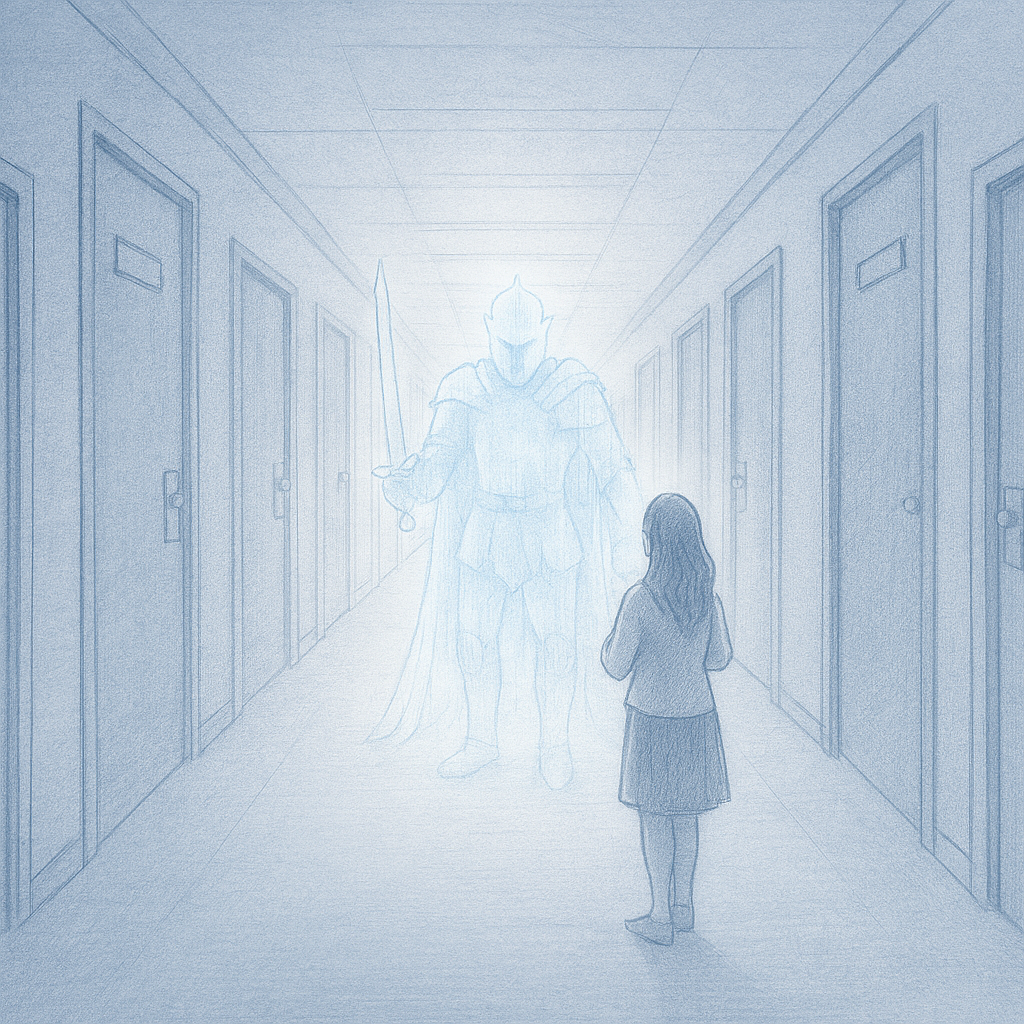
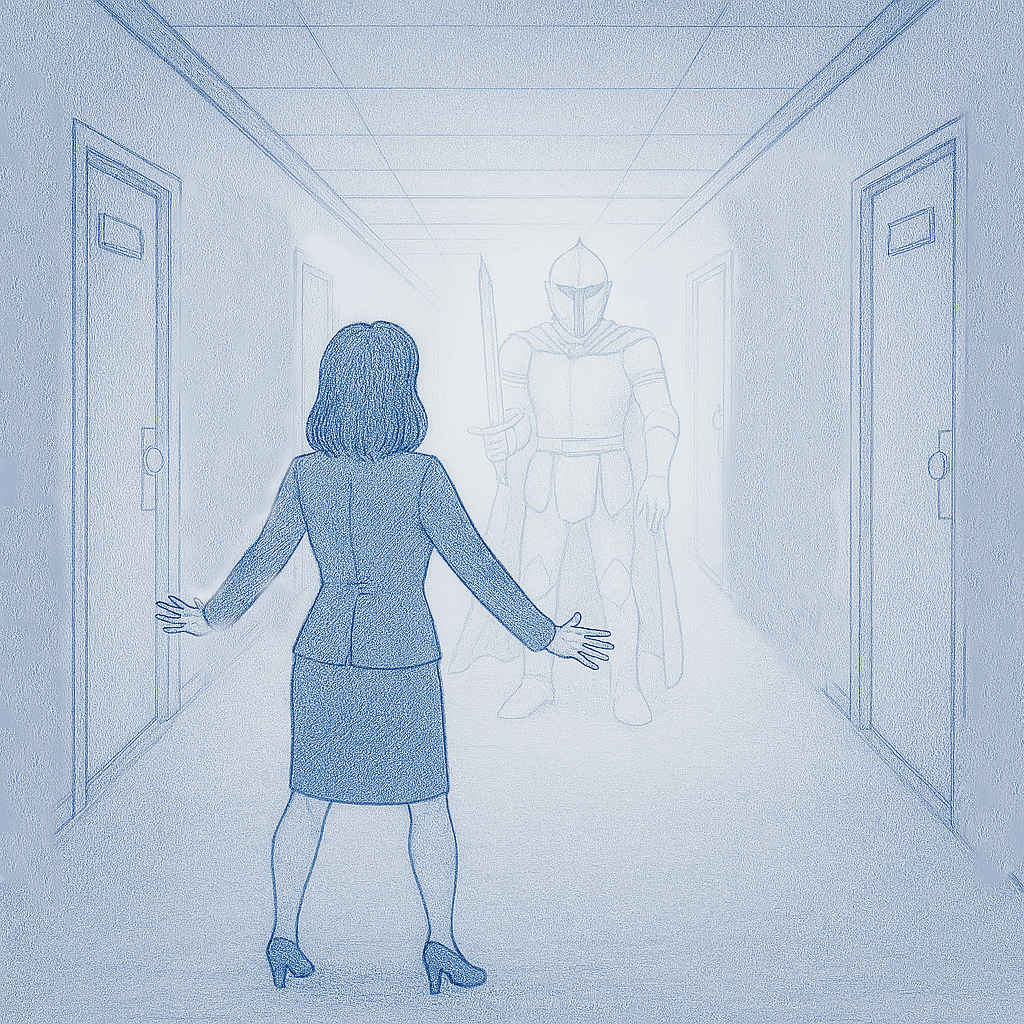
her own past. Yet she is haunted by a knight in shining armor, carrying a very large, very sharp sword.
No one else can see the apparition, and she hesitates to confide in her friends or
acquaintances. She finds that she knows each person around her with unsettling clarity,
and she is astonished by how deeply she can connect to them, yet she cannot understand why.
As the ghost's appearances grow more frequent, she struggles to grasp the meaning behind it all.
As her courage fades and fear takes its place, she slowly begins to realize that she is in
charge, that she commands and controls the very lives of all those around her.
All the time, the apparition slowly slips in and out of the realm of shadows
and ghosts, confronting the frightened woman, each time, in an isolated environment,
until she begins to question her own reality.
Her friends press her for the truth until she finally admits what she has been seeing.
Even with their support, the haunting remains a mystery to her, a shadow without meaning, a warning
without context. And while she struggles to understand it, far from her sight, another crisis is
quietly taking shape.
In the deep laboratories of the Great Wizard Noe Cabal, now a scientist in her service,
centuries of research into undeath lie catalogued, tested, refined, and contained. Every plague,
every necrotic contagion, every echo of Khalista's ancient horrors has been studied and secured.
But sabotage slips past even his vigilance. A single breach, deliberate and precise, unleashes a
new undead plague unlike any before, fast, ravenous, and unstoppable.
News of the outbreak reaches her while she is still wrestling with the haunting. Supported
by her friends, she sets aside her fear and turns to the only thing she can control: the machinery
of civilization. She unleashes a war economy across the federations, corporations, planets, and
systems under her rule, fighting to save as many as she can.
But the plague spreads faster than any defense she can muster. One by one, worlds fall.
Fleets vanish. Economies collapse. Even her wisdom, her diplomacy, her command of space and time
cannot halt the tide. In the end, all is overcome.
In the final battles, as the last strongholds crumble, the ancient war vortex, the one that
claimed her grandfather, the Paladin King, tears open once more. It spits him out onto a world
already drowned in undeath.
He fights as he always has, but even he cannot turn the tide. The undead consume everything.
The prophecy of good rising to defeat evil falters, and the universe tilts toward its final night.
Though they will never physically meet, the knight and the woman will both be
overcome with a strange sense of familiarity, and an overwhelming feeling that what
they did and died for was right.